
Office and Small Business Moves in Los Angeles
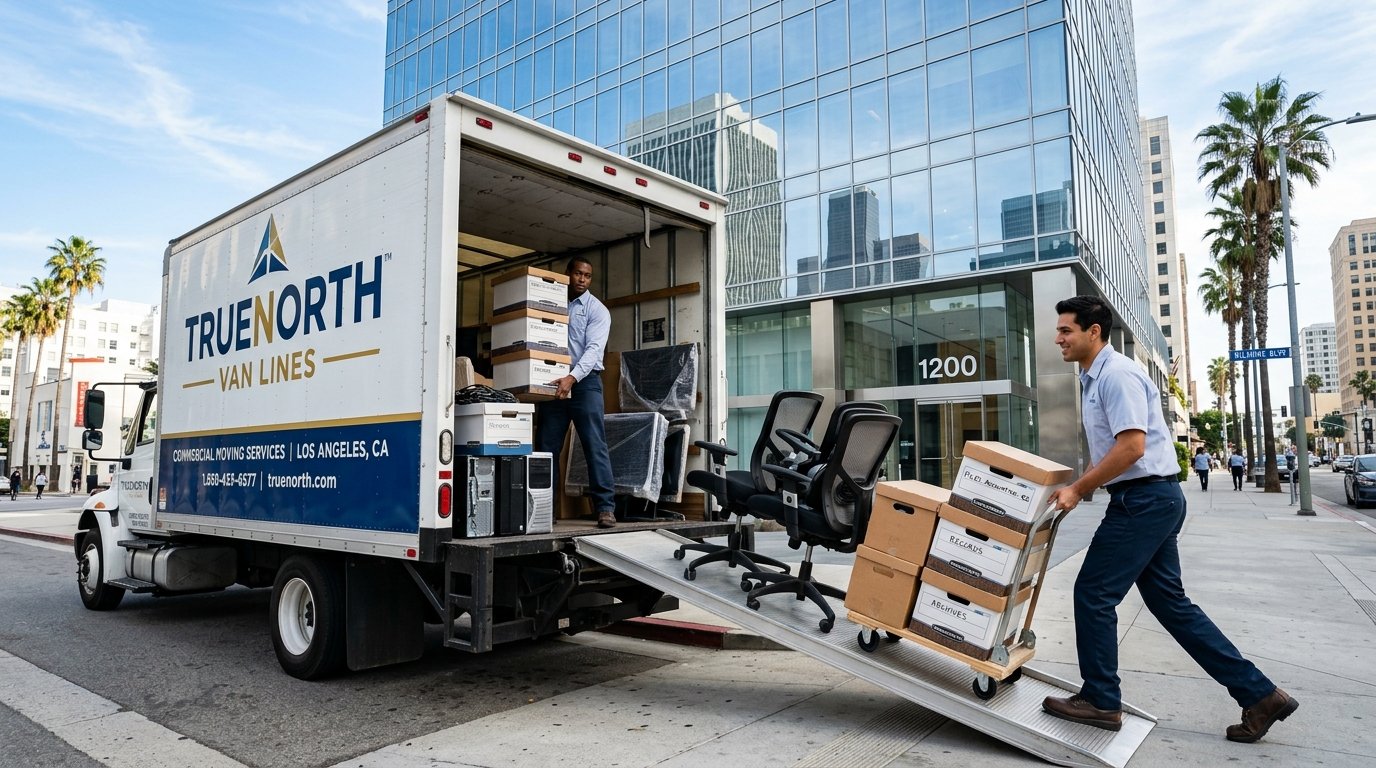
Relocating an office or small business in Los Angeles is more than just putting boxes on a truck. You are moving people, systems, and time-sensitive operations through a busy city with traffic, loading docks, freight elevators, and strict building rules. When a commercial move is not carefully planned, downtime, damaged equipment, and frustrated teams can quickly erase any savings on moving costs.
With the right plan, the move can be a controlled transition instead of a disruption. That is where experienced office movers in Los Angeles make a difference: aligning your move schedule with building access, protecting computers and servers, labeling workstations so employees can get back to work quickly, and keeping surprises out of your invoice as much as possible.
This guide walks you through a complete, practical process for planning office and small business moves in Los Angeles. You will see how to build a realistic timeline, prepare your team, compare estimates from commercial movers, control costs, and get your new workspace functional on day one. Throughout, we will show how TrueNorth Van Lines supports businesses with local moving, packing, and storage services while keeping the focus on what matters most: reducing downtime and stress.
Use this as a working document: share it with your internal move coordinator, facilities team, and IT, and keep it handy as you schedule your move with professional office movers in Los Angeles.
Key takeaways
- Start planning your Los Angeles office move 8–12 weeks in advance to coordinate leases, IT, building access, and commercial movers.
- Document a detailed inventory and workstation map so crews can place items correctly and your team can resume work faster.
- Understand key cost drivers: move size, access, distance, packing needs, and schedule (weekdays vs. nights/weekends).
- Confirm building rules, elevator reservations, and loading dock restrictions early to avoid delays and extra fees.
- Decide what your team will pack versus what professional packers will handle, especially for IT and sensitive records.
- Use written, itemized estimates from licensed and insured movers, and compare services line by line, not just total price.
- Keep critical items (credentials, key documents, laptops, and basic supplies) with you, not on the truck.
How Los Angeles office moves are different
Los Angeles has its own set of challenges for commercial moves. Downtown high-rises, creative studios in converted warehouses, and low-rise office parks each come with different access rules. Traffic can be intense, loading zones limited, and some buildings require moves to be completed overnight or on weekends.
Choosing experienced office movers in Los Angeles helps you navigate:
- Loading dock reservations and time windows
- Freight elevator scheduling and protective padding requirements
- Certificate of insurance (COI) requirements by building management
- Parking and street access for trucks during busy hours
- Local ordinances that may affect noise or loading in certain areas
An organized mover will ask detailed questions about your current and destination buildings so they can plan crew size, truck parking, and the order in which items are loaded and delivered.
Commercial move timeline: from decision to move-in
A realistic, planned timeline is one of the most valuable tools for any business relocation in LA. Below is a sample timeline for a small to mid-sized office (10–60 employees) working with professional office movers in Los Angeles.
| Phase | When | Key actions |
|---|---|---|
| Initial planning | 8–12 weeks before move | Confirm new lease, choose target move date, identify internal move coordinator, contact commercial movers for quotes. |
| Lock in mover & layout | 6–8 weeks before move | Select mover, sign service agreement, finalize floor plan, start inventory and workstation mapping. |
| IT & building coordination | 4–6 weeks before move | Schedule internet/phone at new site, book freight elevators, obtain COIs, confirm move windows. |
| Packing & labeling | 2–3 weeks before move | Distribute packing instructions, pack archives, label furniture and boxes, finalize disposal/donation. |
| Final prep | Move week | Confirm schedule with mover and building, protect floors, back up data, prepare essentials kit. |
| Move & setup | Move day(s) | Direct crews, check inventory, set up IT and key workstations first, walk-through at completion. |
This timeline is a starting point. Some businesses, especially those with more complex IT or specialized equipment, need additional planning time. TrueNorth Van Lines can adapt this schedule to your specific operation and help you decide when to begin each stage.
Assign an internal move coordinator
Even with full-service movers, designating an internal move coordinator is essential. This person serves as the main contact for the moving company, building management, and your staff.
- Facilities, operations, or office managers often fit this role well.
- For smaller teams, it may be a business owner or senior administrator.
- They should be available on-site during the move.
Sample communication to your team:
“Our office move is planned for the weekend of June 15–16. TrueNorth Van Lines will handle furniture and equipment. Please follow the attached packing and labeling instructions and have your workstations ready by Friday, June 14 at 3 p.m.”
What affects the cost of an office move
Understanding how commercial movers structure pricing helps you budget realistically and choose the best combination of services. While each move is different, most office movers in Los Angeles consider similar core factors.
| Cost factor | How it impacts price | What you can do |
|---|---|---|
| Office size & inventory | More workstations, files, and equipment require more crew time and truck space. | Declutter, donate unused furniture, and provide an accurate inventory to your mover. |
| Access & building rules | Long hallways, stairs, small elevators, or restricted loading zones increase labor time. | Share floor plans, photos, and building rules so crews can plan efficient routes. |
| Distance between locations | Longer drives across Greater LA add travel time and fuel costs. | Schedule moves outside peak traffic when possible to limit delays. |
| Packing level | Full packing (files, supplies, IT) requires more materials and labor. | Decide what staff will pack vs. what professional packers should handle. |
| Schedule (day/time) | Night and weekend moves can cost more but reduce business downtime. | Balance labor costs against lost revenue from daytime disruption. |
| Special handling | Safes, servers, lab gear, and oversized items may require extra equipment. | Flag these items early so your quote includes proper handling. |
Use the moving cost calculator on the TrueNorth Van Lines website as a starting point, then request a detailed commercial estimate for your specific inventory and buildings.
Local vs. longer-distance business moves in LA
Many office moves in Los Angeles are local relocations within the same neighborhood or across the metro area. For these, labor time and access conditions usually matter more than mileage. For longer moves (for example from Los Angeles to another city in California or out of state), transport logistics, timing, and regulatory requirements become more important.
TrueNorth Van Lines offers local moving services for nearby relocations and long-distance moving services for businesses changing cities or states. The right option depends on where you are relocating, how fast you need to be operational, and what you are moving.
Planning inventory and your new office layout
A planned inventory and clear layout instructions pay off immediately on move-in day. Crews can place items correctly the first time, saving your team from rearranging heavy furniture or hunting for important files.
Create a categorized inventory
At a minimum, break down your office contents into categories such as:
- Desks and workstations
- Chairs (task chairs, conference chairs, lobby seating)
- Computers, monitors, and peripherals
- Servers and networking equipment
- Filing cabinets and paper archives
- Conference room furniture and equipment
- Reception and common area furniture
- Kitchen and breakroom items
- Specialty or industry-specific equipment
Then, estimate quantities. Your mover does not need an item-by-item list of staplers, but they do need accurate counts of furniture and major equipment.
| Category | Example items | Approx. quantity |
|---|---|---|
| Workstations | Desks, task chairs, pedestals | 28 sets |
| Technology | Desktop PCs, laptops, dual monitors | 32 PCs, 12 laptops, 64 monitors |
| Files & storage | Lateral cabinets, banker boxes | 10 cabinets, 40 boxes |
| Conference & reception | Conference table, chairs, sofa, coffee table | 1 table, 12 chairs, 2 sofas |
Map workstations and label by zone
For office movers in Los Angeles, zone-based labeling speeds up delivery and setup. Rather than asking movers to memorize employee names or departments, assign simple codes:
- “A” wing (A1–A12)
- “B” wing (B1–B12)
- Conference rooms (C1–C3)
- Reception (R1–R5)
- Storage/archives (S1–S10)
Each box and piece of furniture gets a label with its destination code. Provide the mover with a simple printed floor plan showing these zones.
Example label format:
“B7 – Marketing – Desk contents – Box 2 of 3”
Packing and protecting IT and office equipment
Computers, monitors, servers, and telecom equipment are the backbone of your business. While many items are replaceable, data loss and downtime can be costly. A combination of clear responsibilities and professional packing often works best.
Decide who handles what
Work with your IT and operations teams to assign responsibilities:
- Internal IT may disconnect, tag, and prepare devices.
- Professional packers can pack and pad equipment for transport.
- Servers and sensitive systems may require special shutdown and startup sequences.
TrueNorth Van Lines can provide professional packing services that include padded cartons, monitor sleeves, and anti-static materials as appropriate.
IT packing checklist
- Back up data and verify backups before move day.
- Photograph cable connections or label cables for easier reconnection.
- Label each device with its destination code and user/department.
- Use original packaging when available, or sturdy boxes with ample padding.
- Keep small peripherals (mice, adapters, headsets) in labeled bags inside the main box.
- Pack and transport backup drives and critical media with a trusted staff member when appropriate.
For many Los Angeles offices, having the mover pack IT equipment on the same day as disconnection helps keep everything organized and reduces risk. Be sure to allow enough time on the front end of move day for this process.
How to prepare before the movers arrive
The more prepared your office is when the crew arrives, the more efficient the day will be. This is true even when you choose full-service packing options. Use this checklist the week leading up to your move.
Office move preparation checklist
- Confirm move date, start time, and access details with your mover and building management.
- Ensure freight elevator reservations and loading dock bookings are in writing from building management, if required.
- Notify neighboring tenants if your building rules require advance notice of moves.
- Remove or secure any items the movers are not transporting (personal items, certain confidential records, or hazardous materials).
- Clearly mark items that are not going (for disposal, donation, or sale).
- Protect floors and walls, or confirm that your movers will provide and install protection.
- Prepare a printed move roster with key contacts for each department.
- Set up a command area (a clear desk or table) for the move coordinator at both origin and destination.
Suggested internal reminder email:
“All staff should complete workstation packing and labeling by Thursday at 4 p.m. Any personal belongings should be taken home. Items not labeled for the move may be discarded.”
How to compare commercial moving estimates
When your office is planning a move, it is common to obtain estimates from several office movers in Los Angeles. Focus on clarity and scope, not just the bottom-line number.
Line-by-line comparison
Use this comparison framework to evaluate each quote:
| Estimate element | What to verify | Red flags |
|---|---|---|
| Scope of work | Does it include packing, furniture disassembly, and setup? | Vague descriptions, no mention of key tasks you requested. |
| Access assumptions | Are stairs, elevators, and long carries accounted for? | No questions about building access or potential restrictions. |
| Staffing & trucks | Is crew size and number of trucks reasonable for your office? | Very small crew for a large office, or unclear truck count. |
| Rate structure | Hourly vs. flat rate, minimum hours, overtime rules. | No clear explanation of how time or extras will be billed. |
| Insurance & valuation | What coverage is included, and what upgrades are available? | No written explanation of coverage options or exclusions. |
Questions to ask before booking a mover
- Are you licensed and insured for commercial moves in Los Angeles?
- Can you provide a written estimate outlining all expected charges?
- How many similar office moves have you completed recently?
- Will you perform an on-site or virtual walk-through before finalizing the quote?
- How do you handle building requirements such as COIs and elevator reservations?
- What is your process for protecting IT equipment and sensitive documents?
- What happens if the move takes longer than expected?
TrueNorth Van Lines provides detailed written estimates and can schedule a walk-through to understand your space, inventory, and building rules before finalizing your commercial move plan.
Choosing between moving, packing, and storage services
Not every office needs the same service level. Some small businesses in Los Angeles want a full-service relocation where the mover handles packing, disassembly, transport, and setup. Others prefer a hybrid approach to control budget and keep certain tasks in-house.
Service options for LA offices
| Service level | What it includes | Best for |
|---|---|---|
| Standard office move | Moving crew, truck, basic protection, load/unload, furniture placement. | Smaller offices with staff able to pack and prepare. |
| Partial packing | Movers pack select items such as IT, files, or fragile equipment. | Businesses that want help with high-risk or time-consuming areas. |
| Full-service relocation | Packing, labeling, disassembly/reassembly, transport, and setup. | Growing companies that need to minimize staff involvement and downtime. |
| Moving with storage | Pickup, storage in a secure facility, later delivery to your new office. | Offices with delayed build-outs, phased moves, or surplus furniture. |
TrueNorth Van Lines offers moving services that can be customized to your schedule and budget, including local moving services for Los Angeles-area offices, professional packing services, and secure storage services when you need extra flexibility between spaces.
Helpful TrueNorth Van Lines services
Common office moving mistakes and how to avoid them
Even well-run businesses can stumble during a move if small details are overlooked. These are issues professional office movers in Los Angeles see often and how you can avoid them.
| Mistake | Impact | How to prevent it |
|---|---|---|
| Waiting too long to book movers | Limited date options, higher costs, rushed planning. | Contact movers 8–12 weeks out, especially for peak periods. |
| Underestimating inventory | Insufficient truck space or crew time, schedule overruns. | Provide accurate counts and update your mover if anything changes. |
| Ignoring building rules | Denied access, fines, rescheduling, or unexpected overtime costs. | Speak with building managers early and share requirements with your mover. |
| Weak labeling system | Boxes and furniture land in the wrong places, slowing setup. | Use simple zone codes and consistent labels across the office. |
| No plan for old furniture | Paying to move items you do not need or last-minute disposal costs. | Decide what to keep, sell, donate, or recycle before your quote is final. |
Moving-day checklist for Los Angeles offices
On move day, your goal is simple: keep activity organized and predictable so that crews can work efficiently and your team knows what is happening at each step.
Before the crew arrives
- Have the internal move coordinator on-site early with access keys, parking permits, and building contacts on hand.
- Confirm that the freight elevator pads and floor protection are installed if required by building management.
- Set up signage directing movers to key areas (e.g., “IT staging,” “File room,” “Reception”).
- Verify that boxes and furniture are correctly labeled by zone.
While the move is in progress
- Keep a printed inventory or checklist to note any high-priority items and confirm when they are loaded.
- Walk the space periodically with the crew lead to answer questions and adjust plans as needed.
- Stay accessible by phone for any building or security staff questions.
- Coordinate with your IT lead on timing for shutting down and restarting systems.
At the new office
- Confirm that destination labels and zone maps are posted at key entry points.
- Guide movers on the placement of reception areas, conference rooms, and shared spaces first.
- Direct setup of core workstations and IT equipment that are critical for operations.
- Walk through with the crew lead at the end to address any last adjustments.
What to keep with you on moving day
Even with professional office movers in Los Angeles handling the bulk of your equipment and inventory, some items are better kept under direct control of your leadership or IT team.
Essential items to keep with your team
- Keys, access cards, and security fobs for both old and new locations.
- Leases, move-related contracts, and key HR or financial documents you may need during the move.
- Portable backup drives or other critical data media, as appropriate for your security policies.
- Laptops and personal devices that staff need to work remotely during the transition.
- Basic office supplies for day one: pens, notepads, power strips, extension cords, and tape.
- A small toolkit for minor adjustments (screwdrivers, Allen keys) even if the movers handle most assembly.
- Snacks, water, and basic housekeeping supplies for the first day at the new office.
Keeping these items with you reduces the risk of delays while you search through boxes or wait for a truck to arrive.
How TrueNorth Van Lines supports LA businesses
TrueNorth Van Lines provides organized support for office and small business moves in the Los Angeles area, combining local moving experience with careful planning and communication. The goal is straightforward: help your team relocate with less downtime and fewer surprises.
Support from initial plan to final placement
- Consultation and walk-throughs to understand your current and new spaces, inventory, and building rules.
- Written estimates that outline services, schedule assumptions, and cost structure.
- Coordinated scheduling with building management for elevators, loading docks, and move windows.
- Protection for floors, walls, and doorways according to building requirements.
- Experienced crews familiar with commercial furniture, workstations, and IT-related packing.
For local moves within Greater Los Angeles, TrueNorth Van Lines uses its local moving services platform to plan routes and manage timing around LA traffic and building access windows. When a business is relocating to or from Los Angeles across a longer distance, the long-distance moving services team can help coordinate schedules and transport.
If your move requires staged deliveries or you need to store furniture and equipment while your new space is being prepared, the company can incorporate secure storage services as part of a planned relocation path instead of a last-minute add-on.
Planning your LA office move with TrueNorth Van Lines
Because office and small business moves in Los Angeles are often time-sensitive, it is helpful to connect with a mover early in the process. You can explore options on the moving services page, review the service areas, and use the moving cost calculator to get a rough idea of budget ranges.
When you are ready to discuss your specific move, you can request a free moving quote and share details such as office size, locations, and target dates. A coordinator can then help you firm up the plan, refine your office move checklist, and schedule your move window.
Related moving guides
Frequently asked questions
How far in advance should I book office movers in Los Angeles?
For most small to mid-sized offices, booking 8–12 weeks before your desired move date is recommended. This allows time to secure elevator access, coordinate IT changes, and refine your office move checklist without rushing. Larger or more complex relocations may benefit from even more lead time.
Can we move our Los Angeles office over a weekend to avoid downtime?
Yes, many office moves in Los Angeles are planned for evenings or weekends specifically to minimize business disruption. Weekend moves can sometimes cost more in labor but often save money overall by preserving working hours. Discuss your preferred schedule with your mover early so they can plan staffing and building access.
Will movers disconnect and reconnect our computers and IT equipment?
Policies vary by moving company. Some movers disconnect and reconnect basic workstations under your IT team’s guidance, while others only handle physical packing and placement. It is important to clarify who is responsible for powering down equipment, managing data backups, and restarting systems. TrueNorth Van Lines can coordinate with your IT staff and provide professional packing for equipment.
How do we handle confidential files and records during the move?
For paper records, lockable file carts or sealed, labeled cartons help keep contents secure. Some businesses choose to have sensitive files transported in locked cabinets. For electronic data, work with your IT and compliance teams on encryption and backup plans. Clearly communicate any requirements to your mover so they can plan appropriate handling.
What should our employees do to prepare for the office move?
Employees should follow a clear packing plan: declutter their workstations, pack personal items to take home, and label boxes and equipment according to your zone system. Sharing a simple office move checklist and deadline helps keep everyone aligned. Your mover can also provide packing tips and materials if needed.
Can an office move be phased over multiple days?
Yes. Many Los Angeles businesses choose phased moves, especially if they are maintaining partial operations during the transition or moving between multiple floors or buildings. In a phased approach, departments or teams are moved in stages. Coordination is key so your mover and staff know which items are moving in each phase.
Do we need moving insurance for our Los Angeles office relocation?
Licensed office movers in Los Angeles carry specific types of coverage, and most also offer valuation options for your shipment. Standard valuation provides limited protection based on weight, while higher levels can be purchased for added coverage. Review these options carefully, and if necessary, consult your own insurance provider about additional business coverage.
How can we keep our office move on budget?
Accurate inventory, early planning, and clear scope are your best tools for controlling costs. Avoid last-minute additions, confirm building rules to reduce delays, and decide in advance which packing tasks your staff will handle. A detailed, written estimate from a professional mover makes it easier to see how each decision affects price.
What if our new Los Angeles office is not ready on move-in day?
If your build-out is delayed or you need to vacate your current space before the new one is available, short-term storage can bridge the gap. Movers can load your office contents into a secure facility and deliver them when your new space is ready. This is where working with a mover that offers secure storage services can be very helpful.
How do we get started planning an office move with TrueNorth Van Lines?
Gather basic information about your current and new locations, approximate office size, and desired move window. Then visit the TrueNorth Van Lines website to review moving services, check service areas, use the moving cost calculator, and request a free moving quote. A coordinator can help you turn that into a detailed plan.
Sources referenced in this guide
Commercial moving best practices typically align with guidance from several types of sources, including:
- Federal Motor Carrier Safety Administration consumer guidance on moving services and documentation
- U.S. Department of Transportation moving guidance relating to interstate moves
- State transportation or consumer protection agencies outlining requirements for licensed movers
- Building management move-in and move-out requirements, including elevator and loading dock rules
- Written moving estimates, bills of lading, and service agreements provided by moving companies
- Carrier tariffs, valuation options, and coverage descriptions for commercial relocations
This guide is general moving information, not legal, insurance, or regulatory advice. Moving requirements, pricing, access rules, and coverage options may vary by location, move type, building rules, and service agreement.