
How Many Boxes Do You Actually Need? (By Home Size)
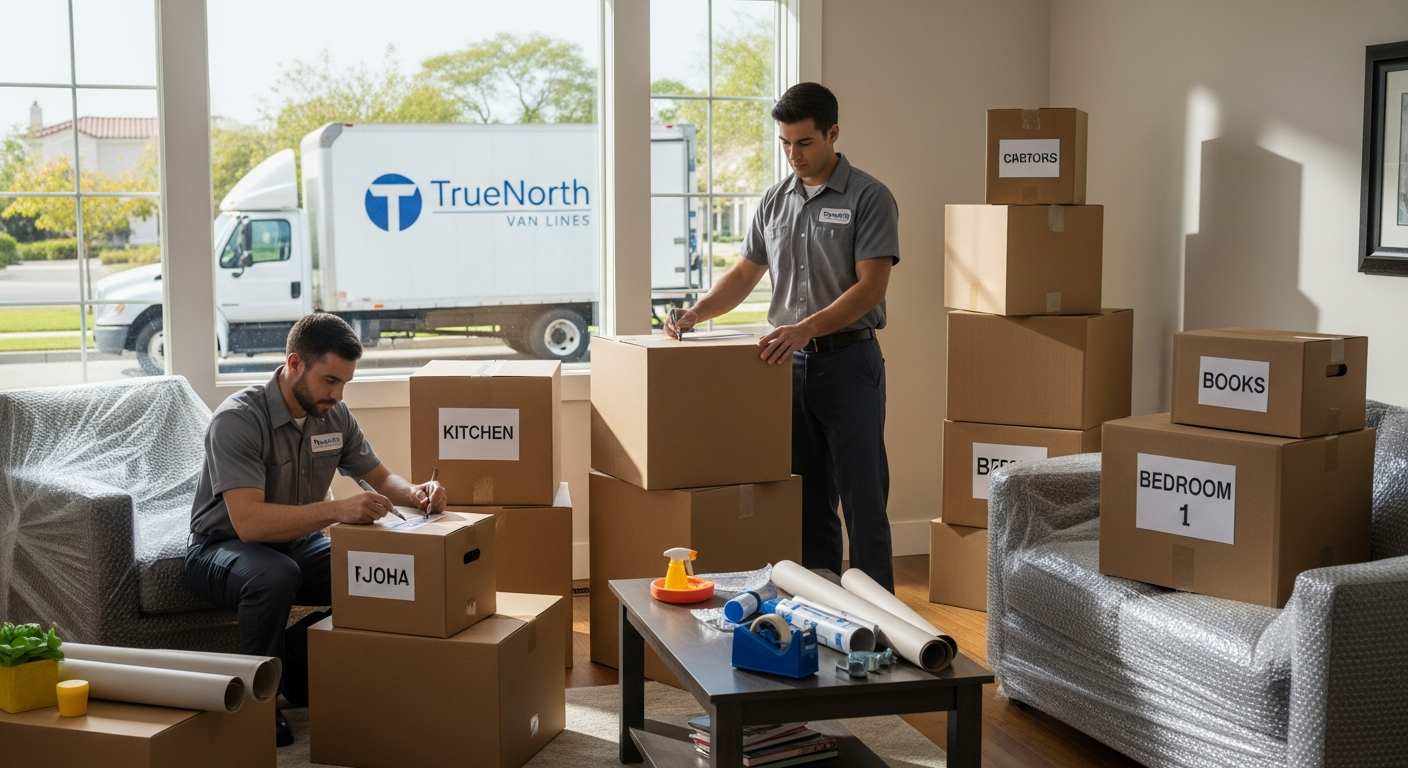
When you are planning a move, one of the first questions that comes up is how many moving boxes you actually need. Order too few and you will be scrambling on moving day with mismatched containers and overstuffed bags. Buy too many and you waste money and end up with a pile of unused supplies.
Estimating boxes is not guesswork. The right number depends on your home size, how much you own, how you pack, and whether professional movers will be handling and stacking your boxes. A well-planned packing supplies list makes your move smoother, safer, and more cost-efficient.
This guide from TrueNorth Van Lines walks through realistic box counts by home size, room, and lifestyle level, plus what types of boxes to use, how to avoid common packing mistakes, and when to bring in professional packing services. You will also see how a moving box calculator and inventory planning can help you stay organized from your first packed drawer to the final unpacked box.
Use this as a practical field guide: reference the tables, checklists, and examples as you plan your move, compare moving estimates, and coordinate services with TrueNorth Van Lines.
Key takeaways
- Most homes need 15–20 boxes per room on average, but lifestyle and clutter level can shift that number significantly.
- Use a mix of small, medium, large, and specialty boxes; avoid overusing large boxes for heavy items like books or dishes.
- Start with a baseline estimate by home size, then refine using a room-by-room inventory and a moving box calculator.
- Ordering 10–20% extra boxes is usually cheaper and safer than running out the day before your move.
- Good labeling, quality packing supplies, and clear hallways can reduce damage risk and speed up your move with TrueNorth Van Lines.
- Professional packing services are especially helpful for kitchens, fragile decor, and tight timelines.
- Your total box count can affect labor time, truck space, and therefore the overall cost of your local or long-distance move.
Why getting your box count right matters
When people ask how many moving boxes do I need, they are really trying to control stress, cost, and timing. Boxes are the backbone of any organized move. Underestimate them, and you end up with loose items that are hard to stack, easy to damage, and time-consuming to load.
From a moving-company perspective, consistent box sizes are faster to carry and stack in the truck than irregular containers such as trash bags or open-top bins. Crews from TrueNorth Van Lines can load a neatly boxed home more safely and efficiently, which often translates into smoother move days and more predictable labor time.
Getting the box count right also matters because:
- You avoid last-minute trips to buy more supplies.
- You can pack by category and room, then unpack logically.
- You protect fragile and high-value items with the right box types.
- You give your movers a clearer picture when requesting a free moving quote.
Think of boxes as your move's infrastructure: if the foundation is solid, everything else becomes easier to manage.
Key factors that affect how many boxes you need
No two households are identical. Two people in similar 2-bedroom apartments can need very different amounts of boxes depending on their belongings and lifestyle.
1. Home size and layout
Square footage and room count are starting points. A compact 2-bedroom apartment with minimal storage usually has fewer items than a spread-out 2-bedroom house with a garage and basement.
2. Lifestyle and clutter level
Ask yourself honestly:
- Minimalist: you keep only essentials, donate regularly, and avoid duplicates.
- Average: you have a normal mix of furniture, decor, kitchenware, and hobbies.
- Collector: you own extra decor, books, seasonal items, and multiple hobbies.
Collectors typically need 30–50% more boxes than minimalists in a similar home size.
3. Family size and age
More people usually means more belongings – especially when children are involved. Toys, clothes, school supplies, and sports gear add quickly to your box count.
4. How long you have lived there
The longer you stay in one place, the more you tend to accumulate. A 5-year stay in a home usually equals more boxes than a one-year lease in the same size unit.
5. Decluttering before you pack
Decluttering can reduce your total box count dramatically. You may be able to eliminate 5–15 boxes or more by donating items you no longer need.
Sample approach: “If I would not pay to move this item, I probably do not need to keep it.”
6. Whether movers are packing or you are
Professional packers, such as the crews from TrueNorth Van Lines, usually use more boxes than DIY packers because they avoid overloading and pack with protection in mind. That is a good thing: extra boxes cost less than damaged items.
Box estimates by home size
Use the following tables as starting benchmarks. Your actual box count may shift up or down based on the factors above. These estimates assume a typical household with average belongings that has done light decluttering before packing.
Overview: typical total box counts
| Home size | Typical range of boxes | Notes |
|---|---|---|
| Studio / efficiency | 15 – 25 boxes | Limited furniture, compact kitchen, minimal storage. |
| 1-bedroom apartment | 20 – 35 boxes | More kitchenware, clothes, and decor. |
| 2-bedroom apartment / condo | 35 – 55 boxes | Typical “boxes for 2 bedroom” range for average households. |
| 2-bedroom house with garage | 45 – 70 boxes | Additional storage, tools, and seasonal items. |
| 3-bedroom home | 60 – 90 boxes | Family items, toys, larger kitchen, more decor. |
| 4+ bedroom home | 90 – 140+ boxes | Multiple living areas, large storage, hobbies, and collections. |
Boxes by home size and lifestyle
Here is a more refined look that adds lifestyle level to the equation:
| Home size | Minimalist | Collector / heavy storage |
|---|---|---|
| Studio | 12 – 18 boxes | 20 – 30 boxes |
| 1-bedroom | 18 – 25 boxes | 30 – 40 boxes |
| 2-bedroom apartment | 30 – 40 boxes | 50 – 65 boxes |
| 2-bedroom house + garage | 40 – 55 boxes | 60 – 80 boxes |
| 3-bedroom home | 55 – 75 boxes | 80 – 110 boxes |
| 4+ bedroom home | 80 – 110 boxes | 115 – 160+ boxes |
These ranges give you a realistic starting point as you think about boxes for a 2 bedroom apartment, a family home, or anything in between.
Room-by-room moving box guide
Beyond overall home size, a room-by-room plan helps you create a more accurate packing supplies list. Here is how many moving boxes you might expect to use in each space.
Kitchen
The kitchen usually requires the most time and the highest number of small and medium boxes due to fragile and heavy items.
- Small boxes (books/fragile): 6–10
- Medium boxes: 5–8
- Dish packs or double-wall boxes (if used): 2–4
Heavy items like canned goods and dishes belong in small, well-padded boxes. Large boxes are better for lightweight items such as plastic containers or baking sheets.
Living room
- Medium boxes: 4–8
- Large boxes: 2–5
- Specialty boxes (TV, artwork, lamps): 2–6
Books, decor, electronics, and throw blankets all add to your count. If you have many framed photos or art pieces, you may need specialty picture boxes or extra small boxes with padding.
Primary bedroom
- Medium boxes: 5–10
- Large boxes: 3–8
- Wardrobe boxes: 2–4 (depending on hanging clothes)
Clothing, shoes, accessories, and nightstand items quickly fill boxes. Wardrobe boxes keep hanging items wrinkle-free and speed up packing.
Additional bedrooms (per room)
- Medium boxes: 4–8
- Large boxes: 2–6
- Wardrobe boxes: 1–3
Children's rooms can require more small boxes for toys, books, and school supplies.
Bathroom(s)
- Small boxes: 1–3
- Medium boxes: 1–2
Toiletries, towels, cleaning supplies, and small appliances generally fit into a few well-organized boxes. Be careful with liquids and follow any mover rules about hazardous items.
Home office
- Small boxes: 2–5
- Medium boxes: 2–5
Papers, books, files, and electronics need careful packing. Avoid making boxes too heavy with books; use more small boxes instead.
Garage, basement, and storage areas
- Small boxes: 3–8
- Medium boxes: 4–10
- Heavy-duty or specialty boxes: 2–6
Tools, seasonal decor, sports equipment, and miscellaneous storage items often add more boxes than people expect. This is also where decluttering can make the biggest difference in how many moving boxes you need.
Sample room-by-room overview
| Room | Estimated box count | Box types used most |
|---|---|---|
| Kitchen | 13 – 22 | Small, medium, dish packs |
| Living room | 8 – 19 | Medium, large, specialty |
| Primary bedroom | 8 – 22 | Medium, large, wardrobe |
| Each additional bedroom | 7 – 17 | Medium, large, wardrobe |
| Bathroom(s) | 2 – 5 | Small, medium |
| Home office | 4 – 10 | Small, medium |
| Garage / storage | 9 – 24 | Small, medium, heavy-duty |
Essential packing supplies list
Knowing how many moving boxes you need is only part of the planning. A complete packing supplies list also includes protective materials and labeling tools. This helps TrueNorth Van Lines crews handle your items efficiently, whether it is a local moving service or a long-distance relocation.
Core box types
- Small boxes (1.5 cu ft) – books, canned goods, dishes, small tools, fragile items.
- Medium boxes (3.0 cu ft) – pantry items, toys, linens, small appliances, decor.
- Large boxes (4.5+ cu ft) – pillows, bedding, bulky but lightweight items.
- Wardrobe boxes – hanging clothes, long coats, delicate garments.
- Dish pack / heavy-duty boxes – dishes, glassware, fragile kitchen items.
- Specialty boxes – TVs, artwork, mirrors, lamps, and odd-shaped items.
Packing and protection materials
- Packing paper (unprinted)
- Bubble wrap for very fragile items
- Stretch wrap for furniture protection
- Furniture pads or moving blankets (supplied by movers in many cases)
- High-quality packing tape and tape dispenser
- Permanent markers for labeling
- Zip-top bags for hardware and small parts
- Colored labels or stickers for room coding
Suggested quantities by home size
| Home size | Packing tape rolls | Packing paper bundles |
|---|---|---|
| Studio / 1-bedroom | 3 – 4 rolls | 1 – 2 bundles |
| 2-bedroom home | 4 – 6 rolls | 2 – 3 bundles |
| 3-bedroom home | 5 – 7 rolls | 3 – 4 bundles |
| 4+ bedroom home | 7 – 10 rolls | 4 – 6 bundles |
Tip: Keep one small “toolkit” box packed last with tape, markers, a utility knife, and basic tools so you can open and reassemble items quickly at your new home.
Using a moving box calculator effectively
A moving box calculator turns the question how many moving boxes do I need into a structured estimate. Instead of guessing, you answer a series of prompts about your home size, rooms, and lifestyle, and receive a recommended box count and packing supplies list.
You can use the moving cost calculator from TrueNorth Van Lines as part of your planning. While it focuses on overall move costs, the information you gather about home size, inventory, and services helps refine your box needs too.
What to have ready before using a calculator
- Number of bedrooms and approximate square footage
- Whether you have a garage, basement, attic, or storage unit
- Your lifestyle level: minimalist, average, or collector
- Any specialty or fragile items that need extra protection
- Whether you want full packing, partial packing, or self-packing
How to interpret the results
Calculator outputs are best seen as ranges. For example, you might see “35–50 boxes” for a typical 2-bedroom apartment. If you know you are a heavy book reader, entertaining cook, or decor enthusiast, choose the higher end of the range and add 10–20% extra for safety.
If you are between two ranges, plan for the higher one and keep receipts so you can return unused boxes if your supplier allows it.
How box count impacts moving cost
Box count is not just about organization; it also influences your moving quote and final invoice.
1. Labor time
More boxes typically mean more items to carry, stack, and unstack. However, well-packed and consistently sized boxes are faster to move than an equal weight of loose or awkward items. That is why TrueNorth Van Lines crews often prefer a few extra boxes over overstuffed, hard-to-handle containers.
2. Truck space and trips
The number and size of your boxes affects how your belongings fit in the truck. For local moves, an overloaded home may require a second trip if the truck size and inventory do not align. For long-distance moving services, volume and weight are used to plan the right truck space.
3. Packing service options
If you hire professional packing services, your mover will factor in box count and packing complexity when estimating the cost. Fragile-heavy homes and large kitchens may take longer and use more materials.
4. Material costs
Boxes, tape, and packing materials are part of your overall moving budget. Buying in advance and in the right quantities helps you manage this cost.
Box count and cost overview
| Factor | How box count affects it | Planning tip |
|---|---|---|
| Loading / unloading time | More boxes mean more trips from home to truck. | Use uniform box sizes and clear paths to speed up handling. |
| Truck space | Poorly packed boxes waste space and may require a larger truck. | Fill boxes fully without overloading; avoid half-empty large boxes. |
| Packing services cost | Higher box count and more fragile items increase packing time. | Discuss full vs. partial packing with TrueNorth Van Lines. |
When you request a free moving quote from TrueNorth Van Lines, sharing a realistic idea of your box count or inventory helps the team provide a more accurate estimate.
How to prepare before packers or movers arrive
Whether you are packing yourself or using professional packers, preparation is key to a smooth move.
1. Create a simple inventory
Walk room by room and jot down major categories: bookshelves, closet sections, kitchen cabinets, garage shelving, etc. This helps you visualize how many boxes each area will need and supports the how many moving boxes do I need decision.
2. Declutter strategically
- Set up donate, sell, and trash piles.
- Start with storage areas, then move to closets and the kitchen.
- Be realistic about duplicates and “someday” items.
Every unneeded item you remove is one less thing to pack, move, and unpack.
3. Group and stage items
Try to group like items together on shelves or tables before packing. For example:
- All cookbooks stacked together
- All framed photos laid on a bed for easy wrapping
- All office supplies gathered on a desk
This enables your packers or your own packing process to be more efficient.
4. Decide what you will pack vs. what pros will pack
Many customers choose a hybrid approach: they pack clothes, linens, and non-breakables, while leaving the kitchen, fragile decor, and artwork to TrueNorth Van Lines packers.
Example phrasing when you speak with your move coordinator: “We will pack books, clothing, and linens ourselves, but we would like your crew to handle the kitchen and fragile decor.”
5. Prepare your home for move day
- Clear walkways and remove tripping hazards.
- Reserve elevators or loading docks if needed with building management.
- Protect floors if required by your building rules (discuss with your mover).
- Make sure utilities are on and lighting is adequate for packing and moving.
Common packing mistakes and how to avoid them
Even well-planned moves can run into trouble if packing is rushed or improvised. Here are frequent mistakes movers see and how to prevent them.
Mistake and countermeasure table
| Common mistake | Why it is a problem | Better approach |
|---|---|---|
| Overloading large boxes with books or dishes | Boxes can break; difficult and unsafe to carry. | Use small boxes for heavy items; keep each box liftable. |
| Mixing items from multiple rooms in one box | Slows down unpacking and room setup. | Pack by room and label each side with destination and contents. |
| Not labeling boxes clearly | Movers do not know where boxes go; increases handling time. | Use large, legible labels with room name and brief contents. |
| Using weak or damaged boxes | Higher risk of crushing or contents shifting. | Invest in sturdy moving-grade boxes; retire worn ones. |
| Leaving packing until the last day | Results in chaos, poor protection, and delays for movers. | Follow a packing timeline; start early with low-use rooms. |
Checklist: avoid these packing pitfalls
- Do not exceed about 40–50 pounds per box.
- Do not leave empty space inside boxes – fill with paper or soft items.
- Do not tape boxes lightly; use multiple strips on seams.
- Do not pack prohibited items (fuel, open chemicals, etc.).
- Do not ignore building or HOA move rules that may affect timing.
Questions to ask before booking a mover
When you contact moving companies, your questions should cover both services and packing expectations. This helps you compare estimates and understand who is responsible for what.
Suggested questions to discuss
- Can you provide an estimate based on my home size, inventory, and approximate box count?
- Do you offer full and partial packing services, and how are materials billed?
- What types of boxes and packing materials do your crews typically use for kitchens, artwork, and electronics?
- What are your recommendations for how many moving boxes I need for my specific home and lifestyle?
- Are there any items you cannot move or pack, such as certain chemicals or valuables?
- How should I label boxes to make moving day more efficient for your crew?
As a licensed and insured moving company, TrueNorth Van Lines can walk you through these questions and tailor services to your needs, whether you are planning a small apartment move or a larger home relocation.
What to keep with you on moving day
Not everything should go into moving boxes and onto the truck. A separate set of “travel items” keeps your essentials accessible and protects irreplaceable belongings.
Essentials bag checklist
- Wallet, keys, and IDs
- Important documents (lease, closing papers, passports, insurance)
- Medication and basic first-aid supplies
- Phone chargers and small electronics you use daily
- Change of clothes and basic toiletries for 1–3 days
- Snacks, water, and pet supplies if applicable
Items better transported personally
- High-value jewelry and small heirlooms
- Personal laptops and hard drives with sensitive data
- Sentimental items you prefer not to place on the truck
- Certain houseplants, if allowed and practical
Plan as if your truck might be briefly delayed; keep anything you would need for a couple of days with you instead of packed deep in boxes.
How TrueNorth Van Lines can help with packing and boxes
Knowing how many moving boxes you need is the first step. Executing that plan efficiently is where a professional mover adds real value. TrueNorth Van Lines supports customers with both local moving services and long-distance moving services throughout its service areas, and can adjust support based on how hands-on you want to be.
Service options to match your packing needs
- Full-service packing – Crews bring boxes and materials, pack your entire home, label boxes, and prepare everything for transport.
- Partial packing – You handle simpler areas; TrueNorth focuses on fragile rooms such as the kitchen, dining room, and decor.
- Self-packing with professional moving – You pack all boxes; TrueNorth Van Lines handles loading, transport, and unloading.
- Storage solutions – If you are between homes or downsizing, secure storage services help you stage items and reduce clutter during the move.
Helpful TrueNorth Van Lines services
When you speak with a move coordinator, you can share your approximate box count, home size, and any special packing needs. Together you can build a plan that fits your schedule and budget.
Sample conversation starters
- “We live in a 2-bedroom apartment and estimate needing about 40–50 boxes. We would like help with the kitchen and fragile items only.”
- “We are in a 4-bedroom home with a garage and many storage bins. Can you recommend how many moving boxes we need and whether full packing makes sense?”
Frequently asked questions
How many moving boxes do I need for a studio?
Most studios need about 15–25 boxes, depending on how much kitchenware, books, and storage you have. Minimalists may be closer to 12–18, while collectors may need 20–30.
How many moving boxes do I need for a 1-bedroom apartment?
A typical 1-bedroom apartment uses 20–35 boxes. Expect roughly 4–6 small, 8–12 medium, 4–6 large, and 1–2 wardrobe boxes, plus extra if you have lots of books or decor.
How many moving boxes do I need for a 2-bedroom home?
Boxes for a 2 bedroom usually total 35–55 for an apartment and 45–70 for a 2-bedroom house with a garage. Storage areas and hobbies can push you toward the higher end of the range.
How many boxes are needed for a 3-bedroom house?
Most 3-bedroom homes fall in the 60–90 box range. Families with children, hobbies, or large kitchens may need closer to 80–100 boxes, especially if they have been in the home for several years.
What types of boxes should I buy?
Plan on a mix of small, medium, and large boxes, plus wardrobe and dish packs if your budget allows. Small boxes are best for heavy items, while large boxes should be used only for lighter, bulky belongings.
Should I buy extra boxes?
Yes. It is smart to buy about 10–20% more boxes than your estimate. Extra boxes are inexpensive compared with the cost and stress of running out at the last minute or overstuffing what you have.
Can professional packers bring boxes for me?
Yes. When you book professional packing services with TrueNorth Van Lines, crews can bring appropriate boxes and materials based on your home size and needs.
How early should I start packing?
Start packing 2–4 weeks before a typical household move, beginning with storage areas and items you use rarely. Aim to have most boxes ready a few days before your moving date.
Do more boxes always mean a more expensive move?
Not necessarily. More boxes that are well-packed and safe can be easier and faster to load than loose or overloaded items. The total volume and weight of your belongings, access conditions, and services chosen all affect cost.
How can I reduce the number of moving boxes I need?
Declutter before you pack, donate duplicates, sell unused items, and avoid moving things you do not want in your next home. Each bag or box donated is one less to move.
Can TrueNorth Van Lines help me estimate my boxes?
Yes. During your quote process, your move coordinator can discuss your home size and belongings to suggest a realistic range and recommend whether self-packing, partial packing, or full packing is the best fit.
Sources referenced in this guide
Guidance in this article is informed by industry experience and commonly referenced resources, including:
- Federal Motor Carrier Safety Administration consumer guidance
- U.S. Department of Transportation moving guidance
- State transportation and consumer protection agencies
- Building management move-in and move-out requirements
- Written moving estimates, inventories, and bills of lading
- Carrier tariffs, valuation options, and service agreements used in the moving industry
Plan your move with TrueNorth Van Lines
If you are ready to turn your box estimate into a real moving plan, TrueNorth Van Lines can help you compare service options, schedule crews, and coordinate packing.
- Review available moving services for homes and businesses.
- Use the moving cost calculator to think through inventory and budget.
- Check service areas to confirm coverage for your origin and destination.
- Request a free moving quote and discuss your box count and packing needs with a coordinator.
- Visit the TrueNorth Van Lines blog for more moving tips and checklists.
This guide is general moving information, not legal, insurance, or regulatory advice. Moving requirements, pricing, access rules, and coverage options may vary by location, move type, building rules, and service agreement.