
Moving for a Job in LA: Relocation Timeline That Actually Works
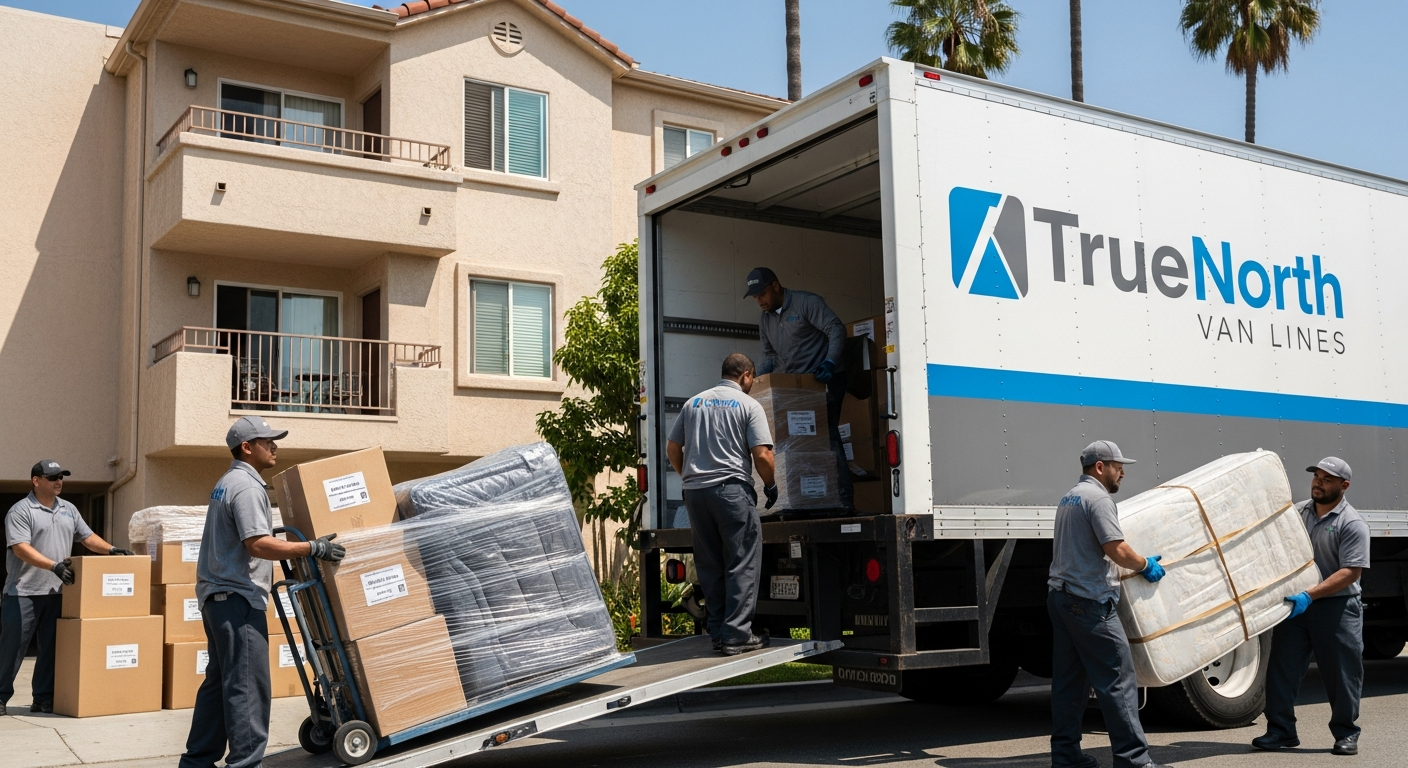
Relocating to Los Angeles for a new job is exciting, but the logistics can quickly feel overwhelming. You are balancing a firm start date, a current lease or home sale, family needs, and a long list of moving details. Without a clear plan, it is easy to overspend, rush packing, or arrive in LA before your belongings or housing are ready.
Whether you are moving from another part of California or across the country, a job relocation to Los Angeles adds extra pressure: employers expect you to be ready on day one, and you may only have one shot to get your schedule, budget, and move details right. That is where planning, timing, access, and working with the right long-distance mover become critical.
This guide from TrueNorth Van Lines is designed to walk you through a practical, step-by-step approach to job relocation in Los Angeles. You will find realistic timelines, packing strategies, cost factors, comparison tips for long-distance moving services, and checklists you can use right away. The goal is to help you make informed decisions, avoid common mistakes, and arrive in LA ready to focus on your new role, not moving-day problems.
TrueNorth Van Lines provides local and long-distance moving, packing, storage, apartment and house moving, office and senior moving, and full-service relocation support. In this guide, we will explain where a professional mover fits into your relocation plan and how to use our moving cost calculator and long-distance moving services to build a realistic budget and schedule.
Key takeaways
- Start planning your Los Angeles job relocation 6–8 weeks before your first day of work to align housing, travel, and moving schedules.
- Gather written, detailed long-distance moving estimates that clearly list services, weight or volume assumptions, and access conditions.
- Use a room-by-room inventory and color-label system so your items arrive organized and can be set up quickly in your new LA home.
- Consider adding packing and short-term storage if you have a tight relocation window, temporary housing, or overlapping leases.
- Reserve building elevators, loading zones, and parking for both origin and destination to avoid delays and additional fees.
- Keep essentials like important documents, work equipment, first-week clothing, and basic kitchen and bedding items with you.
- Work with a licensed, insured mover like TrueNorth Van Lines that understands both long-distance moves and the realities of Los Angeles access, traffic, and buildings.
Understanding a job relocation to Los Angeles
Relocating specifically for a job adds layers of timing and responsibility that do not always exist in a casual move. You may be working with a corporate relocation package, reimbursable expenses, or a flat relocation bonus. You may also be expected to start on a specific date in Los Angeles, leaving limited flexibility if something in your move plan slips.
Key elements that make a job relocation different include:
- Firm start date: Your belongings and basic household setup need to be ready in time for work, not just eventually.
- Budget constraints: Many companies cap relocation support, so you have to stretch those funds carefully.
- Distance and logistics: If you are moving cross-country, your shipment may take several days to travel to LA.
- Housing uncertainty: You might be moving into temporary housing first, then a more permanent rental or home later.
- Employer expectations: You need enough stability at home to show up focused and organized from week one.
Because Los Angeles is a large, busy metro area with dense neighborhoods, narrow streets, parking restrictions, and elevator reservations, working with a mover that is comfortable with urban logistics can save you frustration and last-minute changes.
TrueNorth Van Lines regularly helps customers with apartment and house moves, office moves, and full-service relocations. For a job relocation, those same skills translate into efficient packing, careful transport, and a crew that is ready for the realities of LA streets and buildings.
Job relocation timeline that actually works
A realistic relocation timeline is one of the most powerful tools you can use. Below is a sample 8-week framework for job relocation to Los Angeles. Even if your move is more compressed, this will give you a sense of priority and sequence.
| Weeks before start date | Primary tasks | Why it matters |
|---|---|---|
| 6–8 weeks | Confirm start date, review relocation benefits, research movers, request quotes, plan budget using the moving cost calculator. | Locks in preferred dates and ensures your budget aligns with reality early. |
| 4–6 weeks | Book your mover, begin decluttering, start non-essential packing, finalize housing in LA if possible. | Reduces shipment size and prevents last-minute decisions about what to keep. |
| 3–4 weeks | Notify landlord or list home for sale, request time off for moving days, reserve building elevator/loading dock, transfer utilities. | Aligns your housing, job schedule, and building requirements. |
| 2–3 weeks | Finish most packing, create room-by-room inventory, separate essentials you will carry yourself. | Improves accuracy on move day and speeds up unpacking in LA. |
| 1 week | Confirm details with your mover, label all boxes, prepare payment method, pack moving-day kit. | Prevents miscommunication and ensures you have what you need during transit. |
| Moving week | Supervise loading, take meter readings, lock up old home, travel to LA, be ready for delivery. | Keeps your relocation organized right through delivery and setup. |
Many job relocations do not allow a full 8-week runway. If you only have 3–4 weeks before your start date, consider:
- Adding professional packing so crews can safely pack your home in 1–2 days.
- Using short-term storage near LA if your long-term housing is not ready yet.
- Booking a move date that leaves a buffer of a few days before your first day at the new job.
Example: “My first day in the LA office is Monday, May 6. I want my delivery between May 1–3 so I have the weekend to unpack essentials and test my commute.”
What affects the cost of a long-distance move to LA
Understanding cost drivers will help you design a relocation that fits both your budget and your employer’s policies. Long-distance moving costs are not one-size-fits-all; they are influenced by shipment size, distance, services, and access conditions.
| Cost factor | What it means | How you can manage it |
|---|---|---|
| Shipment size (weight/volume) | Total weight or cubic feet of your belongings. | Declutter proactively, donate or sell items you do not need in LA. |
| Distance and route | How far your shipment travels to Los Angeles and the route used. | Not easily controlled, but flexible dates may help optimize routing. |
| Service level (self-pack vs. full pack) | Whether movers pack everything, just some items, or only move pre-packed boxes. | Self-pack to save, or choose partial/full packing for speed and reduced stress. |
| Access at both locations | Stairs, long carries, shuttle trucks, elevator reservations, and parking constraints. | Share accurate details with your mover to avoid surprise charges. |
| Timing and seasonality | Month, day of week, and demand periods like summer or month-end. | If possible, choose weekday or mid-month dates for more options. |
| Valuation coverage | The level of protection for your belongings during transit. | Review options carefully; higher coverage adds cost but also protection. |
You can use the TrueNorth Van Lines moving cost calculator to understand how different shipment sizes and service levels might impact your overall budget. Then, compare that to your employer’s relocation support so you know exactly what is covered and what you might pay personally.
When you request long-distance moving estimates, provide as much detail as possible about your origin and destination addresses, parking situation, building type, and elevator or loading dock rules in Los Angeles. Accurate information helps the estimator build a realistic plan the crew can follow on moving day.
How to compare long-distance moving estimates
Not all estimates are structured the same way, which can make apples-to-apples comparison difficult. For a job relocation, it is especially important to know what is included and how changes in scope are handled.
Key details that should appear in every estimate
- Pickup and delivery addresses (or at least cities and ZIP codes)
- Estimated weight or volume of your shipment
- Services included (packing, disassembly, reassembly, storage, etc.)
- Valuation coverage level and terms
- Assumptions about stairs, elevators, long carries, and parking
- Any potential additional fees and how they are triggered
When you receive two or more estimates, use a simple comparison table like the one below to analyze them.
| Comparison point | Mover A | Mover B |
|---|---|---|
| Estimated shipment weight / volume | e.g., 6,000 lbs | e.g., 5,200 lbs |
| Services included | Load/unload only | Includes packing of kitchen and closets |
| Valuation coverage | Basic released value | Upgraded full-value option |
| Access assumptions | Assumes free street parking | Includes LA building elevator reservation and long carry |
| Estimated total | $X,XXX | $X,XXX |
Look beyond the bottom-line number. A slightly higher estimate may include professional packing, better coverage, or realistic access charges that reduce the chance of surprise costs on moving day.
Sample email to a mover for clarification:
“Hi, I am relocating for work to Los Angeles in late June. Your estimate lists a ‘possible shuttle fee’ at destination. The building has an underground parking garage but does not allow tractor-trailers on the property. Can you clarify if a shuttle will definitely be needed and, if so, what that cost range is?”
Choosing between moving, packing, and storage services
TrueNorth Van Lines offers local and long-distance moving, packing services, and secure storage. For a job relocation to Los Angeles, the right combination depends on your timeline, housing situation, and budget.
Local moving vs. long-distance moving
If you are already in Southern California and simply changing neighborhoods for a new job, local moving services may cover what you need. If you are moving from out of state or from a distant part of California, long-distance moving services are appropriate.
- Local move: Usually completed in one day, often billed hourly, ideal if you are changing apartments or homes within the LA region.
- Long-distance move: Shipment travels between cities or states, often priced based on weight or volume and distance, with a multi-day transit window.
Packing service levels
Deciding who does the packing is a major piece of your relocation plan.
- Self-pack: You pack all boxes; movers handle furniture protection and loading. Lowest packing cost but highest time demand on you.
- Partial packing: Movers pack higher-risk areas like the kitchen, glassware, and artwork; you pack the rest. This is a popular middle ground for busy professionals.
- Full packing: Professional packing services handle everything, typically over 1–2 days. This is ideal when you have a compressed timeline before your start date.
When to add storage
Short-term secure storage services are useful if:
- You will be in corporate or temporary housing for a few weeks or months.
- Your LA lease starts after your first day on the job.
- You are still house-hunting and do not want to move twice.
In many cases, it is more efficient to store your belongings once with your moving company than to move into a temporary place and then move again later. Talk with your mover about storage-in-transit options and how they will affect total cost and delivery timing.
How to prepare before the movers arrive
A well-prepared home makes moving day faster, safer, and more predictable. It also helps crews load the truck effectively, protecting your belongings during the drive to Los Angeles.
Home preparation checklist
- Confirm move dates and arrival window with your mover 3–7 days beforehand.
- Reserve elevators, loading docks, and parking with building management at both origin and destination.
- Complete major decluttering so only items you are taking remain in the home.
- Unplug and defrost refrigerators/freezers at least 24 hours before loading.
- Disconnect washer/dryer, TV mounts, and basic electronics unless your service includes this.
- Secure pets and arrange childcare if needed for moving day.
- Set aside a clearly labeled “Do Not Load” area for essentials and items that will travel with you.
Documentation and work-related items
Because this move is tied directly to your job, certain documents and items should stay with you at all times:
- Offer letter and employment contract
- Relocation policy or reimbursement instructions
- Photo IDs, passports, Social Security cards
- Work laptop, chargers, and any equipment you must bring on day one
- Medical records and important prescriptions
Example personal note to yourself:
“Laptop, onboarding documents, and first-week work outfits go in my carry-on bag and never onto the moving truck.”
Packing strategy for a job relocation
Packing for a long-distance job move is about more than getting items into boxes. It is about how quickly you can function in your new life in Los Angeles once you arrive.
Organizing by priority
Think of your belongings in three priority levels:
| Priority level | Examples | Packing approach |
|---|---|---|
| 1: Immediate essentials | Work clothes for first week, laptop, toiletries, minimal kitchen gear, bedding for first night. | Pack in luggage and clearly marked boxes that travel with you or are unloaded first. |
| 2: First month needs | Everyday clothing, primary cookware, small appliances, basic decor. | Pack by room, color-label for quick placement at destination. |
| 3: Non-urgent items | Books, off-season clothes, collections, rarely used gear. | Pack securely and label as low-priority to unpack later. |
Room-by-room inventory
Creating a simple inventory is one of the most underrated tools you can use for a job relocation. It helps your mover provide accurate estimates and keeps you organized at delivery.
- List major furniture items and their rooms.
- Note any fragile, high-value, or unusually large pieces.
- Number each box and note the room and brief contents.
- Share special items with your mover before move day.
This inventory does not have to be perfect. A quick spreadsheet or even a notes app works. The goal is to know what you own and where it will go when you arrive in Los Angeles.
What to keep with you on moving day
Certain items should never go on the moving truck, especially during a long-distance job relocation. These are things you either need urgently or that cannot be replaced easily.
- Wallet, keys, and everyday personal items
- Identification documents and financial records
- Job-related materials, laptop, chargers, and work phone
- Medications and basic first-aid supplies
- Change of clothes and basic toiletries for several days
- Small toolkit, flashlight, and spare batteries
- Snacks, water, and pet supplies if traveling with animals
Create a dedicated “travel zone” in your home the night before loading. Place luggage, backpacks, and any boxes you will transport yourself there. Clearly mark them “Do Not Load.” When the TrueNorth Van Lines crew arrives, point out that area so it is left untouched.
Example instruction to movers:
“Everything in this hallway stays with me. Please load only the items in the living room, bedrooms, and kitchen.”
Common job relocation mistakes and how to avoid them
Many job relocations run into the same avoidable issues. Awareness is your best defense. Use the table below as a quick reference for what to watch out for and how to plan around it.
| Common mistake | Potential impact | Better approach |
|---|---|---|
| Booking a mover at the last minute | Limited date options, higher stress, rushed planning. | Contact movers 6–8 weeks ahead when possible. |
| Underestimating shipment size | Surprise cost increases or space constraints on truck. | Provide a thorough inventory and walk-through to your mover. |
| Ignoring building rules in LA | Fines, delays, or inability to move in on the planned date. | Confirm elevator reservations, loading zones, and insurance requirements ahead of time. |
| Packing too late | Disorganized boxes, damaged items, and late-night stress before loading. | Start packing non-essentials 3–4 weeks out or add professional packing. |
| Not aligning move with start date | Arriving in LA without furniture or essentials when work begins. | Schedule delivery several days before day one on the job, if possible. |
By planning ahead and communicating clearly with your mover, you dramatically reduce the chance that these issues disrupt your relocation.
Helpful TrueNorth Van Lines services
How TrueNorth Van Lines supports Los Angeles job moves
TrueNorth Van Lines is a licensed and insured moving company offering both local and long-distance moving services for households and businesses. For customers relocating to Los Angeles for work, the focus is on planning, communication, and careful handling.
Organized planning and communication
- Discussing your job start date and building a move schedule that works backward from that deadline.
- Reviewing access conditions at both the origin and your LA destination so the crew comes prepared.
- Providing clear expectations around pickup, transit window, and delivery timing.
Careful packing and handling
Whether you self-pack or use professional packing services, TrueNorth Van Lines crews are trained to protect your furniture and belongings with appropriate materials and techniques. On a long-distance route to Los Angeles, proper padding, wrapping, and loading order are critical to minimize shifting in transit.
Flexible support, including storage
If your job relocation involves temporary housing or overlapping leases, TrueNorth Van Lines can combine long-distance moving services with secure storage services to keep your belongings safe until your permanent address is ready.
Customers can also explore moving services in more detail and review the company background on the about page or see feedback on the reviews page. The goal is straightforward: provide professional, reliable support so you can focus on your new position in Los Angeles.
Frequently asked questions
How far in advance should I book a mover for a job relocation to Los Angeles?
When possible, book your mover 6–8 weeks before your preferred pickup date. This is especially important during busy seasons like summer or end-of-month periods. If your employer gives short notice, contact movers as soon as you receive your offer so you can align dates with your start schedule.
What kind of quote should I ask for when moving for work?
Ask for a detailed written estimate that lists services, estimated shipment weight or volume, valuation coverage, access assumptions, and any possible additional fees. This level of detail makes it easier to compare offers and submit documentation for relocation reimbursement if your employer requires it.
Can TrueNorth Van Lines help with both packing and moving to Los Angeles?
Yes. TrueNorth Van Lines offers full-service and partial packing, along with loading, transport, and unloading. For many job relocations, partial or full packing helps you stay focused on work-related tasks and reduces the risk of rushed, last-minute packing before travel.
What if my LA apartment is not ready by the time my belongings arrive?
If your new home is not ready, you can use secure storage through TrueNorth Van Lines. Your shipment can be placed into storage-in-transit until your move-in date, then delivered to your Los Angeles address when you have building access and elevator reservations in place.
How can I keep moving costs under control during a job relocation?
Start by decluttering to reduce shipment size, then use the TrueNorth Van Lines moving cost calculator to understand cost drivers. Compare detailed estimates, choose service levels that fit your budget and schedule, and communicate accurate access details so you avoid surprise charges on moving day.
What should I tell my employer about moving expenses?
Ask your HR or relocation contact for written guidelines on what is covered and how to submit receipts. Typical categories may include transportation to LA, moving company charges, temporary housing, and storage. Share your detailed estimate with your employer if they need to approve or reimburse specific line items.
How long does a long-distance move to Los Angeles usually take?
Transit times depend on origin, route, and season. Many domestic long-distance moves require several days of travel plus loading and unloading time. Your mover should provide a projected delivery window. For job relocations, schedule your arrival and first day of work with a comfortable buffer around that window.
Is it better to move before I start work or after my first week?
Whenever possible, aim to complete the main part of your move and delivery before your first day. Having your essentials, bed, and work clothes ready helps you start your new role with less stress. If that is not possible, consider shipping only essentials at first or using temporary housing while your full shipment travels to Los Angeles.
Sources referenced in this guide
When planning a job relocation to Los Angeles, it can be helpful to review general guidance from several reputable sources in addition to information from your moving company.
- Federal Motor Carrier Safety Administration consumer guidance
- U.S. Department of Transportation moving guidance
- State transportation or consumer protection agencies
- Building management move-in and move-out requirements
- Written moving estimates, bills of lading, and service agreements
- Carrier tariffs and valuation options for long-distance shipments
Use these resources, along with detailed communication with your mover and employer, to make informed decisions about coverage, scheduling, and documentation.
This guide is general moving information, not legal, insurance, or regulatory advice. Moving requirements, pricing, access rules, and coverage options may vary by location, move type, building rules, and service agreement.