
Moving With Pets in LA: Keeping Cats and Dogs Calm on Move Day
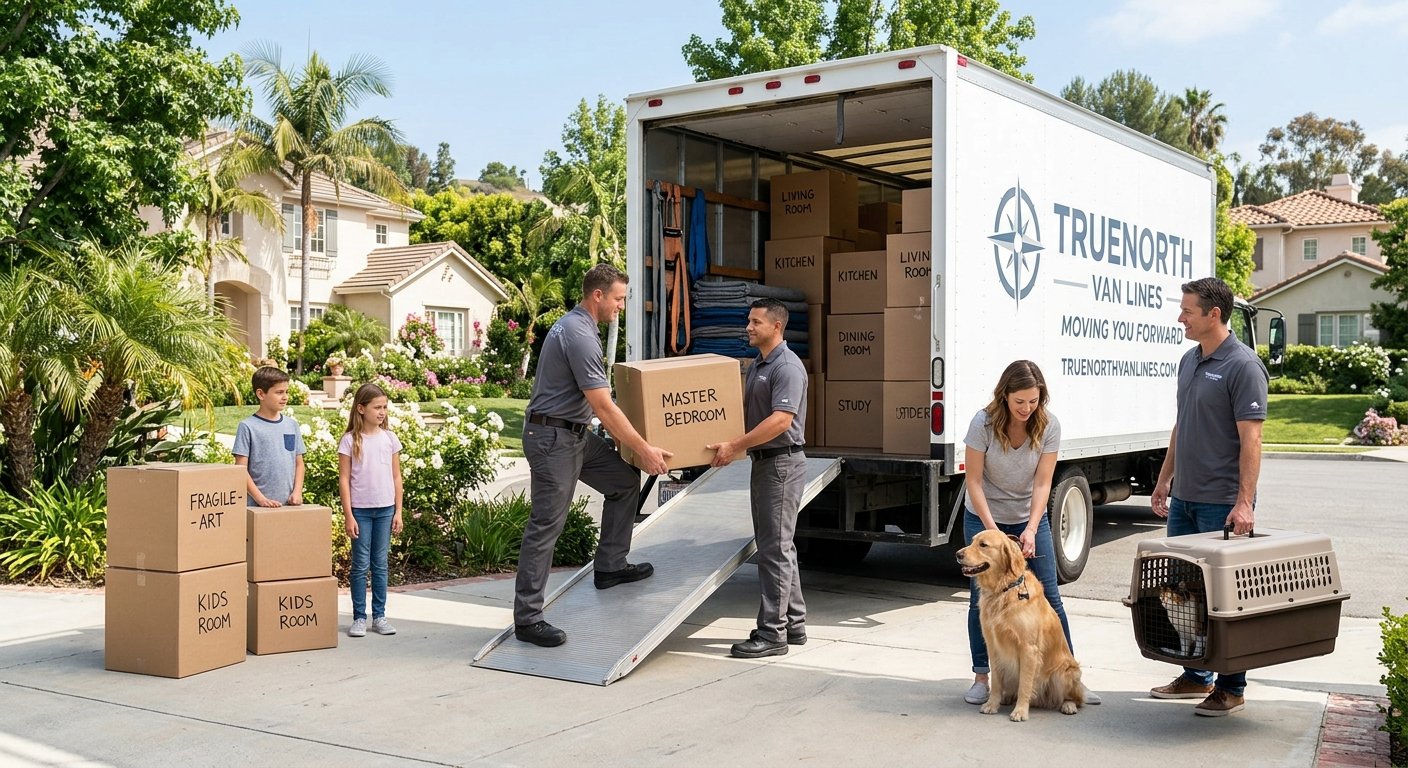
Moving with pets adds a layer of complexity that most checklists do not fully cover. Your dog, cat, or other animal is part of your family, and a move disrupts every routine they know: feeding times, walks, sleeping spots, familiar smells, and sounds. When the movers arrive, doors are open, people are walking in and out, and there are plenty of chances for a stressed pet to bolt, hide, or react unpredictably.
With the right plan, though, you can keep your pets safe and as calm as possible while your move stays efficient and organized. A thoughtful timeline, the right supplies, and clear communication with your moving company all help your household and your animals transition smoothly from one home to the next.
This guide from TrueNorth Van Lines walks you through a complete step-by-step approach to moving with pets. We will cover how to prepare weeks in advance, how to pack pet items, how to set up a safe room on moving day, what to keep with you, and how to get your dogs and cats settled into the new home. You will also see checklists, planning tables, and examples you can adapt to your situation.
As a professional moving company handling local and long-distance moves for families, apartments, houses, and seniors, TrueNorth Van Lines understands that a successful move is not just about furniture and boxes. It is about people and pets arriving safely and feeling at home as quickly as possible.
Key takeaways
- Start planning your move with pets at least 2 to 4 weeks in advance so you can update vaccinations, microchips, and tags and gather records.
- Pack a dedicated pet essentials bag with 3 to 7 days of food, medications, bowls, leashes, waste bags, and comfort items, and keep it with you.
- On moving day, set up a closed, clearly labeled pet room or use off-site care to keep animals away from open doors and heavy foot traffic.
- Maintain feeding and walk routines as consistently as possible before, during, and after the move to reduce stress for both pets and people.
- Talk with your mover ahead of time about pets in the home, parking, elevator reservations, and any special access concerns that affect timing and safety.
- For longer local or interstate moves, plan safe transportation for pets, including breaks, carriers, and temperature control in vehicles.
- Unpack a small, quiet pet area first in your new home so dogs and cats have a predictable place to retreat while you handle the rest of the boxes.
Why planning matters when moving with pets
Every move has moving parts: coordinating dates, packing, access at both homes, and choosing the right services. When you add dogs, cats, or other pets to the picture, you add live, sensitive family members who do not understand what is happening. Planning is what keeps a normal moving day from becoming chaotic and unsafe.
From a moving-company perspective, two major issues come up when customers have pets:
- Safety risks for pets and crew if animals are loose around heavy items, dollies, and open doors.
- Delays if a dog needs to be caught after slipping out, or if a cat hides in a room that still needs to be cleared.
Thoughtful planning around your pets protects them and keeps your local or long-distance move on schedule. It also helps your movers from TrueNorth Van Lines work efficiently, because everyone knows where the pets are and how the day will flow.
How pet planning connects to the rest of your move
Your pet plan should connect with your broader moving plan. For example:
- When you schedule your move date, consider your vet's hours in case you need last-minute paperwork or calming medication guidance.
- When you confirm your arrival window with local moving services or long-distance movers, think about feeding and walk times.
- When you plan packing, schedule pet packing (toys, bedding, litter supplies) with attention to what should stay out until the last day.
Pet-focused moving timeline
Having a realistic timeline specifically focused on your pets keeps tasks manageable and reduces the chance of missing an important step. Use this sample and adjust for your situation.
| Timeframe | Pet Tasks | Move Planning Tasks |
|---|---|---|
| 4+ weeks before move | Schedule vet exam, confirm vaccinations, update microchip info, request records. | Request estimates, compare movers, review services like packing and storage. |
| 2–3 weeks before | Introduce carriers, practice car rides, gradually box up non-essential pet items. | Confirm booking with TrueNorth Van Lines, reserve elevators, confirm parking. |
| 1 week before | Pack pet go-bag, label remaining pet boxes, maintain regular routines. | Finish most packing, confirm move details, walkthrough for access paths. |
| Day before | Set up designated pet room or confirm off-site care, prepare carriers and leashes. | Unplug electronics, label last boxes, prepare payment and paperwork. |
| Move day | Keep pets in safe room or off-site, stick to feeding/walk schedule as best you can. | Meet crew, walkthrough, supervise load and unload, keep key items accessible. |
| First week after | Set up pet zone, re-establish routines, monitor behavior and appetite. | Unpack essentials, inspect items, update addresses and registrations. |
You can adapt this timeline whether you are planning a short local move across town or a longer relocation. The steps stay similar; you may just need extra travel planning for longer distances.
Pre-move vet visits and paperwork
Ahead of moving day, it is wise to treat your veterinarian as part of your moving support team. Even if you are only moving across town, a quick check-in can prevent problems on or after move day.
Key vet-related tasks
- Schedule a general health exam, especially for senior pets or animals with chronic conditions.
- Confirm vaccinations are current in case your new building, boarding facility, or dog park requires proof.
- Update microchip registration with your new address and phone number.
- Ask for printed copies of your pet's medical records and prescription information.
- Discuss travel plans and ask about motion sickness or anxiety options when appropriate.
Sample wording for a vet call:
"We are moving in about three weeks and will be using professional movers. Our dog can be anxious with loud noises and new people. Could we schedule a quick checkup and talk about ways to keep him comfortable during the move and car ride?"
Licensing and local rules
When you move to a new city or county, different pet licensing rules may apply. While TrueNorth Van Lines cannot provide legal advice, we recommend noting the following in your moving folder:
- Current rabies certificate and vaccination record.
- Any breed, size, or number-of-pets limits for your new building or area.
- Contact details for a new vet near your new home.
Handling this paperwork ahead of time means you are not searching for documents after arrival while trying to unpack.
How to pack for pets
Pet items often get packed last, and then people realize they have buried leashes, medications, or the only toy that keeps a nervous dog calm. Instead, give pet packing its own plan.
Categories of pet items
Think about your pet's belongings in three groups:
- Daily essentials you will keep with you (food, medications, leash).
- Comfort and enrichment that help your pet feel secure (beds, toys, scratching posts).
- Back-up and bulk supplies that can go on the moving truck (spare litter, extra food bags, crates you are not currently using).
| Category | Examples | Where to Pack |
|---|---|---|
| Daily essentials | Food, bowls, medications, leash, harness, waste bags, litter box and scoop, carrier. | In a clearly labeled pet go-bag that stays with you in your vehicle. |
| Comfort and enrichment | Beds, blankets, favorite toys, scratching post, perches. | Partly in go-bag (one or two items), rest in early-to-open box marked "Pet comfort items." |
| Bulk supplies | Extra food bags, backup litter, large crates, grooming supplies, spare bowls. | On the truck, in sturdy boxes labeled with room and "Pet supplies" on multiple sides. |
Pet go-bag checklist
Prepare a dedicated bag or small bin that is only for pet items you want close at hand. For many customers, this bag sits alongside their personal overnight bag.
- 3–7 days of your pet's regular food (plus a scoop).
- Water and food bowls (collapsible bowls work well for travel).
- Medications and supplements with printed dosage instructions.
- One or two favorite toys and a small blanket that smells like home.
- Leash, harness, collar, and updated ID tags.
- Waste bags, puppy pads, or travel litter and a small scoop for cats.
- Paper towels, pet-safe cleaning spray, and a few trash bags.
- Hard copy of vet records, recent photo of each pet, and microchip info.
Label this bag clearly and plan to move it yourself. Do not send it on the truck.
Preparing your home and pets before movers arrive
The day before your movers arrive is when planning turns into action. Your goal is to make the home safe and straightforward for the crew while giving your pets a predictable, quiet place to stay.
Create a designated pet room
For many households, the simplest solution is to choose one room as the "pet room." This might be a bedroom, bathroom, or home office. On move day, pets stay in this room with the door closed until it is time for them to leave with you.
- Select a room that can stay closed most of the day and is not a main traffic area.
- Move non-essential furniture and boxes out of that room ahead of time if possible.
- Set up bed, water, a few toys, and a litter box for cats.
- Post a note on the door such as "Pets inside – please keep door closed."
When your TrueNorth Van Lines crew arrives, mention where this room is during the initial walkthrough. This lets the crew plan the loading sequence so that room is cleared last or packed after your pets are already safely out of the home.
Consider off-site care
Some pets do best away from the action entirely. Consider:
- Having a trusted friend or family member keep your pet for the day.
- Scheduling a day at a reputable daycare or boarding facility.
If you go this route, coordinate pick-up and drop-off around your moving schedule, and pack an extra copy of records and food for their stay.
Prepare the paths for movers
Pet safety is improved when movers have clear walkways and can focus on their work. Before the crew arrives:
- Clear hallways, stairs, and entry points of clutter, loose rugs, and pet gates.
- Secure or temporarily remove freestanding pet gates that may trip movers.
- Let your mover know if there are any tricky doors, latches, or loose boards.
Managing move day with dogs and cats
Move day is busy by nature. You will be signing paperwork, answering questions, and making fast decisions. That is why your pet plan should be simple and already in place by the time the first box is carried out.
Move day checklist for pet owners
- Confirm your pet room is set up and the door can close securely.
- Walk dogs early for a longer-than-usual outing to burn energy.
- Feed a slightly smaller breakfast than usual to reduce upset stomachs.
- Place carriers, leashes, and the pet go-bag near the door you will use, not near the mover entry.
- Show the TrueNorth Van Lines crew the pet room during your initial walkthrough.
- Keep pets in the designated room or off-site care before the crew starts work.
Interacting with movers and pets
Your movers are there to safely and efficiently move your belongings, not to handle pets. Clear communication helps everyone:
- Let the crew leader know how many pets you have and where they are located.
- Mention any "do not open" doors that are protecting animals.
- If a pet must be moved (for example, to load furniture from that room), coordinate with the crew so doors are closed and the pet is leashed or in a carrier first.
Sample wording to tell your movers:
"We have one dog and one indoor-only cat. They will be in this bedroom with the door closed. Please do not open this door; if you need something from this room, let me know and I will handle the pets first."
Loading and travel with pets
Try to time pet departure so they leave with you between the main loading and unloading periods:
- Once the crew has loaded most items, you can carefully move pets from their room to the vehicle.
- Use secure carriers for cats and seat-belted harnesses or crates for dogs.
- Keep vehicle temperature comfortable and never leave pets in a parked car without climate control.
What to keep with you, not on the truck
There are items professional movers will not transport, such as live animals, some hazardous materials, and certain valuable documents. When moving with pets, you also want specific pet-related items in your personal vehicle for quick access.
Non-transport items and pet-related exceptions
| Keep With You | Why | Tips |
|---|---|---|
| Pet go-bag and documents | Essential for feeding, meds, and emergencies during the move. | Store near your personal bag, not near packed boxes. |
| Carriers and crates in use | Pets must travel with you, not inside the moving truck. | Label them clearly so movers know not to load them. |
| High-value items and IDs | Driver's license, passports, vet records, microchip numbers. | Keep these in a folder in your personal vehicle. |
Human and pet essentials together
For a smoother transition, think of your first 24–48 hours at the new home:
- Pack a human overnight box with clothing, toiletries, chargers, medications, and basic cookware.
- Keep the pet go-bag next to that box so you unpack them at the same time.
- Designate one family member to be in charge of pets and their items during travel.
TrueNorth Van Lines crews are used to working around family routines. When you keep essentials separate from the main shipment, it reduces stress for everyone.
Cost factors for a pet-friendly move
Moving with pets does not usually change the core pricing structure of your move, but it can affect timing, service choices, and any optional add-ons you choose to keep stress low. Understanding cost factors helps you plan and avoid surprises.
Main cost drivers for local and long-distance moves
| Cost Factor | How It Impacts the Move | Pet-Related Considerations |
|---|---|---|
| Home size and inventory | More items and rooms increase loading time and truck space. | Multiple pets mean extra crates, litter, food bins, and beds to account for. |
| Distance and travel time | Longer distances add drive time and logistics planning. | Pets may require more breaks and overnight stays, which you should budget for. |
| Access conditions | Stairs, long carries, elevators, and tight parking can extend the job. | More time on-site means longer periods managing pet safety and stress. |
| Packing level | Full-service packing reduces your workload but adds labor and materials. | Professional packers can quickly and securely pack pet supplies you are not using daily. |
You can get a clearer sense of potential costs for your specific situation by using the moving cost calculator on the TrueNorth Van Lines site and discussing your inventory and access details with a moving consultant.
Choosing moving, packing, and storage services for pet households
Not every move needs the same level of service. Households with pets sometimes benefit from additional help so that one adult can focus mainly on animals while the movers handle the heavy lifting and packing.
Comparing service options
| Service Type | What It Includes | Best For Pet Owners Who… |
|---|---|---|
| Local moving services | Loading, transportation, and unloading within the same metro area. | Are moving across town and want a same-day transition for themselves and their pets. |
| Long-distance moving services | Transportation between cities or states with coordinated pickup and delivery. | Need to plan pet travel over many miles and want predictable pickup and delivery windows. |
| Professional packing services | Trained packers box up some or all of your home, including fragile items. | Prefer to spend their time managing pets and logistics instead of packing every box themselves. |
| Secure storage services | Short- or longer-term storage in between homes or during renovation. | Need to declutter before listing a home or delay some deliveries to reduce chaos around pets. |
Residential customers sometimes choose a combination approach: TrueNorth Van Lines might provide full packing for the main household while the family handles pet supplies and personal essentials. This allows one person to focus mainly on pet care during the busiest packing days.
Helpful TrueNorth Van Lines services
Key questions to ask your mover
Before booking, it helps to talk through your pet situation with your moving company. While movers do not transport animals, they can plan timing and crew strategy around your needs.
Suggested questions
- "What arrival window can we expect, and how much notice do you give?" – This helps you plan walks and feeding times.
- "How long do you expect loading and unloading to take for a home of our size?" – Useful for scheduling off-site pet care or pet room use.
- "Are there any items related to pets you cannot move?" – For example, certain chemicals, large outdoor tanks, or specialty equipment.
- "What is the best way to label pet items so they are unloaded first?" – Crews can stage these near the front of the truck if requested.
- "How far in advance should we let you know about changes to inventory or access?" – Avoids last-minute surprises that might extend the day.
Sample email wording to your mover:
"We are moving from a two-bedroom apartment and have two indoor-only cats. On move day, we plan to keep them in a closed bathroom until we leave. Are there any special instructions you recommend for labeling their items so we can set up their space first at the new home?"
When you contact TrueNorth Van Lines through the request a free moving quote form, adding a note about your pets helps the consultant suggest timing and services that fit your household.
Common pet moving mistakes and how to avoid them
Many issues on moving day repeat across households. Being aware of them ahead of time allows you to plan around them.
| Common Mistake | What Can Happen | How to Prevent It |
|---|---|---|
| Letting pets roam freely during loading | Pets may dart outside, get underfoot, or become highly stressed. | Use a secure pet room or off-site care throughout the move. |
| Packing pet essentials on the truck | You arrive at the new home without food, bowls, or litter box available. | Prepare and carry a pet go-bag in your own vehicle. |
| Changing food or routine right before moving | Pets may develop digestive issues or extra anxiety. | Keep the same food and schedule as much as possible until after you settle in. |
| Not securing carriers properly in vehicles | Carriers can tip or slide, frightening or injuring pets. | Seat-belt carriers and use stable surfaces in the vehicle. |
- Double-check door and window latches in the new home before letting pets explore.
- Walk the fenced yard for gaps or loose boards before turning dogs loose.
- For cats, start with one room and gradually expand access after a few days.
How TrueNorth Van Lines helps families moving with pets
While pet care itself stays with the owner, having an experienced, organized moving company reduces the overall stress level in the household. That makes it easier for you to stay calm for your pets.
TrueNorth Van Lines provides:
- Licensed and insured crews for local moving services and longer-distance relocations.
- Careful handling of your home's contents, including furniture pets use regularly, like couches and beds.
- Optional professional packing services that free you to focus on your animals and logistics.
- Secure storage services if you need to stagger move-in or reduce clutter before listing your home.
- Transparent discussions about timing, access, and expectations so you can plan walks, feeding, and pet room use around the crew's work.
If you are planning to move with dogs, cats, or other pets, an early conversation with a moving consultant helps align services with your priorities, whether that is a fast local move, a more complex long-distance relocation, or a staged move using storage.
Frequently asked questions
How far in advance should I plan when moving with pets?
Whenever possible, start planning 3 to 4 weeks before your move. This gives you time to schedule vet visits, update microchips and tags, gather records, and ease your pets into carriers and car rides. Even if your timeline is shorter, following the key steps in this guide will still help.
Should my pets stay in the home or go off-site on moving day?
Either option can work, but most pets are less stressed when they are in a quiet, closed room away from the moving activity or with a trusted caregiver off-site. If you keep pets in the home, use a dedicated room with a closed door, clear signage, and instructions for the movers so the door stays shut.
Can movers transport my pets in the moving truck?
No. Professional movers, including TrueNorth Van Lines, do not transport live animals in moving trucks for safety and regulatory reasons. Pets should travel with you in your vehicle in secure carriers or harnesses, with enough ventilation and temperature control.
What should go in a pet travel or go-bag?
Pack several days of your pet's regular food, bowls, medications, a leash or harness, waste bags or litter supplies, a favorite toy or blanket, paper towels, and vet records. Keep this bag with you, not on the truck, so you can care for your pet during travel and immediately at your new home.
How do I help my dog or cat adjust to the new home?
Set up a quiet pet zone first, with their bed, water, food, and litter box for cats. Keep routines as consistent as possible, including feeding and walk times. For cats, start with just one room and gradually open additional spaces. Offer extra reassurance, but also give shy pets room to retreat.
Will moving with pets make my move more expensive?
Having pets does not usually change the basic pricing structure, which is based on factors such as distance, home size, and access. However, you may choose additional services such as packing or storage to reduce stress, and you may incur separate pet-related costs like boarding or extra travel stops.
How do I label pet boxes so they are unloaded first?
Label at least two sides of each box with the destination room plus a clear note like "Pet supplies – open first." Mention this to the crew leader at the start of the move. TrueNorth Van Lines teams can often stage these boxes near the truck's door so they are unloaded early at your new home.
What if my pet is very anxious or aggressive with strangers?
Talk with your veterinarian in advance about behavioral strategies and, when appropriate, medication. On move day, keep your pet fully separated from movers in a closed room or off-site. Avoid introducing your pet to the crew and focus instead on secure containment and a calm environment.
How can I estimate moving costs when I have pets?
Your pets mainly affect how you plan the day rather than the base cost. To get a clearer estimate, list your home’s rooms and major items, note any stairs or long carries, and use the moving cost calculator from TrueNorth Van Lines. Then discuss your pet situation with a consultant when you request a free moving quote.
Can TrueNorth Van Lines help with last-minute moves when I have pets?
Availability depends on scheduling and crew capacity. Even for shorter-notice moves, TrueNorth Van Lines will walk you through the key steps to keep animals safe and to coordinate timing, but specific dates and times depend on existing bookings.
Sources referenced in this guide
To develop practical recommendations for moving with pets, this guide aligns with general consumer and transportation guidance from several types of sources, including:
- Federal Motor Carrier Safety Administration consumer guidance on household goods moves
- U.S. Department of Transportation moving guidance and safety recommendations
- State transportation or consumer protection agencies regarding moving contracts and regulations
- Typical building management move-in and move-out requirements for apartments and condominiums
- Standard written moving estimates, bills of lading, and service agreements used in the moving industry
- Carrier tariffs, valuation options, and common practices for licensed and insured movers
These sources do not replace your own contracts, building rules, or professional advice, but they inform the planning checklists and timelines in this guide.
For more planning help beyond moving with pets, you can review the TrueNorth Van Lines blog and other resources on the main TrueNorth Van Lines website.
Related moving guides
When you are ready to move, especially with dogs, cats, or other pets, a brief call or online request can clarify options and timing. You can explore available moving services, confirm that your home falls within current service areas, use the moving cost calculator, and request a free moving quote tailored to your household.
This guide is general moving information, not legal, insurance, or regulatory advice. Moving requirements, pricing, access rules, and coverage options may vary by location, move type, building rules, and service agreement.