
How to Pack Fragile Items So Nothing Breaks in Transit
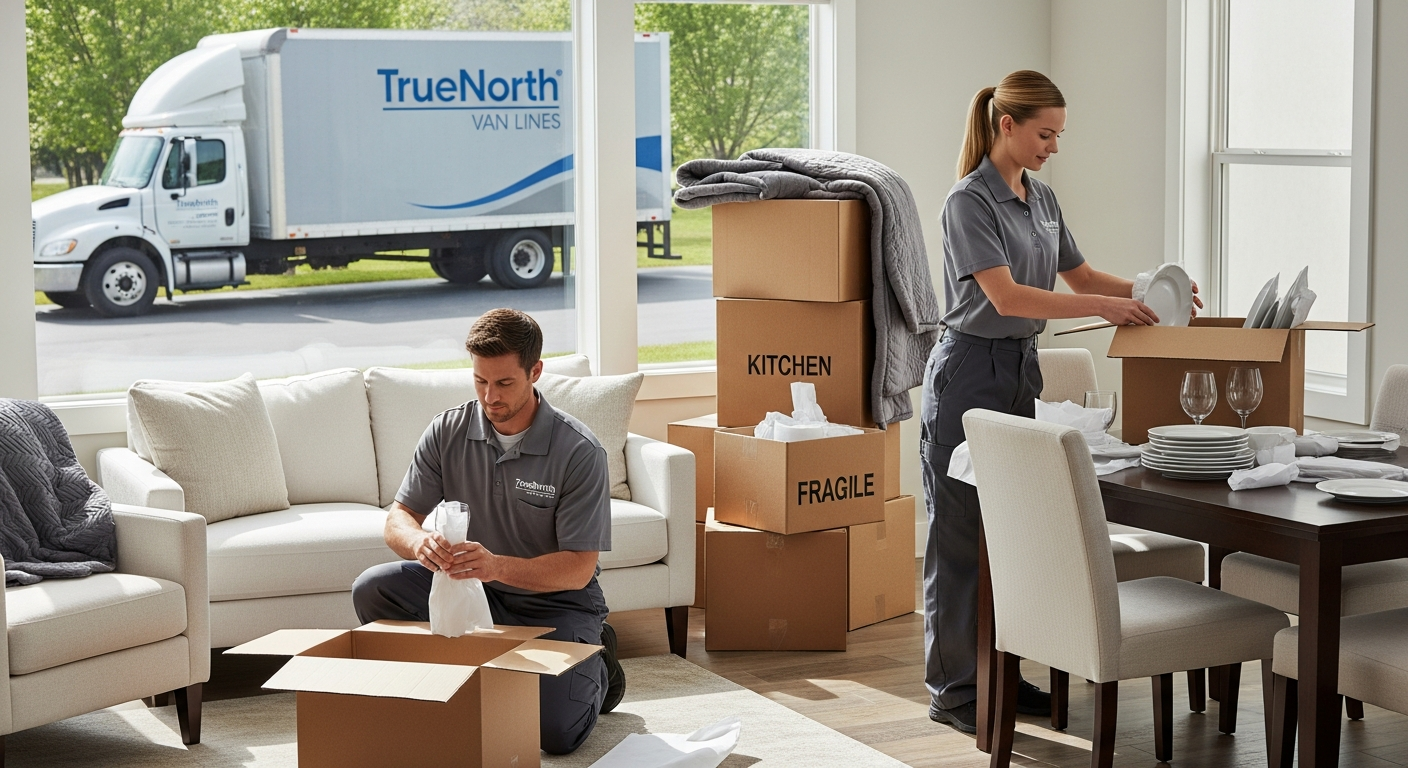
Fragile items are often the things you care about most on moving day: glassware from your wedding, a favorite set of dishes, a passed-down vase, your TV, framed photos, and delicate decor. These pieces are also the most likely to break if they are not packed correctly. A good moving crew can handle them with care, but the way they are boxed and protected is what keeps them safe once the truck is rolling.
Whether you are planning a short local move or a long-distance relocation, knowing how to pack fragile items properly will save you stress, time, and potentially a lot of money. Solid packing is what prevents chips, cracks, and shattered boxes when the road is bumpy or the elevator is tight.
This guide from TrueNorth Van Lines walks you step by step through how to pack fragile items so nothing breaks in transit. You will learn what packing materials to use, how to pack dishes and glassware, the right way to protect electronics and artwork, how to label and load fragile boxes, and how professional packing services can help when you would rather have experts handle it.
Use this as a practical checklist-style field guide as you get ready for moving day. You can do all of the packing yourself, mix your efforts with professional help, or have TrueNorth Van Lines handle everything as a full-service move. The better you plan and pack, the smoother your move will feel.
Key takeaways
- Use sturdy, small to medium boxes for fragile items, and create padding on all sides, not just on top.
- Wrap each fragile item individually, then bundle similar items together with extra cushioning to prevent movement.
- Pack dishes and plates vertically, like records, and fill every gap with paper or soft materials so nothing rattles.
- Original boxes and foam inserts are best for TVs and electronics; if those are not available, use double-wall cartons and rigid padding.
- Clear labels like «Fragile» and «This Side Up» help movers load with care, but proper internal packing is what actually prevents damage.
- Professional packing services can handle your most delicate items when you are short on time or want extra peace of mind.
- Planning your fragile packing 1–2 weeks ahead reduces last-minute rushing and lowers the risk of breakage.
Why packing fragile items correctly matters
Knowing how to pack fragile items is more than an organizational exercise. It directly affects how much you will enjoy your new home after the move. The goal is simple: everything you care about should arrive in the same condition it left.
Even with careful driving and handling, a moving truck will bounce, turn, brake, and climb ramps. Boxes shift, weight stacks up, and small bumps can become big impacts inside a loosely packed carton. That is why packing technique is just as important as the movers you hire.
Here is what proper fragile packing does for you:
- Reduces the risk of chips, cracks, and shattered items.
- Makes loading and unloading faster because boxes are sturdy and stackable.
- Protects sentimental and high-value items that are hard or impossible to replace.
- Makes it easier for your movers to see which boxes need extra care.
- Helps you unpack in an organized way because similar items are grouped and labeled.
At TrueNorth Van Lines, our crews can tell right away when a customer planned and packed carefully versus when fragile items were rushed into random boxes. This guide shows you the same process our professional packers follow, adjusted so you can do it yourself or decide when to ask for help.
Essential packing materials for fragile items
Good materials are the foundation of safe packing. You do not need every specialty product on the market, but you do need quality basics and a planned setup area.
Core materials checklist
- Small and medium moving boxes (preferably double-wall for heavy or very fragile items)
- Packing paper (ink-free, newsprint-style sheets)
- Bubble wrap (small bubbles for glassware, larger bubbles for bigger items)
- Packing tape (quality tape with a tape gun if possible)
- Stretch wrap (for bundling items and protecting furniture surfaces)
- Foam pouches or sleeves (optional but very useful for glasses and plates)
- Corner protectors or foam edging (for mirrors and framed art)
- Permanent markers (black and red for labeling)
- Soft materials you already own (dish towels, linens, clothing for extra gap-filling)
Suggested quantities for a typical 2–3 bedroom home
| Material | Typical amount | Notes |
|---|---|---|
| Small boxes (1.5 cu ft) | 15–25 | Best for books, canned goods, heavy dishes and glassware |
| Medium boxes (3.0 cu ft) | 10–20 | Good for larger kitchen items, decor, lampshades |
| Packing paper bundle | 400–600 sheets | Primary cushioning and wrapping material |
| Bubble wrap roll | 50–100 ft | Use for delicate glass, electronics, artwork |
| Tape rolls | 4–6 | Plan more if you are doing all packing yourself |
Setting up a packing station
Designate one table or counter as your fragile packing station so you are not bending over on the floor for hours. Keep boxes, paper, tape, and markers within arm's reach. Working from a standing-height surface will help you pack more consistently and reduce fatigue, which is a common cause of rushed, risky packing decisions.
How to pack dishes and glassware
The kitchen is usually where people worry most about breakage. Luckily, once you learn the method, packing dishes and glassware becomes a repeatable process.
General rules for kitchen fragiles
- Use small, strong boxes; do not overload them.
- Pad the bottom of each box with at least 2–3 inches of crumpled paper.
- Wrap each piece individually, then bundle similar items together.
- Pack plates and bowls vertically rather than stacked flat.
- Fill all gaps so that nothing shifts when you gently shake the box.
- Clearly label each box with «Kitchen – Fragile – Glassware» or similar wording.
Step-by-step: Packing plates
- Place a stack of packing paper (4–5 sheets) on your table.
- Lay the first plate in the center and fold the corners of the paper up and over the plate until it is fully covered.
- Place a second plate on top of the wrapped first plate and wrap again with fresh sheets.
- Repeat until you have a bundle of 4–5 plates, fully wrapped together.
- Stand the bundle vertically in the box, like records in a crate, against a padded side.
- Add more plate bundles, filling the row tightly, and stuff any side or top gaps with paper.
Step-by-step: Packing bowls and mugs
- For bowls, wrap each piece individually and then nest them 3–4 high with paper between each bowl.
- For mugs, stuff the inside of each mug with crumpled paper before wrapping the outside.
- Place mugs upright in the box with handles alternating directions to fit closely.
- Use extra paper between handles to prevent contact.
Step-by-step: Packing wine glasses and stemware
- Fill the bowl of each glass with a loose ball of paper to support it from the inside.
- Wrap the stem carefully with a separate strip of paper, then wrap the entire glass.
- Use foam sleeves or additional bubble wrap around the outside if the glass is thin or valuable.
- Pack glasses upright in a divided glassware box if possible, or tightly upright in a small box with paper between each piece.
Sample label wording: «Kitchen – Fragile – Wine Glasses – Load on Top»
Example kitchen packing plan by box
| Box label | Contents | Special notes |
|---|---|---|
| Kitchen – Everyday Dishes – Fragile | Dinner plates, salad plates, cereal bowls | Plates and bowls packed vertically, heavy box |
| Kitchen – Glassware – Fragile | Drinking glasses, coffee mugs | Glasses upright, mugs padded between handles |
| Kitchen – Stemware – Fragile – Top Load | Wine glasses, champagne flutes | Extra bubble wrap, light box, marked «Top Load» |
Packing decor, collectibles, and odd-shaped items
Decor and collectibles come in every shape and size, which can make them feel harder to protect. The key is to treat them like mini furniture pieces: protect surfaces, cushion edges, and keep them from moving.
General approach
- Choose boxes that closely match the size of the item once wrapped.
- Wrap surfaces with paper first, then add bubble wrap where needed.
- For hollow or delicate pieces (ceramic figurines, vases), fill the inside with paper before wrapping.
- Use cardboard or foam dividers between items so they cannot collide.
- Label boxes with both the room and what type of items are inside.
Examples of fragile decor packing
| Item type | Packing method | Extra tips |
|---|---|---|
| Ceramic figurines | Wrap in paper, then bubble wrap; pack in small box with dividers | Use plenty of top and side padding, label as «Fragile – Collectibles» |
| Vases | Fill with paper, wrap in bubble wrap, place upright | For tall vases, use a box slightly taller and pad around the neck |
| Small sculptures | Protect protruding parts first, then wrap overall | Consider double-boxing high-value pieces |
Sample note to movers: «Living Room – Fragile Collectibles – Please Keep Upright»
How to pack electronics and TVs
Electronics are both fragile and valuable, and they are especially sensitive to impact and moisture. If you still have the original boxes and foam inserts, use them. If not, you can still pack them safely with the right method.
General electronics packing tips
- Back up important data from computers before moving day.
- Take photos of cable connections so you can reassemble devices later.
- Remove batteries from remotes and accessories to prevent leaks.
- Use antistatic bags if available for components.
- Pack accessories (cables, remotes, mounts) in labeled bags and boxes.
Televisions
- Use a TV-specific carton if possible. Movers like TrueNorth Van Lines can provide these on request.
- Wrap the screen in a soft, lint-free cloth or foam, then use bubble wrap over it.
- Place the TV upright in the box; never lay flat.
- Fill empty space with foam or crumpled paper so the TV cannot move.
- Mark the box «TV – Fragile – This Side Up».
Audio equipment, gaming systems, and computers
- Wrap each component separately in paper and then bubble wrap.
- Use small or medium double-wall boxes; avoid mixing heavy components with lighter fragile items.
- Pack towers and consoles upright with padding on all sides.
- Label each box with both the room and device type for easier setup at your destination.
Packing artwork, mirrors, and lamps
Large flat items and tall, awkward pieces need special attention. Improper packing here is one of the most common sources of moving damage.
Framed art and mirrors
- Use picture cartons or telescoping mirror cartons sized to the frame.
- Apply corner protectors or folded cardboard to frame edges.
- Place a layer of cardboard or foam over the glass before wrapping.
- Wrap the entire piece in paper or bubble wrap, then slide into the carton.
- Pack frames upright, never flat, with tight padding between pieces.
Lamps and lampshades
- Remove the bulb and harp from each lamp.
- Wrap the base in paper and bubble wrap; pack upright in a box with padding.
- Pack lampshades in a separate box with very light items only, no heavy objects on top.
- Stuff shades lightly with paper to help them hold shape.
Fragile packing timeline and planning
Packing fragile items is slower than packing clothing or books. A planned timeline helps you start early enough that you can work carefully instead of rushing the night before movers arrive.
Suggested fragile packing timeline
| Time before move | Fragile packing tasks | Notes |
|---|---|---|
| 3–4 weeks | Sort and declutter decor, extra dish sets, unused glassware | Decide what to donate or sell so you are not packing items you do not need |
| 2–3 weeks | Pack rarely used fragile items and seasonal decor | Start with guest dishes, display pieces, and collectibles |
| 1–2 weeks | Pack most kitchen fragiles, artwork, and mirrors | Keep only a minimal set of everyday dishes out |
| 2–3 days | Pack remaining everyday glasses, dishes, and electronics | Switch to disposable plates if needed for the last days |
For larger homes or long-distance moving, plan even more time. Long-haul trips add vibration and time on the road, so carefully packed boxes are especially important.
Cost factors for packing fragile items
Whether you pack yourself or use professional packing services, there are predictable factors that influence what you will spend. Understanding these helps you plan your moving budget and decide which tasks you want to handle personally.
Key cost factors
- Volume of fragile items (number of boxes needed)
- Type of materials (standard vs. specialty cartons and padding)
- Labor time if you hire professional packers
- Distance of the move (local vs. long-distance moving)
- Access issues (elevators, stairs, long carries)
Typical cost drivers summary
| Factor | How it affects cost | Planning tip |
|---|---|---|
| Number of fragile boxes | More boxes usually mean more materials and labor time | Declutter heavily before packing to reduce volume |
| Specialty cartons (TV, wardrobe, picture) | These cost more but add protection and efficiency | Use specialty boxes for your most valuable pieces |
| Professional packing labor | Labor is usually calculated by time and crew size | Have non-fragile items sorted and ready to speed up work |
You can use the moving cost calculator from TrueNorth Van Lines as a starting point to understand how adding packing services may affect your overall moving budget.
Common fragile packing mistakes and how to avoid them
When people try to move quickly, they often make the same fragile packing mistakes. Recognizing these in advance can help you avoid preventable damage.
Frequent mistakes
- Using boxes that are too large and too heavy.
- Leaving empty space inside boxes so items can move.
- Stacking heavy items on top of delicate glassware.
- Using thin or damaged boxes from previous moves.
- Packing mixed categories together (kitchen glassware with tools).
- Forgetting to label boxes as fragile and note the room.
Mistakes and countermeasures
| Mistake | Risk | Better approach |
|---|---|---|
| Overpacking large boxes with mixed fragile items | Boxes may collapse or crush items inside | Use small boxes and keep each around 40 lbs or less |
| Skipping bottom padding | Impacts transfer directly to the bottommost items | Always add 2–3 inches of crumpled paper before loading items |
| Loose items without individual wrapping | Items collide and chip each other | Wrap each piece individually first, then bundle |
If you find yourself running short on time, prioritize fragile items early. If needed, you can always ask TrueNorth Van Lines to step in and handle the remaining packing for your most delicate possessions.
Working with professional packers
Hiring professional packers is a practical option when you have a busy schedule, a large home, or a lot of delicate items. TrueNorth Van Lines offers professional packing services that can handle everything from a single room of fragile items to your entire home or office.
Situations where packing services make sense
- You are planning a long-distance moving project and want extra protection for a long trip.
- You have a tight schedule between work, family, and closing dates.
- You are moving a lot of fragile items such as fine china, glass decor, and artwork.
- You are coordinating a senior move and want to minimize physical strain.
- You simply prefer a full-service move where professionals handle the details.
What professional packers typically do
- Bring appropriate materials and specialty cartons for your items.
- Wrap each fragile item securely using tested techniques.
- Label boxes clearly by room and contents.
- Coordinate with the moving crew so fragile boxes are loaded and unloaded correctly.
Sample question to ask: «Can you provide a separate packing quote for just my kitchen glassware, artwork, and electronics?»
How to prepare before the movers arrive
Even if you do all of your own packing, a bit of planning before moving day helps your crew handle fragile items smoothly and safely.
Pre-move checklist for fragile items
- Finish packing fragile boxes at least the day before your move.
- Seal and label each box clearly with room, contents, and «Fragile».
- Group fragile boxes in one area of each room so movers see them easily.
- Set aside any high-value or irreplaceable items you plan to move yourself.
- Take photos of especially important items for your records.
- Walk the crew through which boxes need extra care or special handling.
If you choose a full-service move with TrueNorth Van Lines, your move coordinator can help you decide which fragile items our team will pack and what you prefer to handle personally.
What to keep with you on moving day
Not everything should go into the moving truck. Some fragile or important items are better kept with you, especially on long drives or when you will not arrive at your new home the same day.
Items to transport yourself when possible
- Jewelry, watches, and small valuables
- Important documents (IDs, passports, financial records, closing papers)
- Sentimental small items such as heirloom rings or keepsakes
- Small electronics such as laptops, tablets, and backup drives
- Prescription medications and medical devices
- One box of «first-night» essentials (a few dishes, mugs, and basic kitchen items)
Sample label: «Open First – Kitchen Essentials – Travel with Owner»
Comparing local, long-distance, packing, and storage services
How carefully you plan your fragile packing also depends on the type of move you are planning. A short, simple local move may allow more flexibility, while long-distance moving often calls for extra padding and professional support.
Local vs. long-distance moving for fragile items
- Local moves: Shorter transit times and fewer bumps, but tight stairwells and elevators still pose risks. You may choose to do more of your own packing for these moves.
- Long-distance moves: More time on the road, multiple handling points, and greater vibration. Professional packing can be a smart investment to protect fragile items from start to finish.
TrueNorth Van Lines provides both local moving services and long-distance moving services, so your fragile packing plan can be tailored to the specific move you are planning.
Packing and storage options
- Handle all packing yourself, using this guide and buying your own materials.
- Use partial packing services for just your most fragile rooms (kitchen, artwork, electronics).
- Choose full packing services where the movers pack your entire home.
- Add secure storage services if your items need to be held between move-out and move-in dates.
Helpful TrueNorth Van Lines services
Key questions to ask before booking a mover
When you are comparing moving companies, you want to understand exactly how they will handle your fragile items. Here are practical questions you can ask during your estimate.
Questions about fragile packing and handling
- Do you offer professional packing services for dishes, glassware, artwork, and electronics, and can I choose just certain rooms?
- What types of boxes and packing materials do you use for fragile items?
- How are fragile boxes labeled and loaded on the truck?
- Are your crews trained specifically in packing and handling delicate items?
- What valuation or protection options are available for high-value items?
Questions about estimates and pricing
- Is my estimate based on time, weight, volume, or a combination?
- How is packing labor charged if I add it to my move?
- Are packing materials included or billed separately?
- What information do you need from me to create the most accurate estimate?
You can review general information about TrueNorth Van Lines on the about page, browse customer experiences on the reviews page, and explore all available moving services before you decide.
Frequently asked questions
How early should I start packing fragile items before my move?
For most homes, start packing fragile items 2–3 weeks before moving day. Begin with decor and rarely used dishes, then pack everyday glassware and plates in the final few days. Starting early gives you time to wrap each piece carefully.
What kind of boxes are best for fragile items?
Small and medium moving boxes are best for fragile items. They are easier to carry and less likely to collapse under weight. For heavy dishes and glassware, double-wall cartons add extra strength. Avoid oversized boxes for fragile items.
How do I pack dishes so they do not break?
Add padding to the bottom of the box, wrap each dish individually, and pack plates vertically like records rather than stacked flat. Fill all gaps with paper so nothing moves. Label the box «Kitchen – Fragile – Dishes» and avoid stacking very heavy boxes on top.
Should I use bubble wrap or packing paper for glassware?
Packing paper is usually enough for everyday glassware if you use multiple layers and pack tightly. For thin or valuable glass, combine paper with bubble wrap or foam sleeves. Paper offers flexibility and fills gaps, while bubble wrap adds extra impact protection.
Can movers pack my fragile items for me?
Yes. Companies like TrueNorth Van Lines offer professional packing for fragile items, from just your kitchen and decor to your entire home. You can schedule packers for the day before your move and decide which rooms or item types you want them to handle.
How should I label fragile boxes?
Write the room, general contents, and «Fragile» on at least two sides and the top of each box. For example: «Kitchen – Fragile – Wine Glasses – Top Load.» Clear labels help the crew identify fragile items quickly when loading and unloading.
What fragile items should I move myself?
Keep small valuables, important documents, jewelry, some electronics, and sentimental items with you if possible. Also consider carrying a small box of first-night kitchen essentials so you can settle in before you unpack fully.
Is packing different for long-distance moves?
The basic techniques are the same, but long-distance moving usually calls for more padding and sturdier boxes because items spend more time on the road. Many customers choose professional packing for their most fragile pieces on long-distance moves for added peace of mind.
What if I run out of time to pack fragile items?
If you are running short on time, prioritize your most delicate and valuable items first. You can also contact TrueNorth Van Lines to add partial packing services for remaining fragile rooms so professionals can finish the job before moving day.
How can I estimate the cost of packing services?
Packing costs are based on the volume of items, materials used, and labor time. You can use the TrueNorth Van Lines moving cost calculator as a starting point and then request a free moving quote that includes optional packing services.
Sources referenced in this guide
Safe packing practices in this guide are informed by guidance and documents commonly used in the moving industry, including:
- Federal Motor Carrier Safety Administration consumer guidance for household moves
- U.S. Department of Transportation moving guidance
- State transportation and consumer protection agency recommendations
- Building management move-in and move-out rules and elevator reservation requirements
- Written moving estimates, bills of lading, and valuation options provided by household goods carriers
- Carrier tariffs and service agreements that describe how items are packed, handled, and transported
How TrueNorth Van Lines can help
Packing fragile items well takes time, focus, and the right materials. If you would rather have experienced professionals handle the most delicate parts of your move, TrueNorth Van Lines can step in with organized, careful crews and a service plan that fits your schedule.
We provide residential and commercial moving support, including local moves, long-distance moving, packing, storage, apartment and house moves, office relocations, and senior moving. You can explore all available options on our main moving services page, check that your origin and destination are within our service areas, and review recent experiences on the reviews page.
When you are ready to plan your move, you can use the online moving cost calculator to get a rough idea of your budget and then request a free moving quote. Let your move coordinator know that protecting fragile items is a priority so your estimate and move plan reflect the level of packing support you want.
Related moving guides
For additional planning ideas, packing tips, and move checklists, you can also visit the TrueNorth Van Lines blog as you prepare.
This guide is general moving information, not legal, insurance, or regulatory advice. Moving requirements, pricing, access rules, and coverage options may vary by location, move type, building rules, and service agreement.