
Moving Truck Parking Permits in Los Angeles: Step-by-Step
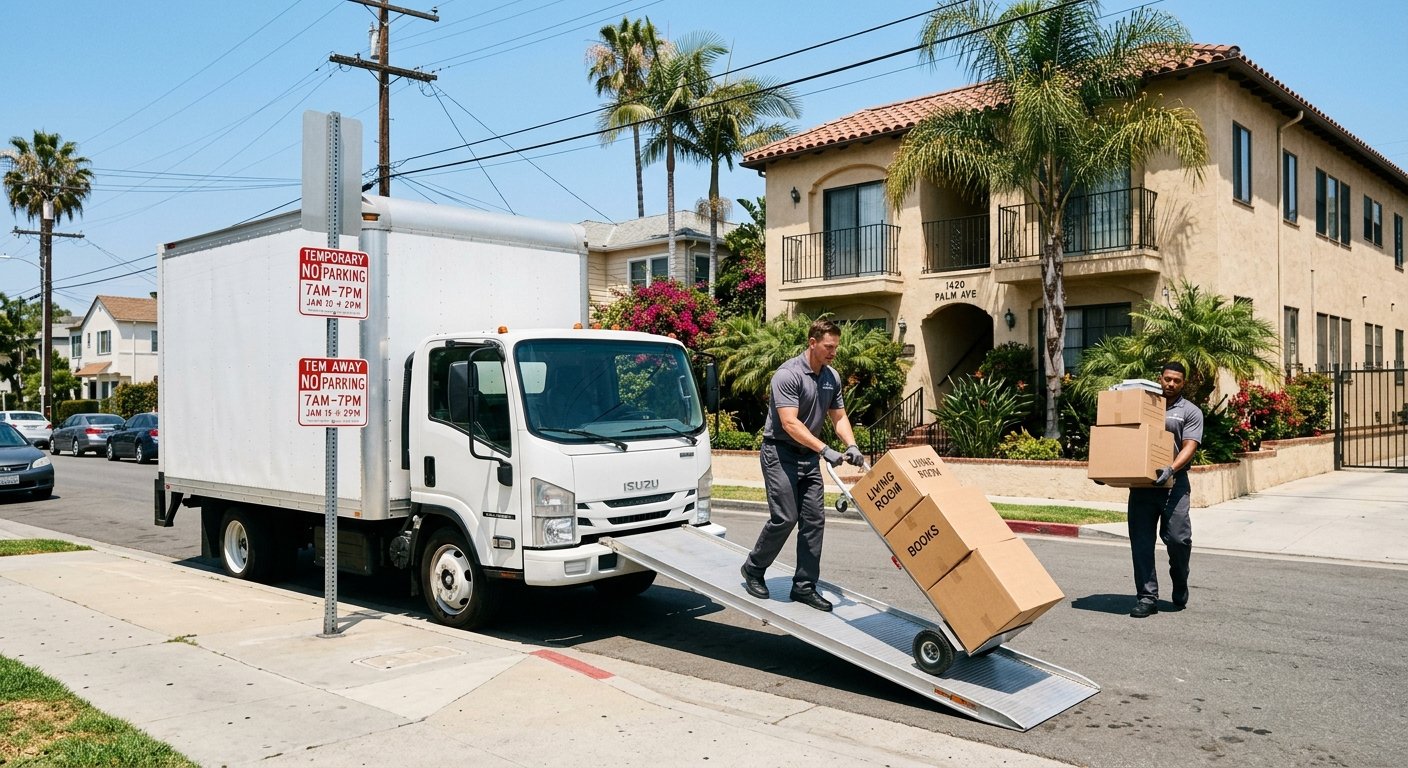
In Los Angeles, the hardest part of moving often is not packing the boxes or loading the truck. It is figuring out where that truck can legally park without getting ticketed, towed, or blocked in by a line of cars. Between narrow residential streets, crowded apartment zones, and strict parking rules, a good moving truck parking plan can be the difference between a smooth move and an expensive, stressful day.
Many LA customers are surprised to learn that they may need a temporary no parking permit or a specific loading zone just for moving day. Without one, your crew could end up carrying furniture half a block, fighting with neighbors over curb space, or watching a parking enforcement officer write a ticket while your belongings sit on the sidewalk.
This guide walks through moving truck parking permits in Los Angeles step-by-step. You will learn how LA temporary no parking permits usually work, what is typically required by building managers, how to plan the timing, and how to coordinate your mover so the crew, truck, and parking window all line up. Throughout, we will also point out where a professional mover like TrueNorth Van Lines can support you with planning and local experience.
Use this as a practical game plan: you will find timelines, checklists, example conversations with your property manager, and simple tables to help you compare options and costs. The goal is not just to avoid tickets, but to keep your move safer, faster, and more predictable.
Key takeaways
- In Los Angeles, moving truck parking is rarely a last-minute detail. Treat it as one of the first parts of your moving plan.
- Many neighborhoods and buildings expect you to arrange a temporary no parking permit or designate a loading area before movers arrive.
- Poor parking access can easily add one to three extra hours to a move, which directly increases labor cost.
- Always confirm permit rules, time windows, and truck size limits with both your property manager and your mover well in advance.
- Have a backup parking plan in case your reserved curb space is blocked when the truck arrives.
- Written moving estimates should clearly show access or parking surcharges so there are no surprises on moving day.
- A professional mover used to Los Angeles streets can help you plan realistic parking, truck sizes, and load times.
Why moving truck parking matters in Los Angeles
Los Angeles is a driving city, but that does not mean parking is simple. Densely packed apartment zones, steep hills, narrow side streets, and strict street-cleaning rules all affect moving trucks. Unlike a personal car, a moving truck is large, heavy, and often needs several hours at the curb.
Ignoring parking details can lead to:
- Parking citations or towing fees for the truck.
- Long carries down the block that slow your move.
- Safety risks when movers are crossing active driveways or streets with furniture.
- Frustrated neighbors who find their driveways or vehicles blocked.
- Rescheduled elevator or dock reservations that incur extra charges.
When you book a move with a company such as TrueNorth Van Lines for local moving services, the crew will plan for access and loading conditions. However, only you or your building management can usually arrange official LADOT temporary no parking permits or building-specific loading reservations. That means the best results come from a coordinated plan.
Parking is not just about avoiding tickets. It is also a matter of efficiency: the closer the truck is to your door, the faster the job goes and the less your crew needs to maneuver large items through traffic or tight spaces.
How LA moving truck parking permits typically work
Los Angeles has structured systems for temporary parking changes, including moving truck loading zones and temporary no stopping or no parking signs. Exact rules and processes can vary by neighborhood, type of street, and whether the space is metered, residential permit-only, or unrestricted.
While the detailed process and fees can change over time, most temporary moving-related permits involve similar elements:
- A defined date and time window for the reserved curb area.
- Specific length of curb or number of spaces you are reserving.
- Requirements for how and when signs must be posted in advance.
- Rules about blocking driveways, bus stops, bike lanes, or fire hydrants (almost always prohibited).
Because of these variables, it is smart to carefully review current LADOT temporary no parking rules or speak with local transportation or consumer agencies before your move. A moving consultant at TrueNorth Van Lines can help you understand what information we need about your street and building so we can plan truck size and timing around your permit window.
Typical information your mover needs about permits
- Exact address and which side of the street the truck should use.
- Permit start and end times, including any buffer you requested.
- Any weight or length limits on your street or driveway.
- Whether cones, barricades, or signs will be in place when the truck arrives.
- Where the truck should stage if someone is still parked in your reserved zone.
\