
NorCal to SoCal: Moving From San Francisco Back to LA
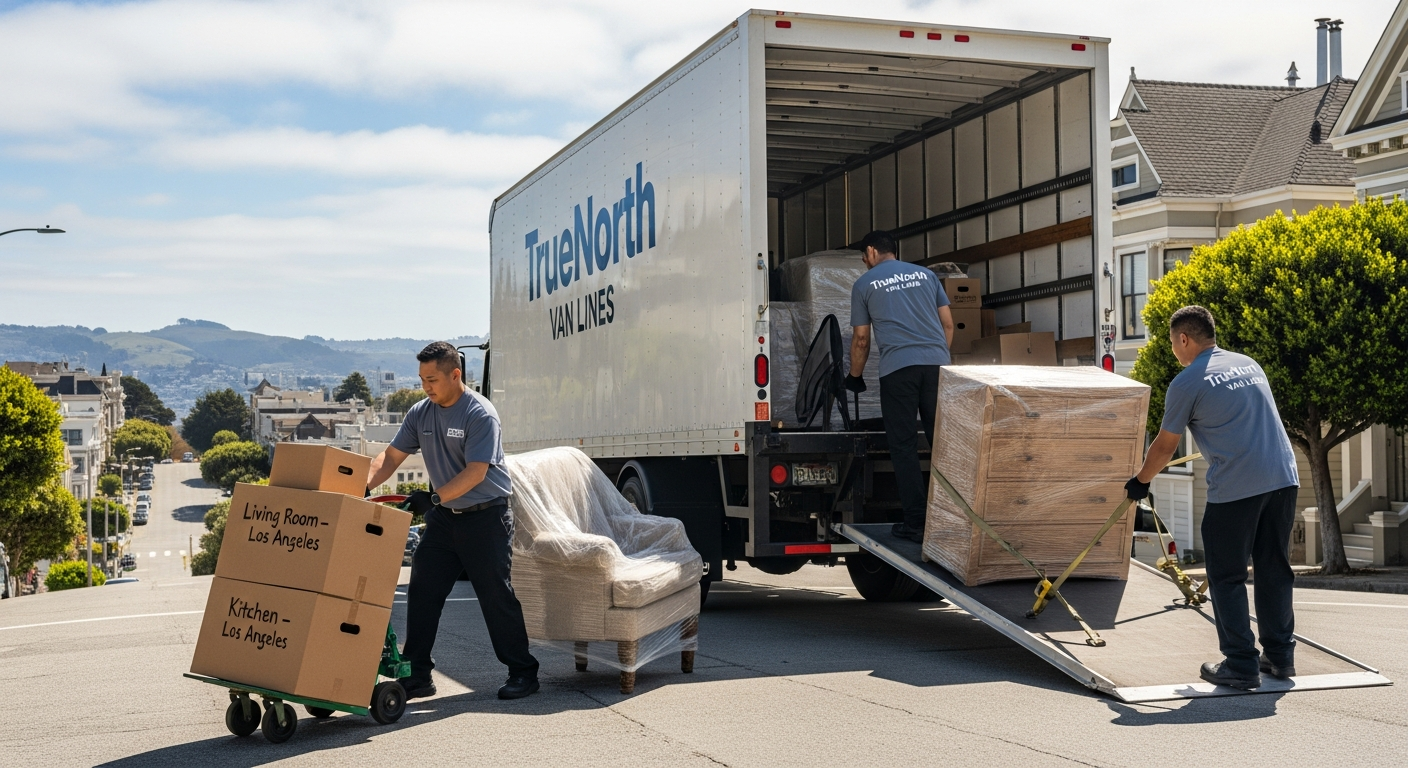
Moving from San Francisco back to Los Angeles is one of the most common NorCal to SoCal routes, but that does not make it simple. Between Bay Area parking rules, LA traffic, building elevators, and timing your move-out and move-in dates, there are many details that can add stress and unexpected cost if they are not carefully planned.
Whether you are returning home, relocating for work, or consolidating offices, a structured plan is the difference between a smooth long-distance move and a chaotic one. The San Francisco to Los Angeles corridor is familiar territory for professional movers like TrueNorth Van Lines, but every shipment is unique: apartment versus house, high-rise versus single-family, students versus families, and office versus warehouse.
This guide walks you through how to plan a move from San Francisco to Los Angeles step-by-step: when to book, what affects your price, how to prepare for city access on both ends, how to compare moving estimates, what you should pack yourself, and how full-service options like packing and storage can make the process easier. You will also see sample timelines, cost factors, and checklists you can adapt to your own situation.
Throughout the guide, we will reference how TrueNorth Van Lines approaches this route so you can see what to expect from a professional, licensed, and insured moving company. You can use this information to plan your move and decide which level of service is right for you.
Key takeaways
- Start planning your move from San Francisco to Los Angeles 6–8 weeks ahead to secure dates, parking permissions, and elevator reservations.
- Cost is driven by shipment size, access conditions in both cities, distance, service level (self-pack vs. full service), and timing (summer and weekends cost more).
- Detailed inventories, photos, or video surveys help movers provide accurate, transparent long-distance estimates for the SF to LA corridor.
- Deciding early between self-packing and professional packing services will determine how much time you need before moving day.
- Reserve elevators, loading docks, and parking in San Francisco and Los Angeles to avoid delays and extra handling.
- Keep essentials, documents, medications, and high-value items with you rather than on the moving truck.
- A licensed, insured mover like TrueNorth Van Lines can coordinate packing, transport, and storage for a streamlined NorCal to SoCal relocation.
San Francisco to Los Angeles route overview
Moving from San Francisco to Los Angeles is a long-distance intrastate move within California, typically running roughly 380–420 miles depending on which part of each metro area you are in and which route your movers use (I-5 or Highway 101). While it is technically one state, logistics feel very similar to a shorter interstate move because your belongings will be loaded, transported hundreds of miles, and unloaded on different days.
TrueNorth Van Lines regularly handles moves along this corridor, including:
- High-rise apartments and condos in San Francisco to single-family homes in Los Angeles suburbs
- San Francisco houses to downtown Los Angeles or westside apartments
- Student moves between Bay Area universities and Southern California campuses
- Office and commercial relocations between the Bay Area and greater LA region
Why this route needs special planning
Even though the trip itself can be driven in a day, several factors make planning essential:
- City access challenges: San Francisco hills, tight streets, and limited parking; Los Angeles alleys, gated communities, and HOA rules.
- Building rules: Many SF and LA buildings require certificates of insurance, move reservations, or restrict move hours.
- Volume and timing: Your shipment may go direct or travel with other shipments depending on size, date flexibility, and service plan.
- Weather and traffic: Fog, heat, and heavy traffic corridors can influence pickup and delivery windows.
Planning for these variables up front helps you set realistic expectations about pickup, transit, and delivery timing, and helps the moving crew arrive prepared with the right truck, equipment, and staffing.
Recommended timeline for an SF to LA move
Below is a sample planning timeline you can adapt to your own move. Every situation is different, but this gives you a sense of how to structure your tasks.
| Time before move | Key tasks | Notes for SF to LA moves |
|---|---|---|
| 6–8 weeks | Research movers, request quotes, decide service level, start decluttering. | Ask about long-distance moving services specifically for SF to LA. |
| 4–5 weeks | Lock in your mover and dates, confirm building requirements, order packing supplies. | Reserve elevators and loading zones at both locations. |
| 2–3 weeks | Begin packing non-essentials, label boxes, confirm details with mover. | Review parking and access on narrow SF streets or LA alleys. |
| 1 week | Finish most packing, set aside essentials, disassemble larger furniture if self-prepping. | Confirm arrival windows and contact numbers with your mover. |
| Day before | Empty and defrost fridge, confirm elevator times, stage items for loading. | Walk through the building routes from unit to truck. |
| Move day | Walk through with crew, verify inventory, sign paperwork, oversee load. | Keep valuables, keys, and documents with you. |
Key checklist items along this timeline
- Confirm whether your move will be a direct load-to-delivery or part of a scheduled run.
- Review your building or HOA moving rules in both San Francisco and Los Angeles.
- Plan your own travel (driving or flying) to align with pickup and delivery windows.
- Update utilities, internet, and address changes so you are ready to live in your new LA home.
What affects the cost of moving from San Francisco to Los Angeles
Long-distance moving prices are driven by a combination of shipment size, distance, labor, and specific service needs. For a move from San Francisco to Los Angeles, expect your quote to reflect at least the following elements.
| Cost factor | How it influences price | Planning tips |
|---|---|---|
| Shipment size (volume/weight) | More furniture and boxes increase truck space, labor time, and fuel costs. | Declutter and donate before requesting quotes. |
| Distance and routing | Mileage between San Francisco and LA and route complexity affect travel time and fuel. | Flexible dates can help your mover plan efficient routes. |
| Access at origin/destination | Stairs, long walks, limited parking, and shuttles add labor and time. | Describe access honestly so crews are staffed correctly. |
| Packing level | Full or partial packing requires additional materials and labor. | Decide early if you want professional packing services. |
| Season and day of week | Summer, month-end, and weekends are higher-demand and often higher-priced. | If possible, target mid-month or weekdays. |
| Special handling | Pianos, safes, artwork, and delicate items add specialized labor and materials. | Tell your mover about special items during the quote process. |
For a rough planning snapshot, many customers use the TrueNorth Van Lines moving cost calculator to understand how changes in shipment size or service level impact estimated costs before finalizing dates.
Understanding estimate types
Ask your mover what type of estimate you are receiving:
- Non-binding estimate: Based on estimated weight or volume; final charges may change based on actual shipment.
- Binding estimate: A set price for listed services and inventory; changes only if you add services or items.
- Not-to-exceed (or similar) estimate: You pay the lower of actual charges or the maximum in the estimate, subject to stated terms.
Sample wording to ask your mover:
«Can you explain whether this is a binding or non-binding estimate and what would cause the final price to change for my San Francisco to Los Angeles move?»
Choosing the right moving services for your SF to LA move
TrueNorth Van Lines offers different service levels for moving from San Francisco to Los Angeles so you can match cost, convenience, and your own time availability.
| Service level | What is included | Best for |
|---|---|---|
| Standard long-distance move | Professional loading, transport, unloading. You pack most boxes; movers protect furniture. | Budget-conscious moves and small households with time to pack. |
| Partial packing add-on | Crew packs fragile or high-value items (kitchen, artwork), you pack the rest. | Busy professionals, families with young children, or heavy kitchen/fragile items. |
| Full-service packing | Movers pack nearly everything, label boxes, and can unpack at destination. | Time-sensitive relocations, executive moves, seniors, and those moving on short notice. |
| Storage plus move | Items are picked up, stored securely, then delivered to your LA home when ready. | Gap between SF move-out and LA move-in, remodels, or temporary housing. |
If you are still deciding between options, review the main TrueNorth Van Lines moving services overview, including dedicated pages for local moving services, long-distance moving services, professional packing services, and secure storage services.
Residential vs. commercial SF to LA moves
While the distance is similar, residential and office moves have different priorities:
- Residential moves: Focus on protecting sentimental items, minimizing downtime for your family, and coordinating utilities and schools.
- Office and commercial moves: Focus on minimizing business interruption, coordinating IT and equipment, and scheduling after-hours moves when needed.
TrueNorth Van Lines is experienced with both household and office moving and can adjust crew size and scheduling accordingly.
How to compare long-distance moving estimates
When you are comparing quotes for moving from San Francisco to Los Angeles, it is important to look beyond the bottom-line number. Break down what each estimate actually includes so you can compare on equal terms.
Checklist for reviewing estimates
- Is the estimate based on an in-home or virtual survey rather than a quick phone guess?
- Is every major item listed on the inventory or described generally (e.g., «queen bed», «sectional sofa»)?
- Does the quote clearly indicate whether packing services and materials are included or optional?
- Are access conditions described (stairs, elevator, long carry, shuttles) and priced in?
- Are valuation/coverage options explained so you understand protection for your belongings?
- Are fuel, tolls, and basic labor included, or are there separate surcharges?
Sample wording to clarify with a mover:
«Can you walk me through what is included in this price for my SF to LA move, especially packing, stair carries, and any potential additional fees?»
Red flags to watch out for
- Significantly lower estimates without a detailed inventory or written terms.
- Refusal to provide a written estimate or clear service description.
- Vague or missing information about licensing, insurance, or valuation protection.
- Demands for very large cash deposits with no clear schedule or documentation.
Taking time to evaluate estimates can save you money and stress on moving day.
How to prepare your San Francisco home before movers arrive
The more prepared your San Francisco residence is, the smoother loading will be and the better your movers can protect your belongings and your building. This is especially important in dense neighborhoods and older buildings where space is tight.
Two to three weeks before pickup
- Confirm your move date and arrival window with your mover in writing.
- Speak with your building manager or HOA about move requirements.
- Reserve elevators and loading docks for several hours longer than you think you will need.
- Ask if your mover needs to provide a certificate of insurance to the building.
- Begin packing items you do not use daily and label them clearly by room.
Access and parking in San Francisco
Describe your access situation clearly to your mover so they can plan the right truck size and equipment:
- Is your street steep, narrow, or restricted for large vehicles?
- Is there a driveway, garage, or loading zone nearby?
- Will a smaller shuttle truck be needed to reach your front door?
Some customers coordinate with their building or city parking to reserve curb space or obtain temporary permits when necessary. Providing photos or a short video of the street and entryway can help your mover determine the best approach.
Day-before checklist
- Finish most packing except daily essentials.
- Empty and defrost your refrigerator and freezer.
- Disconnect and secure appliances according to manufacturer guidelines.
- Gather keys, fobs, garage openers, and important documents in one safe place.
- Set aside personal bags and valuables that will travel with you.
Packing strategy for a NorCal to SoCal relocation
A move from San Francisco to Los Angeles is long enough that your belongings will be on the truck for a full day or more. Good packing reduces the risk of damage and makes loading more efficient.
Self-packing vs. professional packing
If you plan to pack yourself, focus on what you can reasonably accomplish before move day. Many customers find a hybrid approach works best: they handle clothing, books, and linens while professional crews pack the kitchen and fragile décor.
| Room/Item type | Recommended approach | Notes for SF to LA moves |
|---|---|---|
| Clothing & linens | Self-pack in medium boxes or wardrobe cartons. | Avoid overloading large boxes; weight can add up quickly. |
| Books & media | Use small boxes only; keep them light. | Label by room so crews stack them efficiently. |
| Kitchen & dishes | Consider professional packing services for fragile items. | Extra vibration on the highway makes good padding important. |
| Artwork & mirrors | Custom picture cartons and professional wrapping recommended. | Tell your mover if you have large or fragile pieces. |
If you prefer to hand off most of this work, TrueNorth Van Lines offers professional packing services that can be scheduled the day before or the morning of your move, depending on shipment size.
Labeling and inventory tips
- Label each box with its destination room in the LA home, not just where it came from in San Francisco.
- Use a simple numbering system and keep a basic inventory for boxes with high-value or critical items.
- Mark boxes «Open first» for essentials like bedding, towels, basic cookware, and work gear.
- Clearly note «Fragile» on boxes and which side should face up.
What to keep with you and what moving day looks like
On moving day in San Francisco, your movers will arrive within the scheduled window, walk through your home with you, and review the plan. Expect to sign standard paperwork such as a bill of lading and confirm contact information for delivery in Los Angeles.
Items to keep with you
Certain items are better transported with you rather than on the moving truck, especially for a long-distance route like San Francisco to Los Angeles.
- Wallets, IDs, passports, and other personal documents
- Lease, closing documents, and moving paperwork
- Medications and basic first aid
- Electronics you will need immediately (laptops, chargers)
- Small, irreplaceable items with sentimental value
- One to three days of clothing and toiletries for each family member
- Pet supplies, leashes, and travel carriers
What to expect during loading
- The crew will protect floors and doorways as needed.
- Furniture will be padded and wrapped before being moved toward the truck.
- Boxes and items will be staged near the truck if space is tight.
- Large pieces may be disassembled to move safely.
- The driver or crew leader will maintain an inventory as items go onto the truck.
Upon arrival in Los Angeles, the crew will repeat a walkthrough, confirm room labels, and place items in the correct rooms so you can start settling in quickly.
Common SF to LA moving mistakes and how to avoid them
Moves along this route often run into the same avoidable issues. Use the following list as a quick risk checklist.
| Common mistake | Potential impact | Better approach |
|---|---|---|
| Booking too late during peak season | Limited date options, higher rates, rushed decisions. | Book 6–8 weeks out for summer or month-end moves. |
| Underestimating inventory | Surprise costs or not enough truck space on move day. | Provide an accurate list or use video surveys with your mover. |
| Ignoring building rules | Delays, fines, or denied access by management. | Confirm rules early and share them with your mover. |
| Last-minute packing | Prolonged loading time, higher stress, potential rush damage. | Finish most packing at least one day before, or add packing help. |
Quick checklist to avoid problems
- Confirm elevators and parking 3–5 days before move day.
- Walk your mover through any fragile or high-value items in person.
- Review your estimate and terms again before the crew arrives.
- Have payment method agreed upon ahead of time (card, check, etc., as applicable).
Helpful TrueNorth Van Lines services
How TrueNorth Van Lines supports SF to LA moves
TrueNorth Van Lines is a licensed and insured moving company providing professional long-distance moving services for customers going from San Francisco to Los Angeles and other NorCal to SoCal routes. The focus is on careful planning, organized crews, and clear communication so you know what to expect at each step.
Approach to long-distance moves within California
- Detailed pre-move consultation: A move coordinator reviews your inventory, access conditions, and timing needs to recommend the right service level.
- Route familiarity: Crews and drivers regularly operate between San Francisco and Los Angeles, which helps with planning around traffic, hills, and building logistics.
- Packing and protection: Furniture is wrapped and protected, and optional packing services are available for anything from a few fragile boxes to full-service packing.
- Storage flexibility: If your new LA home is not ready on your move-out date, TrueNorth Van Lines can arrange secure storage with coordinated delivery once you have your keys.
To better understand what other customers have experienced, you can review the TrueNorth Van Lines story and customer feedback on the about page and reviews section.
Planning your specific San Francisco to Los Angeles move
Because every move is different, a brief conversation with a moving consultant is often the fastest way to build a realistic, planned approach. You can outline whether you are moving a studio, multi-bedroom house, or office; whether you prefer self-packing or a full-service option; and what your ideal pickup and delivery windows look like.
From there, TrueNorth Van Lines can provide a written estimate for long-distance moving services for your SF to LA route and suggest any helpful additions like packing or storage if there is a timing gap between homes.
Frequently asked questions
How far in advance should I book my move from San Francisco to Los Angeles?
For most SF to LA moves, booking 6–8 weeks ahead gives you the best choice of dates, especially during summer or month-end. Short-notice bookings may still be possible depending on availability, but planning earlier helps secure elevator reservations, parking, and coordinated timing between both cities.
Is moving from San Francisco to Los Angeles considered long-distance?
Yes. Even though both cities are in California, most customers treat this as a long-distance or intrastate move because it involves several hundred miles of transport, usually with different pickup and delivery days. Planning and protection are similar to a shorter interstate move.
How long does it take for my things to arrive in Los Angeles?
Transit time for a San Francisco to Los Angeles move is commonly within one to a few days, depending on your exact schedule, shipment size, and route planning. Your mover will give you expected pickup and delivery windows and update you if timing changes due to traffic or access factors.
Can I move from San Francisco to LA over a weekend?
Many customers prefer Friday or weekend moves to limit time off work. Weekend options are often available but can book up quickly during busy seasons. If weekend timing is important, mention it early when you request your estimate so your mover can plan accordingly.
Should I pack myself or use professional packing for an SF to LA move?
It depends on your time, budget, and comfort level. Self-packing can lower cost if done carefully and early. Professional packing is worth considering for fragile kitchens, artwork, and time-sensitive moves. Many people choose a hybrid approach, packing most items themselves while adding packing services for breakables.
What should I do about parking and elevators in San Francisco and Los Angeles?
Contact your building or HOA at both ends to confirm moving rules, elevator reservations, and loading areas. Share this information with your mover well before move day. In some cases, your mover may recommend a smaller shuttle truck or extra crew members to manage long walks or tight access.
How can I estimate the cost of moving from San Francisco to LA?
Costs depend on shipment size, access, service level, and timing. For early planning, many customers use the TrueNorth Van Lines moving cost calculator and then request a detailed quote based on a more complete inventory and discussion of access conditions.
What areas around Los Angeles does TrueNorth Van Lines serve?
TrueNorth Van Lines serves many parts of the greater LA region, including city neighborhoods and surrounding suburbs. You can review current coverage on the company's service areas page or discuss your specific address when you request a quote for your San Francisco to Los Angeles move.
Can TrueNorth Van Lines store my items if my LA home is not ready?
Yes, storage can be combined with your move so that your belongings are picked up in San Francisco, stored securely, and then delivered when your Los Angeles home or office is ready. This is common when there is a gap between leases, during renovations, or when waiting for closing dates.
How do I get a quote for my San Francisco to LA move?
You can request a free moving quote from TrueNorth Van Lines by providing basic move details and preferred dates. A moving consultant will follow up to review your inventory, discuss service options, and provide a written estimate tailored to your NorCal to SoCal relocation.
Sources referenced in this guide
Planning a long-distance move within California involves transportation rules, consumer protections, and contractual documents. While this guide focuses on practical steps, you may also encounter information from:
- Federal Motor Carrier Safety Administration consumer guidance
- U.S. Department of Transportation moving guidance
- State transportation or consumer protection agencies
- Building management move-in and move-out requirements
- Written moving estimates, orders for service, and bills of lading
- Carrier tariffs, valuation options, and service agreements
These resources, along with your written estimate and service agreement from your mover, will help you understand your rights, responsibilities, and available options for your move from San Francisco to Los Angeles.
Next steps: Turn your plan into a scheduled move
Once you have a rough inventory, target dates, and a sense of your budget, the next step is to speak with a professional mover who regularly handles the San Francisco to Los Angeles route. A short conversation can clarify which services you need and how to time your move so it fits your lease, work schedule, or business operations.
To move from planning to booking, you can explore TrueNorth Van Lines moving services, review the service areas for your specific locations, use the moving cost calculator for early budgeting, and then request a free moving quote tailored to your SF to LA relocation.
This guide is general moving information, not legal, insurance, or regulatory advice. Moving requirements, pricing, access rules, and coverage options may vary by location, move type, building rules, and service agreement.
Related moving guides