
How to Book a Service Elevator for Your LA High-Rise Move
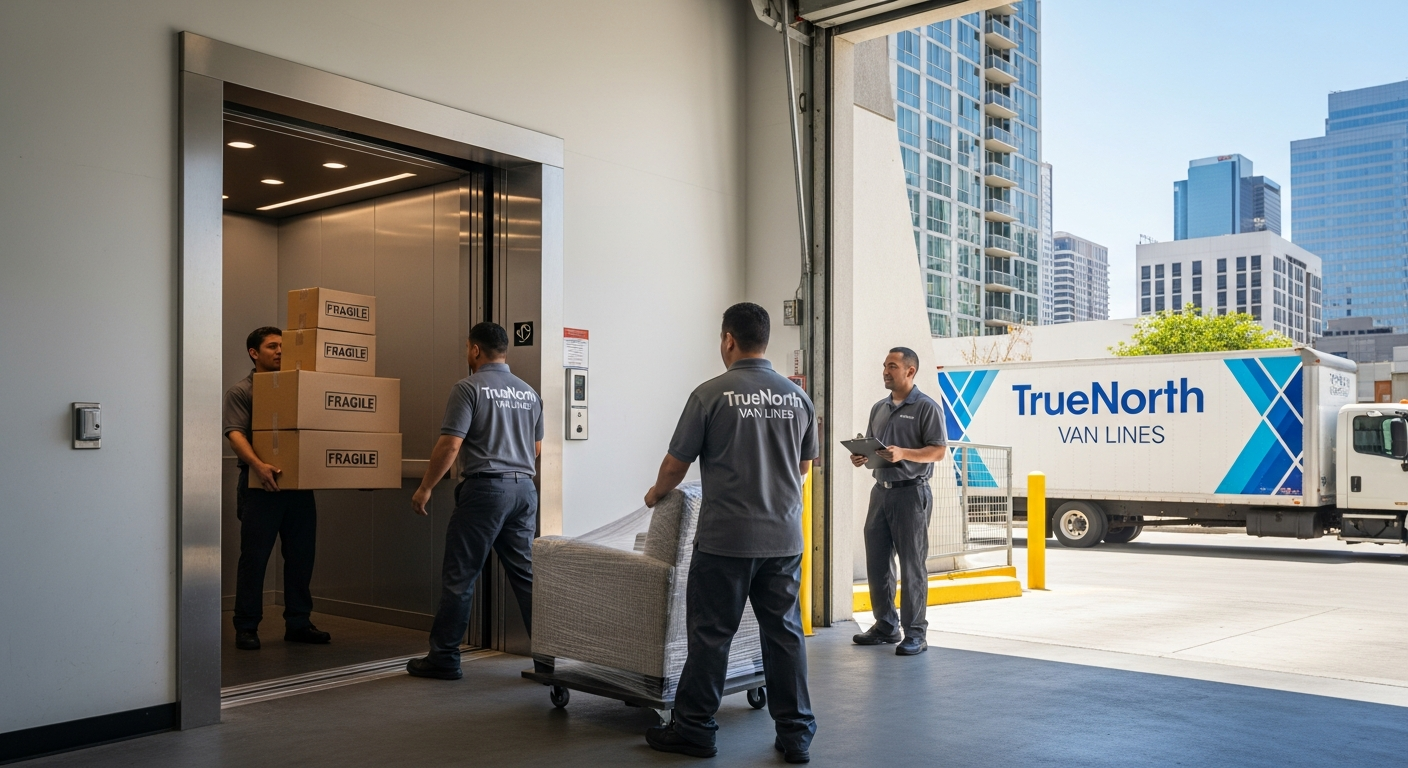
Moving into or out of a Los Angeles high-rise comes with a challenge most people do not think about until it is almost too late: the service elevator and loading dock. In many LA towers, you cannot just show up with a moving truck and start loading. You need a reserved time window, approved movers, proof of insurance, and protection on floors and elevator walls.
When that planning is done well, your move feels organized and efficient. When it is missed, you can face last-minute rescheduling fees, frustrated building staff, and movers waiting on the clock while the elevator is tied up by other residents.
This guide walks you through how to book a service elevator for your LA high-rise move, how to coordinate with your building and movers, and what to do differently if you are using local moving services like those from TrueNorth Van Lines. You will find step-by-step timelines, checklists, sample emails to building management, and realistic expectations about costs and policies.
Use this as a working plan whether you are moving from a downtown Los Angeles apartment, a West LA high-rise condo, or a senior residence with strict elevator rules. The more you prepare, the smoother moving day will be for you, your movers, and your building.
Key takeaways
- Contact your building 3–4 weeks before moving to reserve the service elevator and loading dock; earlier for end-of-month dates.
- Ask for written building moving rules, required forms, and insurance limits so your movers can provide correct documentation.
- Coordinate times carefully so your movers, service elevator slot, and truck parking all line up without costly downtime.
- Protect furniture and building surfaces with pads, shrink wrap, and floor runners; many buildings require this.
- Use a detailed inventory and color labels so movers can load the elevator efficiently and keep trips to a minimum.
- Plan for LA traffic and high-rise congestion; schedule morning moves where possible for smoother access.
- Work with licensed, insured local movers who are familiar with high-rise, service elevator, and loading dock procedures.
LA high-rise moving basics
Los Angeles combines heavy traffic, dense neighborhoods, and buildings with strict access rules. When you are planning a high-rise move, you are really planning three logistics at once:
- Truck access and parking (often at a loading dock or alley)
- Service elevator reservations and restrictions
- Building rules about timing, noise, and protection
The more floors between you and the street, the more that elevator and loading dock matter. Without them, even a small apartment can turn into an all-day project.
Why service elevators are required in many LA buildings
In many Los Angeles high-rises, residents are not allowed to move large furniture in passenger elevators. Service elevators keep regular traffic moving and protect finishes from damage.
Using the service elevator usually means:
- A specific time window (for example, 8:00 a.m.–12:00 p.m.)
- Exclusive or semi-exclusive use during that window
- Padding and floor protection installed by building staff or movers
- Possibly a dedicated building attendant to operate the elevator
Because of this, building management treats elevator reservations similar to booking a venue. Popular days fill quickly, and last-minute changes may not be possible.
Why early planning matters in LA
LA high-rises often see multiple moves every weekend, especially at the end or beginning of the month. Combined with events, filming, and regular deliveries, the loading dock can be extremely busy. Booking your service elevator early protects you from:
- Being pushed to less convenient hours
- Paying movers to wait for an elevator to free up
- Rescheduling your move because no dock or elevator time is left
Working with experienced local movers who understand Los Angeles buildings helps you avoid these bottlenecks. Teams like those at TrueNorth Van Lines local moving services are used to aligning crew and truck schedules with tight elevator windows.
Understanding building rules and reservations
Every LA building is different. Some have a simple sign-up sheet, while others require formal applications, deposits, and proof of insurance from your mover. Your first step should be a conversation with your leasing office, HOA, or building management.
Key questions to ask your building
- Do you require using a service elevator for moves?
- How do I reserve the service elevator and loading dock?
- What moving days and hours are allowed?
- Do you charge a move-in/move-out or elevator fee?
- Is a damage deposit required? How is it refunded?
- What insurance and documentation do you require from my movers?
- How far in advance should I book my elevator time?
- Is there a limit on the size of trucks that can access the dock or garage?
Sample wording when emailing building management:
«Hello, I am planning a move into/out of Unit [number] on or around [target date]. Could you please send your written moving policies, including how to reserve the service elevator and loading dock, required insurance documents for my movers, allowed moving hours, and any applicable fees or deposits?»
Typical LA high-rise requirements
While rules vary, many Los Angeles high-rises share similar expectations. Here is a general comparison:
| Requirement | Common Expectation | Notes for Your Movers |
|---|---|---|
| Advanced reservation | 7–30 days before move date | Share confirmed time as soon as you have it. |
| Allowed move days/hours | Weekdays, daytime hours; limited or no weekends/holidays | Schedule crew to match building window. |
| Proof of insurance (COI) | Specific limits and building listed as certificate holder/additional insured | Provide building requirements to your mover early. |
| Move-in/out fee or deposit | Flat fee or refundable deposit, often $100–$500 range (varies) | Paid by you to building, separate from moving cost. |
| Surface protection | Required pads/floor runners in common areas and elevators | Professional movers bring pads, runners, and tape. |
Professional companies such as TrueNorth Van Lines are used to providing proof of insurance, following written building rules, and coordinating schedules. Sharing the building’s moving policy with your mover early helps avoid surprises.
Suggested timeline to book your service elevator
Because many people move on similar dates, especially in Los Angeles, working backward from your preferred move day is essential. Below is a sample timeline for a planned high-rise move that uses a service elevator and loading dock.
| Time Before Move | Key Actions | Why It Matters |
|---|---|---|
| 4–6 weeks | Research and contact licensed LA movers, request estimates, review building moving rules. | Gives you time to compare services and align with building restrictions. |
| 3–4 weeks | Book your mover; submit required documents to building; request elevator and dock reservation. | Secures your preferred date and time before slots fill. |
| 2–3 weeks | Receive confirmation of elevator/dock time; share exact schedule and rules with your movers. | Ensures your crew arrival aligns with elevator window. |
| 1–2 weeks | Finalize packing plan; reserve parking permits if required by city or building; confirm with movers. | Reduces last-minute issues and makes the move more predictable. |
| 3–5 days | Confirm elevator time with building; verify movers’ arrival time; complete most packing. | Catches any miscommunications while there is still time to adjust. |
| Move day | Meet building staff early; have keys and access cards; walk movers through property and routes. | Keeps everyone aligned and makes the most of your reserved window. |
If you are moving on short notice, you can condense this timeline, but you may need to be flexible with dates or times. Communication between you, the building, and your movers becomes even more important.
What affects the cost of a high-rise move
Service elevator moves in Los Angeles have more variables than ground-level house moves. Understanding cost factors helps you build a realistic budget and avoid surprises.
Key cost drivers in LA high-rise moves
- Move size and weight (studio vs. multi-bedroom)
- Floor level and distance from elevator to unit
- Walking distance from loading dock or parking to elevator
- Elevator reservation window length and timing
- Complex items (pianos, safes, large sectionals)
- Packing and unpacking services requested
- Storage needs if move-in/move-out dates do not line up
It is also common to see minimum hours for local moving services, especially when navigating LA traffic and downtown loading zones.
Sample cost factor comparison
| Factor | How It Tends to Affect Price | What You Can Do |
|---|---|---|
| Service elevator time limits | Short windows can require extra crew or staging to finish on time. | Share time limits with your mover so they can plan staffing. |
| Long carries and hallways | Increase labor time and can lead to long-carry fees in some cases. | Ask about cart access and closest entrances; reserve best routes with building. |
| Tight access or small elevators | May require disassembly or more trips up and down. | Measure large pieces and discuss with movers beforehand. |
| Packing level | Full-service packing costs more but saves time and effort. | Decide which rooms movers should pack vs. what you will pack yourself. |
| Stairs in addition to elevator | Extra stairs can add labor charges if access is limited. | Clarify whether any part of the route includes stairs. |
To get a sense of how these factors might shape your budget, you can use tools like the moving cost calculator from TrueNorth Van Lines as a starting point, then refine with a detailed quote.
How to coordinate with your movers
Once you understand your building’s requirements, your mover needs that information to plan crew size, truck parking, and timing. High-rise moves are most efficient when everyone shares the same schedule.
Information your movers need
- Exact address, unit number, and floor for both origin and destination
- Confirmed service elevator and loading dock reservation times
- Copies or summary of building moving rules and insurance requirements
- Photos or description of loading area and elevator interior if access is complex
- Inventory of large or delicate items (glass tables, artwork, oversized furniture)
- Any restrictions on weekends, early mornings, or evenings
Sample wording when confirming with your movers:
«Our building has confirmed the loading dock and service elevator for Friday, June 21 from 9:00 a.m. to 1:00 p.m. They require a certificate of insurance with specific wording, which I have attached. The service elevator opens directly to our hallway on the 14th floor, and there are no additional stairs. Please let me know what time your crew will arrive so we can coordinate with the building.»
TrueNorth Van Lines coordinates details like this routinely for local moving services across Los Angeles. Sharing accurate information early allows your movers to suggest the right crew size and truck for your building.
Loading dock and access logistics
In a dense city like Los Angeles, the street or loading dock can be the toughest part of the move. Trucks must fit within height and length limits, and some buildings allow only one truck in the dock at a time.
Key loading dock questions
- Where does the moving truck park, and how is that space reserved?
- Are there height, length, or weight restrictions for trucks or vans?
- Does the dock require a gate code, security check-in, or escort?
- Is there a time limit on how long a truck can remain in the dock?
- Is there an indoor staging area near the dock for boxes and furniture?
Sharing the answers with your movers helps them decide whether to send a full-size truck, a smaller truck, or even two smaller vehicles for tighter access areas.
Coordinating elevator and dock schedules
Your service elevator time is only part of the puzzle. Trucks need time before and after to position, load, and secure items. When you are booking a service elevator for your LA high-rise move, make sure your plan covers:
- Truck arrival at least 15–30 minutes before your elevator window
- Any check-in process for security and dock personnel
- Time to install elevator and floor protection before loading starts
- Buffer time after your elevator window for final wrap-up
Professional movers will help you estimate realistic timing so you are not rushing as your elevator window ends.
Packing and prep for elevator moves
Efficient use of the service elevator is all about minimizing trips and keeping items organized. Good packing and labeling save time and stress once your reserved window begins.
How to pack for a high-rise move
- Use sturdy, uniform boxes that stack well on dollies and in the elevator.
- Avoid overpacking large boxes; heavy, dense boxes slow down moves.
- Label each box with both room and floor if moving between buildings.
- Separate fragile items and clearly mark them on multiple sides.
- Disassemble large furniture ahead of time when possible.
Many customers prefer to have movers handle some or all of the packing. TrueNorth Van Lines offers professional packing services that are especially helpful when you have a tight elevator window or a lot of breakable items.
Example packing priority list
| Priority | Items | Notes for Elevator Moves |
|---|---|---|
| 1. Large furniture | Beds, sofas, dining tables, dressers | Measure pieces to ensure they fit in the elevator; disassemble as needed. |
| 2. Essential boxes | Kitchen basics, bedding, toiletries, important documents | Load early so you can set up quickly at the new place. |
| 3. Fragile items | Artwork, mirrors, electronics, glassware | Often moved on separate dollies or by hand for better control. |
| 4. Remaining boxes | Clothing, decor, books, misc. | Group by room to speed unloading and elevator trips. |
Pre-move checklist for service elevator moves
- Confirm with building who installs wall and floor protection (building or movers).
- Clear pathways inside your unit for easy access to the door.
- Reserve pets and small children a safe space away from the work area.
- Set aside your day-of-move essentials so they are not loaded on the truck.
- Take photos of any pre-existing damage in common areas before the move.
Common mistakes and how to avoid them
High-rise moves often go sideways for predictable reasons. Knowing the most common mistakes helps you avoid them when you book a service elevator for your LA high-rise move.
| Common Mistake | Impact on Move | How to Prevent It |
|---|---|---|
| Not booking the elevator early enough | Limited or no availability on your chosen date, or inconvenient late time slots. | Call or email building 3–4 weeks in advance; avoid end-of-month rush if you can. |
| Failing to share building rules with movers | Missing documents or incorrect truck size, causing delays or denied access. | Forward moving policies and insurance requirements to your mover as soon as you get them. |
| Underestimating packing time | Still packing when movers arrive; wasted elevator window and extended labor time. | Be mostly packed the day before, or book professional packing services. |
| Assuming street parking is available | Truck parking issues, longer carries, or tickets. | Clarify loading dock or street parking rules with building and city if needed. |
| Not confirming final elevator time | Miscommunication on day of move; movers and building out of sync. | Reconfirm by email or phone 2–3 days before moving day and share updates with movers. |
Day-of-move checklist for LA high-rises
On moving day, your goal is to keep everything running on schedule, especially within your reserved elevator window. This is where strong planning pays off.
Before the movers arrive
- Have your phone fully charged and keep it on you.
- Set aside keys, fobs, access cards, and any codes needed for doors or gates.
- Walk the route from your unit to the service elevator to be sure it is clear.
- Meet building staff or security, confirm your elevator time, and ask when protection will be installed.
- Place pets in a carrier or separate room away from movers.
When the movers arrive
- Walk them through the unit, pointing out fragile items and anything that needs extra protection.
- Review the route to the elevator, including any tight turns or low ceilings.
- Confirm final plan for loading sequence: furniture first, then boxes, or another agreed strategy.
- Clarify who is allowed to operate the elevator (building staff, you, or movers).
During the move
- Stay available for quick decisions and questions.
- Check in periodically with building staff if any conflicts arise at the dock or elevator.
- Monitor time remaining in your elevator window; alert the crew if you are getting close to the end.
- Do a quick final walkthrough of your unit to ensure nothing is left behind.
At the destination high-rise
If you are moving between two LA high-rises, you might have service elevator reservations at both buildings. Repeat the same steps: coordinate with management, confirm times, and keep communication open with your movers.
Choosing local moving, packing, and storage services
High-rise moves often benefit from a combination of local moving, professional packing, and sometimes storage services. Choosing the right mix depends on your schedule, budget, and how much work you want to handle yourself.
Local moving vs. full-service options
- Local moving only: You pack everything; movers handle loading, transporting, and unloading.
- Local moving + partial packing: Movers pack select areas (kitchen, fragile items, artwork) while you pack the rest.
- Full-service moving: Movers pack, protect, load, transport, unload, and can assist with basic setup.
In a service elevator environment, adding packing help can be especially useful because it speeds up loading and ensures boxes and furniture are protected for tight elevator spaces.
If your move-in date is delayed or your new building’s elevator is not available on your preferred date, short-term storage may be useful. TrueNorth Van Lines offers secure storage services that can bridge the gap between move-out and move-in.
Helpful TrueNorth Van Lines services
Questions to ask before booking a mover
Before you decide on a moving company for your LA high-rise move, ask direct, practical questions. You want a mover who is comfortable with building rules, service elevators, and downtown logistics.
Essential mover questions
- Are you licensed and insured for local moving in the Los Angeles area?
- How often do you handle high-rise moves with service elevator and loading dock requirements?
- Can you provide a certificate of insurance with my building listed, if needed?
- Do you offer packing services, and can they be added to a local move?
- How do you charge for local moves (hourly, flat rate, or a combination)?
- Are there any additional fees for long carries, stairs, or elevator delays?
- What is your policy if building or elevator access is delayed through no fault of the movers?
- Will you do a walkthrough or virtual survey to provide a more accurate estimate?
Sample wording to clarify high-rise needs:
«Both my current and new buildings in Los Angeles require service elevator reservations, proof of insurance, and loading dock access for moves. Do you regularly work with these types of buildings, and can your team help me plan around the elevator time windows?»
TrueNorth Van Lines can discuss these questions in detail when you contact the team to talk through your specific building requirements and schedule.
What to keep with you on moving day
Even with the best planning, you will not want everything in boxes on the truck. Certain items should stay with you for security, convenience, or building compliance.
Day-of-move essentials to keep close
- Wallet, keys, and ID
- Phone, chargers, and any access apps used for your building
- Leases, building move permissions, and contact numbers for management
- Valuables such as jewelry, important documents, and personal electronics
- Medications and basic first-aid supplies
- Change of clothes and basic toiletries
- Snacks and water, especially for longer move days
- Pet food, leashes, and comfort items
Many buildings also have rules about what movers cannot carry, especially with elevators and shared areas. Check whether your building restricts items like open containers, plants, or flammable materials and keep those with you if necessary.
How TrueNorth Van Lines supports LA high-rise moves
TrueNorth Van Lines provides local moving services for apartments, condos, senior residences, and offices across the region. High-rise moves with service elevators and loading docks are part of this everyday work.
How TrueNorth helps with service elevator moves
- Reviewing your building’s written moving rules and elevator guidelines
- Coordinating arrival times to align with your reserved elevator window
- Providing insurance documentation required by your building
- Bringing pads, shrink wrap, and floor protection to help protect property
- Offering packing and unpacking options suited to your schedule
- Arranging short- or longer-term storage when move-out and move-in dates do not match
You can explore the full range of moving services, confirm that your building falls within the service areas, estimate costs with the moving cost calculator, and then request a free moving quote tailored to your building’s rules.
Even if your move is still in the planning stage, having a conversation with a moving consultant can help you refine your date, elevator strategy, and packing plan so your Los Angeles high-rise move is as organized and predictable as possible.
Related moving guides
Frequently asked questions
How far in advance should I book a service elevator for my LA high-rise move?
Ideally, you should contact your building 3–4 weeks before your planned move date, and earlier if you are targeting the end or beginning of a month when demand is higher.
Who is responsible for reserving the service elevator and loading dock?
In most cases, you as the resident are responsible for contacting building management and reserving the service elevator and dock, then sharing the confirmed times and rules with your movers.
What documents do LA high-rise buildings usually require from movers?
Many buildings ask for proof of insurance or a certificate of insurance naming the building as certificate holder or additional insured, along with the moving company’s license and sometimes a signed moving policy acknowledgment.
Can movers provide the certificate of insurance my building requires?
Licensed, insured movers such as TrueNorth Van Lines can typically provide a certificate of insurance that matches your building’s requested wording and limits, as long as you share the requirements in advance.
What happens if the move takes longer than my elevator reservation?
If your move runs beyond the reserved window, building staff may ask movers to stop using the elevator or share it with others, which can slow the job and increase labor time. Planning realistic timing with your mover helps limit this risk.
Do all Los Angeles high-rises require a service elevator for moves?
Not all, but many mid- and high-rise buildings in LA require moves to use a designated service elevator and may restrict using passenger elevators for large items, especially during peak hours.
Can I move on weekends or evenings in an LA high-rise?
Some buildings allow weekend or evening moves, while others limit moving to weekday daytime hours only. Always confirm allowed days and times with management before booking your movers.
Is it worth paying for packing services for a service elevator move?
Packing services can be especially helpful for elevator moves because they speed up loading, ensure boxes stack well, and reduce the chances of damage in tight building spaces, which may ultimately save time and stress.
How can I estimate the cost of my LA high-rise move?
You can start with a tool like the TrueNorth Van Lines moving cost calculator, then request a detailed quote that considers your building’s elevator rules, access, and the size of your move.
Can TrueNorth Van Lines handle both local and long-distance high-rise moves?
TrueNorth Van Lines provides local moving services and long-distance moving services and can coordinate with building rules, service elevators, and loading docks at both origin and destination when applicable.
Sources referenced in this guide
To create this guide, typical policies and guidance from several types of sources were considered, including:
- Federal Motor Carrier Safety Administration consumer guidance on choosing and working with movers
- U.S. Department of Transportation moving guidance on estimates and documentation
- State transportation and consumer protection agency recommendations about moving contracts and building access
- Building management move-in and move-out requirements commonly used in Los Angeles high-rises
- Written moving estimates, bills of lading, and building-specific moving policies
- Carrier tariffs and valuation options that outline coverage and limitations for household goods
This guide is general moving information, not legal, insurance, or regulatory advice. Moving requirements, pricing, access rules, and coverage options may vary by location, move type, building rules, and service agreement.
For more detailed planning ideas and checklists beyond service elevator reservations, you can also explore the TrueNorth Van Lines blog or speak directly with a moving consultant about your building and schedule.