
Summer Moving in Southern California: Heat, Timing, and Safety
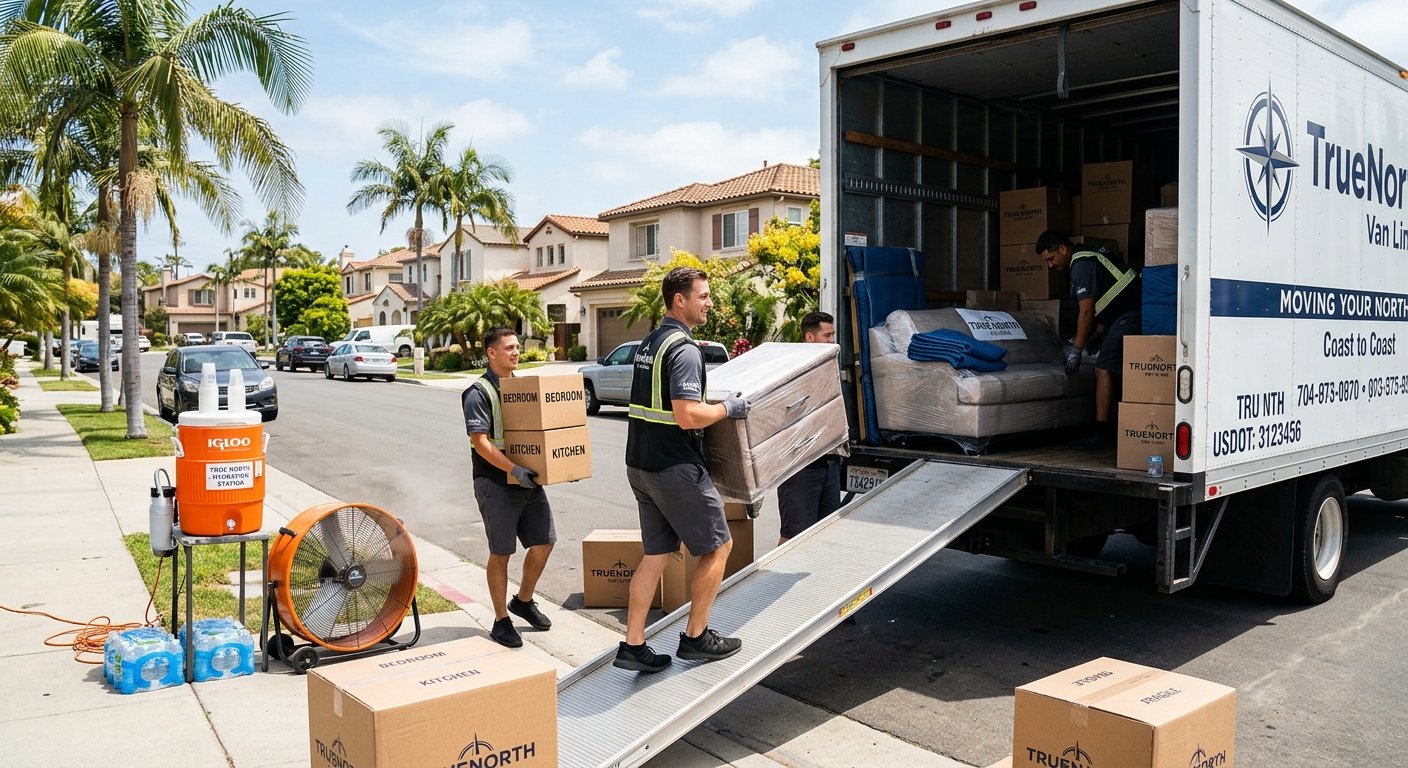
Moving in the middle of summer can be tough. Temperatures climb, traffic gets heavier, and buildings often have stricter elevator schedules and move-in rules. At the same time, summer is when most families, students, and businesses choose to relocate, which means movers book up quickly and prices can fluctuate.
Whether you are planning a local move across town or a longer relocation into or out of California, planning for hot weather and summer demand makes a big difference. Heat affects how long movers can safely work, how quickly certain items can be loaded, and even what time of day your move should start.
This guide from TrueNorth Van Lines is written to help you plan a safer, more organized summer move. You will learn how hot weather impacts timing, packing, costs, and scheduling, what to do before movers arrive, how to compare estimates, and what to keep with you on moving day. You will also see how professional services like local moving, long-distance moving, packing, and storage can fit into your overall moving plan.
Use this as a practical checklist and planning tool so you can stay ahead of the heat, protect your belongings, and help your moving crew work efficiently and safely.
Key takeaways
- Summer moving requires earlier booking, heat planning, and clear access to keep crews efficient and safe.
- Start your moving day as early as possible to avoid peak heat and afternoon traffic, especially in busy areas like Los Angeles.
- Accurate inventories, photos, and clear descriptions help you get realistic pricing and avoid surprise charges on move day.
- Heat-sensitive items, electronics, candles, and liquids need special packing or must travel with you, not in a hot truck.
- Elevator reservations, loading zones, and parking permits should be confirmed well in advance for any summer move.
- Comparing estimates is not only about the price; understand services included, valuation coverage, and potential extra fees.
- Professional services such as packing and storage can simplify a summer move and reduce the physical strain and heat exposure for your household.
Why summer moves are different
Summer is the busiest moving season in the United States. Schools are out, leases roll over, and the weather is more predictable than in winter. At the same time, high demand and high temperatures create a combination that requires careful planning.
High demand and limited availability
In summer, reputable movers get booked weeks in advance, especially around the beginning and end of each month and on weekends. If you wait until the last minute, you may only find companies that cannot accommodate preferred times or that charge significantly more due to tight capacity.
To avoid this, have your move planned early and lock in your dates as soon as you have your housing details. This is especially important if you need a specific date because of work start dates, lease expirations, or building rules.
Heat and its impact on your move
Heat slows everything down. Crews need more water breaks, stair climbs are more exhausting, and loading trucks in direct sun can be draining. This can impact the overall duration of the job and sometimes the cost, especially for hourly local moving services.
For long-distance moves, prolonged heat can affect how certain items travel inside the trailer if they are sensitive to temperature swings. Planning around these factors protects both your belongings and the people handling them.
Building rules and elevator schedules
Many apartment buildings and high-rises in hot markets require moving reservations. Some only allow moves during specific blocks of time to reduce noise and elevator wear. In summer, these slots fill quickly, so coordinating between your building and your mover is essential.
- Confirm elevator reservations at both origin and destination.
- Ask whether your building limits moves during heat advisories.
- Verify loading dock or parking access for the moving truck.
Heat, safety, and crew pacing
Heat safety is a key part of a well-run summer move. A professional company should plan for safe pacing, reasonable breaks, and adequate hydration, especially during multi-story moves or in areas with extreme temperatures.
Why early start times matter
When temperatures climb during mid-day, early morning becomes the best window to complete the heaviest work. For many summer moves, a 3 or 4 hour head start on the heat can make the job feel very different.
A typical approach is:
- Start between 7:00–8:00 a.m. during peak summer.
- Load the heaviest, bulkiest furniture first while it is cooler.
- Reserve lighter boxes and smaller items for mid-day.
Example email to your mover:
“Because of the heat, we would really prefer the earliest possible start time for our move. Please confirm the window you expect the crew to arrive and whether there are any building restrictions we should know about.”
Hydration and break planning
Professional movers typically bring water or plan for short hydration breaks. As a customer, you can support safe working conditions by:
- Having cool water available near the entrance or loading area.
- Keeping pathways shaded where possible with open doors or awnings.
- Understanding that short, regular breaks maintain overall productivity and safety.
Heat-sensitive items
Some items do not tolerate high temperatures well, especially when a truck interior can become much hotter than outside air. These may include:
- Candles, wax decorations, and crayons.
- Liquids that can expand, leak, or explode (cleaners, aerosols, certain cosmetics).
- Electronics and small devices with batteries.
- Musical instruments, especially wooden ones.
- Artwork, photos, and certain finishes that can warp.
Discuss these with your mover when you review your inventory. Some items should ride in your climate-controlled vehicle, while others may need extra padding and careful placement in the truck.
Summer moving timeline
Summer moves benefit from a clear, step-by-step timeline. The exact timing will depend on how complex your move is, how far you are going, and whether you are using packing and storage services, but the structure below provides a useful starting point.
| Time before move | Key tasks | Summer-specific tips |
|---|---|---|
| 6–8 weeks | Research movers, request quotes, confirm building rules. | Ask about peak-season pricing and earliest start times. |
| 4–6 weeks | Book your mover, finalize dates, start decluttering. | Schedule move early in the day; avoid holiday weekends when possible. |
| 2–4 weeks | Begin packing non-essentials, label boxes clearly. | Set aside heat-sensitive items to travel with you. |
| 1 week | Confirm details with your mover, prepare payment and paperwork. | Check forecast; plan extra water, fans, and shade as needed. |
| Day before | Finish packing, defrost fridge, set aside essentials. | Chill drinks overnight, charge phones, and rest. |
When your move is well planned along this kind of timeline, you reduce last-minute decisions that can be stressful in hot weather.
What affects moving costs in summer
Moving costs are influenced by many of the same factors year-round: distance, volume or weight, access, and services requested. In summer, a few extra variables come into play because of demand and conditions.
Key cost drivers
Below is a high-level comparison of typical cost factors for different types of moves. These are not price quotes, but a guide to what movers consider when planning and pricing jobs.
| Factor | Local moves | Long-distance moves |
|---|---|---|
| Pricing structure | Often by hourly rate for crew and truck. | Often based on weight/volume and distance, plus services. |
| Seasonal demand | Rates can be higher on peak summer dates. | Summer demand affects scheduling and peak-day pricing. |
| Access & stairs | More time needed for long carries and multiple flights. | Shuttle trucks, long carries, and elevators can add charges. |
| Packing services | Optional add-on, billed by time and materials. | Can be bundled into a full-service quote. |
| Storage | Short-term storage sometimes used between leases. | Storage-in-transit may be part of a longer relocation. |
Summer-specific considerations
During peak summer, a mover may need to adjust labor planning to account for heat and demand. A few examples:
- Adding a third mover for a heavy, stair-intensive job so the team can rotate more often.
- Scheduling multiple smaller jobs earlier and later in the day rather than stacking heavy jobs at mid-day.
- Planning rest breaks during extremely hot afternoons, which can slightly extend the job duration.
All of these can impact how long a job takes. Being transparent about the size of your home, the number of stairs, and walking distances helps companies like TrueNorth Van Lines give accurate expectations.
Using tools to estimate costs
Many customers like to create a rough budget before they request formal quotes. The moving cost calculator from TrueNorth Van Lines can help you think through the size of your move, distance, and needed services. Once you have a basic estimate, you can discuss the details with a move coordinator and refine the numbers.
Local vs. long-distance summer moves
Local and long-distance moves share a lot of planning basics, but in summer they feel different when it comes to timing, heat, and logistics.
Local summer moves
Local moves are typically charged by the hour and completed same-day, which means that any slowdowns due to traffic, heat, or building delays can affect the total time. Early starts and well-organized packing are especially important.
- Confirm your starting time window with your mover.
- Ask how parking will work near both addresses.
- Make sure everything is packed and ready before the crew arrives.
If you are planning a local move, it may be helpful to review TrueNorth Van Lines' local moving services to see which support options fit your situation.
Long-distance summer moves
Long-distance moves bring added layers: transit time, driver schedules, route planning, and delivery windows. Heat can affect road conditions, rest requirements, and how often drivers stop.
Key points for long-distance moves in summer:
- Review your delivery window carefully, particularly around holidays.
- Understand how communication will work while your shipment is in transit.
- Clarify which items cannot be shipped and must go with you.
TrueNorth Van Lines offers long-distance moving services for customers relocating between states, with planning support to help you coordinate dates, packing, and storage if needed.
Choosing the right service mix
Some customers try to handle everything themselves during a summer move, but the combination of heat and heavy lifting can be more challenging than expected. A more balanced, well planned approach is to decide which parts you truly want to manage and which are better handled by professionals.
| Option | You handle | Mover handles |
|---|---|---|
| Full-service move | Decisions, access coordination, personal documents, valuables. | Packing, loading, transportation, unloading, basic setup. |
| Partial packing | Some room packing, decluttering, essentials. | Fragile packing, larger items, furniture protection. |
| Load-only help | All packing, organizing boxes, some lifting. | Professional handling of heavy items and truck loading. |
Packing for heat and long days
Good packing protects your belongings all year, but hot weather adds a few extra considerations. Correct materials and labeling help make sure boxes can move quickly between locations and that nothing is left sitting in direct sun longer than necessary.
Materials that work better in summer
- High-quality moving boxes: They hold shape better than reused grocery boxes when humidity is high.
- Plastic bins for non-fragiles: Useful for garages and storage areas but avoid trapping moisture around delicate items.
- Stretch wrap and blankets: Help protect furniture finishes from heat and friction during loading.
- Sealable plastic bags: For small hardware, screws, and items that must stay dry.
Labeling for fast, efficient unloading
Clear labeling makes every move easier, but it really pays off in the heat when crews aim to minimize time walking around looking for destinations.
- Use large, legible labels on at least two sides of each box.
- Include both room name and priority (for example, “Kitchen – Unpack First”).
- Mark especially heavy boxes for safe lifting.
Sample labeling system:
- LR-1: Living Room – Books
- BR2-2: Bedroom 2 – Clothes (Off-Season)
- K-3: Kitchen – Pots and Pans
Items to keep out of the truck
Some belongings simply should not travel in a hot truck, especially for long-distance or all-day summer moves. These typically include:
- Medications and critical medical supplies.
- Important documents (passports, IDs, financial paperwork).
- Perishable food.
- High-value small electronics.
- Irreplaceable keepsakes and jewelry.
Pack these into a separate “travel bag” or small tote that stays with you at all times.
Example packing plan for a summer weekend move
| Time | Task | Heat-focused notes |
|---|---|---|
| Thursday evening | Pack non-essential decor, books, and off-season clothes. | Keep windows open for airflow during packing if safe to do so. |
| Friday evening | Pack kitchen, bathroom items, and most clothes. | Set aside cooler, water, and snacks for moving day. |
| Saturday early morning | Finish last-minute items, disassemble beds, move boxes near entrance. | Turn on AC or fans near entryway; keep hallways clear. |
How to prepare before movers arrive
Good preparation shortens your mover's time on site and reduces the amount of heavy work done in peak heat. It also helps crews focus on what they do best: safely moving your belongings.
Access and parking
- Reserve any required loading zones or visitor parking spots.
- Move your own vehicles out of driveways and away from entrances.
- Notify neighbors if a truck will partially block shared areas.
Inside your home
- Finish packing all loose items into boxes; avoid leaving small items loose.
- Disassemble basic furniture if you plan to do so yourself.
- Clear walkways, stairs, and entryways of clutter, rugs, and cords.
- Run air conditioning or fans before the crew arrives, when possible.
Example confirmation message to your mover:
“We have reserved the elevator from 8 a.m. to noon and arranged for the truck to park in the loading zone. All boxes will be packed and labeled before the crew arrives.”
Pets and children
Moving day can be hectic. For safety, consider:
- Having children stay with a relative or friend for the day.
- Keeping pets in a closed, well-ventilated room or off-site.
- Placing a note on the door of the pet room so crew members are aware.
How to compare moving estimates
When you are collecting quotes for a summer move, it is tempting to look only at the bottom-line number. A more reliable approach is to compare what each company includes, how clearly the estimate is written, and what assumptions it is based on.
Key elements to review
- Services included: Does the estimate cover packing, disassembly, stairs, and long carries, or are these listed as possible extra charges?
- Type of estimate: Is it non-binding, binding, or another format specified by the mover?
- Valuation options: What level of protection for your goods is included, and what upgrades are available?
- Access assumptions: Does the quote assume easy parking, or does it anticipate shuttles or long walks?
Summer questions to ask about pricing
- Are there different rates for weekends versus weekdays?
- Does the time of day affect pricing or availability?
- How does the company handle extremely hot days or local heat advisories?
When you speak with a move coordinator at TrueNorth Van Lines, you can walk through each section of the estimate and update it if your inventory or access details change. This makes your move more accurately planned and reduces surprises on moving day.
Questions to ask before booking
Before you sign an agreement with any moving company, it is wise to ask direct, practical questions. The goal is to confirm that the mover is professional, licensed and insured, and prepared for the realities of a hot-weather move.
Suggested questions
- Are you licensed and insured for the type of move I am planning?
- How do you plan the crew size for a summer move like mine?
- What is your policy on breaks and pacing during very hot days?
- Do you offer packing services, and can I choose partial packing?
- How do you protect furniture and mattresses from heat and dust?
- What items do you recommend that I move myself rather than placing on the truck?
- How far in advance should I book to secure an early start time?
Good movers welcome these questions and answer them clearly. At TrueNorth Van Lines, move coordinators discuss access, timing, and service options so your move can be realistically scheduled and well supported.
What to keep with you on moving day
On a hot summer day, you do not want to dig through a loaded truck to find medication, clean clothes, or water. Prepare a simple moving-day kit that stays with you from start to finish.
Moving-day essentials checklist
- IDs, keys, and important documents.
- Wallet, checkbook, or payment method as agreed with your mover.
- Medications and basic first-aid items.
- Phone chargers and a portable battery pack.
- Change of clothes and basic toiletries.
- Snacks that will not melt easily and a small cooler with drinks.
- Basic cleaning supplies for quick wipe-downs at both homes.
For families, add:
- Favorite toys or comfort items for children.
- Pet leashes, carriers, and food bowls.
Clearly label these bags as “Do Not Load” so they stay with you and do not accidentally end up on the truck.
Common summer moving mistakes
Understanding common mistakes helps you avoid them. Many summer move problems come down to timing, heat, and unclear expectations.
Frequent issues and how to avoid them
| Mistake | Why it causes problems | Better approach |
|---|---|---|
| Booking too late in peak season | Limited availability, less flexible start times, higher rates on remaining slots. | Contact movers 6–8 weeks ahead for prime summer dates. |
| Underestimating inventory | Too few movers or an undersized truck can slow the job in the heat. | Provide detailed lists or photos so the move can be accurately planned. |
| Leaving packing until move day | Crew waits while items are still being boxed, extending work into peak heat. | Finish packing before move day or schedule professional packing. |
| Ignoring building rules | No elevator or dock access can cause delays or rescheduling. | Confirm move-in and move-out requirements with building management early. |
By looking at these pitfalls in advance, you can build a straightforward plan and keep your summer move organized.
How TrueNorth Van Lines can help
TrueNorth Van Lines provides local and long-distance moving services for homes, apartments, and businesses. In summer, our focus is on organized planning, clear communication, and safe pacing for our crews and your belongings.
Service options for summer moves
- Local moving services for nearby moves, including apartments, condos, and houses.
- Long-distance moving services for interstate relocations.
- Professional packing services to save time and reduce physical strain in hot weather.
- Secure storage services for short- or longer-term needs between homes or renovations.
For many customers, a combination of packing, moving, and storage creates a more flexible timeline, especially during busy summer months.
Helpful TrueNorth Van Lines services
Each move is handled by trained crews who use appropriate equipment and protective materials. As a licensed and insured moving company, TrueNorth Van Lines works with you to build a realistic plan for your specific situation, including summer timing and access details.
Planning your next step
To start planning your summer move, you can:
- Visit the moving services page to see available options.
- Review the service areas to confirm coverage for your locations.
- Use the moving cost calculator to outline your move size and potential budget.
- Request a free moving quote to speak directly with a move coordinator.
A coordinator can help you organize your inventory, evaluate access at both homes, and decide whether local, long-distance, packing, or storage services best match your needs.
Frequently asked questions
How far in advance should I book a summer move?
For most summer moves, it is wise to book 6–8 weeks in advance, especially if you are moving at the beginning or end of the month or need a specific date and early start time.
What is the best time of day to move in hot weather?
Early morning is usually best. Starting between 7:00 and 8:00 a.m. helps crews complete the heaviest lifting before midday heat and afternoon traffic.
How can I keep movers and my family safe in the heat?
Provide water, keep hallways and entryways clear, use fans or air conditioning when possible, and plan short breaks. For your family, wear light clothing and keep essentials like sunscreen and snacks handy.
Do I need professional packing for a summer move?
You do not have to use professional packing, but it can save time and reduce physical strain. Many customers choose partial packing for fragile or high-value items, especially in hot weather.
What should I not put on the moving truck in summer?
Avoid loading medications, perishable food, important documents, high-value small electronics, and items that could melt or spill, like candles or certain liquids.
How does heat affect moving costs?
Heat itself does not automatically change the rate, but it can affect how long a job takes. Early booking, accurate inventories, and good preparation help keep time, and therefore cost, more predictable.
Can movers still work during very high temperatures?
Professional movers plan pacing and breaks to work safely in high temperatures. In extreme conditions or official heat advisories, start times or break schedules may be adjusted for safety.
How do I get an accurate estimate for a summer move?
Provide detailed information about your inventory, stairs, walking distances, elevator access, and special items. Tools like the TrueNorth Van Lines moving cost calculator can help you organize this information before speaking with a move coordinator.
Does TrueNorth Van Lines offer storage if my move-in date is later?
Yes, TrueNorth Van Lines offers secure storage services that can bridge the gap between move-out and move-in dates, which is especially helpful during busy summer schedules.
Is TrueNorth Van Lines licensed and insured?
TrueNorth Van Lines is a licensed and insured moving company that provides local and long-distance moving services, packing, and storage options for residential and commercial customers.
Sources referenced in this guide
This guide is based on professional moving experience and on common practices reflected in:
- Federal Motor Carrier Safety Administration consumer guidance for household moves.
- U.S. Department of Transportation moving guidance for interstate carriers and customers.
- State transportation and consumer protection agency materials on moving company responsibilities.
- Building management move-in and move-out requirements for elevators and loading docks.
- Written moving estimates, bills of lading, carrier tariffs, and valuation option documents used in the moving industry.
Related moving guides
When you are ready to plan your summer move, you can explore the moving services offered by TrueNorth Van Lines, review our TrueNorth Van Lines blog for more practical guides, and request a free moving quote tailored to your home, schedule, and budget.
This guide is general moving information, not legal, insurance, or regulatory advice. Moving requirements, pricing, access rules, and coverage options may vary by location, move type, building rules, and service agreement.