
Cost of Living in Los Angeles vs. the Rest of California
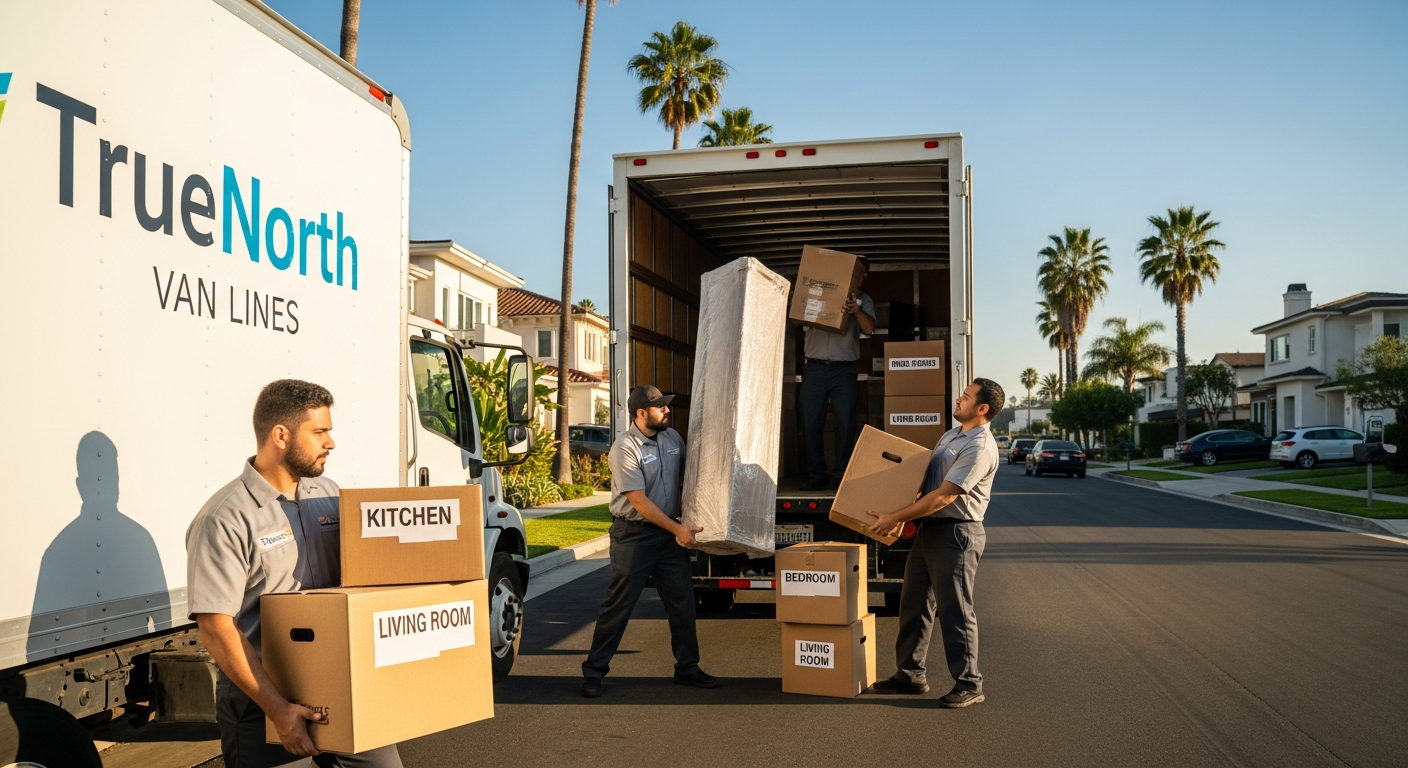
Planning a move in California forces you to think about two major cost categories at the same time: the cost of living in your new city and the cost of hiring movers to get you there. Whether you are heading into Los Angeles, leaving it for another part of the state, or comparing Los Angeles and San Diego, getting those numbers wrong can strain your budget for years.
Housing, parking, access challenges, and timing can all change what you pay for a move just as much as they change what you pay in monthly rent. A steep Hollywood Hills driveway, a downtown Los Angeles high-rise with a freight elevator, or a coastal San Diego condo with strict HOA rules all affect how moving crews plan, price, and execute your relocation.
This in-depth guide from TrueNorth Van Lines is designed to help you think through both sides: how the cost of living in Los Angeles compares with other California cities and how to plan, compare, and book moving services so your relocation supports your long-term budget instead of blowing it up on day one.
You will learn how movers calculate costs, which city-specific factors really matter in Los Angeles and San Diego, what timelines work best, how to read estimates, and how to prepare your home so moving day runs smoothly. You will also find checklists, sample wording you can use with building managers and movers, and realistic expectations for working with a professional, licensed, and insured moving company like TrueNorth Van Lines.
Key takeaways
- Your cost of living in Los Angeles or San Diego should dictate how much you can reasonably spend on your move; build a single combined budget for both.
- Factors like stairs, elevators, long carries, parking restrictions, and narrow streets can matter as much as distance when movers calculate pricing.
- Planning your move 4–8 weeks in advance and locking in a date early usually leads to better availability and more predictable pricing.
- Detailed inventory lists, clear building rules, and photos of access points help movers give accurate estimates and send the right crew and truck.
- Full-service packing costs more upfront but can protect high-value items and save expensive last‑minute purchases or time off work.
- A small storage unit can be cheaper than upgrading to a larger apartment in a high-rent Los Angeles neighborhood; use storage strategically.
- Working with a licensed, insured mover and understanding valuation options is key in dense, high-cost areas where replacement costs are higher.
How Los Angeles compares with the rest of California
The search intent behind comparing the cost of living in Los Angeles with the rest of California is usually simple: you want to know whether the lifestyle and opportunity in LA justify the higher monthly bills. But if you are relocating, you also need to know how those cost differences impact the move itself.
Across California, rent, parking, and time-of-day traffic vary dramatically. Moving into a walk-up in a quieter inland city is very different from moving into a high-rise in downtown Los Angeles or a coastal building in San Diego. TrueNorth Van Lines sees these differences play out every week in service planning, crew assignments, and pricing.
Housing cost and its impact on moving decisions
Los Angeles typically carries higher rents or purchase prices than many inland California cities. San Diego can be similar in coastal zones, but some inland San Diego neighborhoods may offer slightly different price points. Many customers react to these realities in predictable ways:
- Choosing smaller apartments or shared housing to keep rent manageable.
- Delaying the purchase of large furniture to avoid moving or storing it.
- Using storage during a phased relocation instead of upgrading to a bigger unit.
- Opting for a shorter local move within the same metro area instead of leaving the region entirely.
Because housing takes a large share of your budget, your move needs to be carefully planned and priced. A well-planned move avoids surprise fees, overtime, or damages that could make the first months in a higher-cost city even tighter.
Transportation, parking, and urban layout
The layout of Los Angeles and San Diego directly influences moving strategy:
- Los Angeles: Heavy traffic patterns, hills, canyons, narrow streets in older neighborhoods, and strict parking rules in many areas.
- San Diego: Coastal neighborhoods with limited street parking, military base access rules, and HOA restrictions for many condo developments.
- Other California cities: May allow easier curbside parking, shorter carries, or ground-floor access that reduce crew time.
Movers must plan around these constraints with the right truck sizes, parking plans, and sometimes shuttles. That planning translates into cost and schedule differences, even for the same size home.
Table: Cost-of-living context vs. moving choices
| Cost-of-living factor | How it shows up in Los Angeles / San Diego | Impact on move planning |
|---|---|---|
| Rent and housing prices | Higher in many central and coastal neighborhoods compared with some inland cities. | Encourages downsizing, selective furniture moves, and use of storage to avoid larger units. |
| Parking and permits | Permit zones, limited street parking, and loading dock rules are common. | Requires advance planning, potential extra walking distance, and maybe long-carry fees. |
| Traffic and congestion | Rush hour and event traffic can slow crews significantly in LA and San Diego. | Move timing and crew hours must be carefully scheduled; may affect cost windows. |
Common move types in Los Angeles and San Diego
From TrueNorth Van Lines' perspective, cost-of-living decisions shape the types of moves we see in Los Angeles, San Diego, and the rest of California. These patterns help you understand where your own planned relocation fits and what services you might need.
Local urban apartment moves
Short local moves within Los Angeles or San Diego are often between apartments or condos. These moves usually involve:
- Elevators and loading docks with reservation windows.
- Parking restrictions that require tight scheduling.
- Smaller units where space is at a premium and careful protection of walls, doors, and elevators is essential.
Because rent is high, many people choose modestly sized units, which can reduce overall shipment weight but increase the need for organized packing to maximize space.
House-to-house moves within California
Suburban homes in the Los Angeles basin or outside San Diego city limits often have more space and more belongings. These moves might be to:
- Trade up or downsize within the same metro area.
- Relocate to a different California city with a different cost profile.
- Move into or out of multi-story homes with stair carries.
These moves emphasize larger trucks, more crew members, and careful planning for access, especially if driveways are steep or streets are narrow.
Intercity and long-distance moves between LA, San Diego, and other regions
Many customers compare the cost of living in Los Angeles to San Diego, Sacramento, or other California cities and decide to relocate accordingly. For these moves, a company that offers long-distance moving services can coordinate multi-day transit, overnight holds, or storage options.
Understanding which move type you fall into helps you ask the right questions and interpret estimates correctly.
What actually affects your moving cost
When you compare the cost of living in Los Angeles with other parts of California, you also need to understand how the move itself will be priced. A realistic view of moving costs helps you keep your new budget intact.
Core cost drivers movers use
Most professional movers, including TrueNorth Van Lines, look at similar core factors when building a quote:
- Distance between origin and destination.
- Size and weight of your shipment.
- Access conditions at both addresses (stairs, elevators, long walks).
- Required crew size and number of trucks.
- Services you request (packing, unpacking, storage, specialty handling).
- Time of year, day of week, and flexibility of your dates.
In high-cost, high-density cities like Los Angeles and San Diego, access and timing often matter as much as pure mileage. That is why two moves with the same distance and number of bedrooms can be priced differently.
Table: Typical California moving cost factors
| Factor | What it means in practice | How you can manage it |
|---|---|---|
| Shipment size and weight | More furniture and boxes typically mean more hours or a larger truck. | Declutter, sell, or donate items before getting quotes. |
| Stairs and elevator access | Walk-ups and slow elevators increase loading and unloading time. | Reserve elevators, clear hallways, and share details with movers early. |
| Parking distance to unit | If the truck cannot park close, movers must carry items further. | Arrange loading zones or permits where allowed; clear driveways. |
| Packing level | Full-service packing costs more but saves time and materials shopping. | Decide what you will pack yourself vs. what you want packed by pros. |
Valuation coverage and high replacement costs
In cities where the cost of living is higher, the replacement cost of damaged items also tends to be higher. It is important to understand the valuation options offered by your mover and how they differ from third-party insurance.
While movers cannot give you legal or insurance advice, TrueNorth Van Lines can explain the valuation options available under your service agreement so you can make an informed choice that reflects the value of what you are moving into or out of Los Angeles or San Diego.
Planning your moving timeline
High-demand cities reward early, organized planning. Building management, HOA rules, and parking constraints mean your move date and timeframe may be constrained. A thoughtful timeline saves money and reduces stress on moving day.
Recommended planning window
For many California moves, a planning window of 4–8 weeks is ideal, especially if you are juggling lease start dates, work transitions, and school calendars. The more competitive your neighborhood or building, the earlier you should:
- Reserve freight elevators and loading docks.
- Request any required move-in or move-out certificates or documentation.
- Connect with movers to check availability and discuss access details.
Sample timeline for a planned LA or San Diego move
| Time before move | Key tasks | Notes for LA / San Diego |
|---|---|---|
| 6–8 weeks | Set budget, research movers, request estimates, start decluttering. | Ask about building rules and potential parking or shuttle needs. |
| 4–5 weeks | Select mover, sign agreement, confirm target move dates. | Reserve elevators/loading zones as soon as possible. |
| 2–3 weeks | Begin packing non-essentials, label boxes by room, finalize parking plan. | Confirm access instructions with management and your mover. |
| 1 week | Pack essentials except daily items, separate high-value or important documents. | Reconfirm move date, time, and parking details in writing. |
Sample wording to use with building management
“Hi, I’m moving out on [date] with a professional moving company. Do I need to reserve the freight elevator or loading dock? Are there specific hours, insurance certificates, or forms my movers need before that day?”
Clear communication avoids last-minute delays that can lead to overtime charges and rescheduling fees.
How to compare moving estimates the right way
When your cost of living is high, every dollar counts. Moving estimates can look very different at first glance, which makes it tempting to grab the lowest number without understanding the differences. That can be an expensive mistake.
Make sure you are comparing the same services
Before you compare, check that each estimate includes or excludes the same things:
- Packing vs. self-packing.
- Disassembly and reassembly of furniture.
- Handling of special items such as pianos, safes, or large artwork.
- Long carries, stairs, or elevator delays if known.
- Potential fuel charges, travel fees, or overnight holds.
If one estimate is missing important services you know you need, it may not actually be cheaper in the end.
Table: Comparing California moving estimates
| Comparison point | What to look for | Why it matters in LA / San Diego |
|---|---|---|
| Scope of work | Exactly what the crew will and will not do on move day. | Hidden exclusions can lead to delays in buildings with fixed time windows. |
| Access assumptions | Whether the quote assumes easy, average, or difficult access. | Underestimating difficulty can cause surprise labor or equipment charges. |
| Valuation and liability | Clearly outlined valuation options and limits of liability. | Higher replacement costs in large cities make this especially important. |
Questions to ask when reviewing quotes
- What assumptions did you make about parking and elevator access for this quote?
- How would the price change if I add or remove packing services?
- What is not included that I should know about now?
- What are my valuation options and how do they work?
These questions help you align your planned moving budget with the realities of Los Angeles or San Diego living costs.
Packing strategies for high-cost cities
Packing is one of the most flexible levers you control when balancing the cost of living with the cost of moving. In expensive cities, packing smart can free up budget for rent or save you from paying to move items you do not really need.
Deciding between self-packing and professional packing
TrueNorth Van Lines offers both options and can customize based on your needs:
- Self-packing: Lower upfront cost but requires more of your time, organization, and material sourcing.
- Partial packing: Movers pack fragile or high-value items; you pack the rest.
- Full-service packing: Movers bring all materials and pack your entire home.
Your decision should reflect both your cash budget and your time budget. In a busy Los Angeles or San Diego lifestyle, time lost from work or family may cost more than the packing fee.
Practical packing tips for LA and San Diego
- Use smaller boxes for books and heavy items to make long carries easier.
- Label boxes with room and main contents; add “Front of truck” or “Open first” where needed.
- Keep boxes under a weight you can comfortably lift; movers can carry heavy loads, but lighter boxes speed up the job.
- Group items by room, not by where you found them, to minimize confusion when unpacking in your new space.
Table: Packing options and trade-offs
| Packing option | Pros for LA / San Diego residents | Potential drawbacks |
|---|---|---|
| Self-packing | Lower direct cost; flexible schedule for evenings and weekends. | Time-consuming in a busy city schedule; risk of inadequate materials. |
| Partial packing | Professionals protect fragile items; you control the rest of the budget. | Requires coordination to ensure items are ready on time. |
| Full-service packing | Saves significant time; helpful when juggling work and long commutes. | Higher service cost; requires you to be ready and organized on packing day. |
If you choose to outsource part or all of your packing, TrueNorth Van Lines' professional packing services are designed to protect your belongings and keep you on schedule in busy metros.
Inventory, parking, and building access in LA and San Diego
In Los Angeles and San Diego, one of the most important pieces of your planned move is how well you communicate your home's layout and your building’s rules. These details influence the crew size, equipment, and time your mover estimates.
Creating a useful inventory
Your inventory does not have to be complicated to be effective. Aim to capture:
- Number of rooms being moved.
- Major furniture pieces in each room.
- Approximate number of boxes you expect.
- Special items (artwork, large TVs, instruments, safes, fitness equipment).
You can use a simple document, spreadsheet, or photos and videos. Share this with your mover when requesting quotes.
Describing parking and access accurately
Access issues are especially significant in high-density neighborhoods. When you talk with TrueNorth Van Lines or any other professional mover, be ready to explain:
- How close a truck can realistically park to your entrance.
- Whether there are stairs, an elevator, or both.
- If there are time limits or permit zones on the street.
- Any HOA or building rules about move hours or days.
“The truck can usually park about half a block away, and there’s one flight of stairs to my second-floor unit. Our building requires moves to be between 9 a.m. and 4 p.m. on weekdays.”
Details like these help avoid underestimated labor time that could impact your total cost.
Choosing between moving, packing, and storage services
Because Los Angeles and San Diego can be expensive places to live, many people use a combination of moving, packing, and storage services to balance cost, timing, and space. TrueNorth Van Lines provides a range of options that can be tailored to your situation.
Local vs. long-distance services
- Local moving services are ideal when you are staying within the same metro area or nearby city. They are often billed based on time and crew size.
- Long-distance moving services are used when you are moving between regions or across the state, often with pricing influenced by shipment weight and distance.
When storage makes financial sense
Because rent in Los Angeles and San Diego can be significantly higher per square foot than storage, placing rarely used items into secure storage services can be more economical than upgrading to a bigger apartment. Storage can also help you manage timing gaps if your move-out and move-in dates do not align perfectly.
Checklist: Deciding which services you need
- Is your move local within the same metro area or long-distance across regions?
- Do you have the time and energy to pack yourself, or is partial/full packing worth the cost?
- Will you be downsizing and need temporary or long-term storage?
- Are there valuable or fragile items you want professionals to handle specifically?
Helpful TrueNorth Van Lines services
How to prepare before movers arrive
Your preparation before moving day has a direct effect on cost, timing, and stress. In high-cost cities where your building may limit move hours, the stakes are even higher for getting things ready on time.
One week before your move
- Confirm dates and arrival windows with your mover in writing.
- Verify elevator reservations, parking plans, and building access instructions.
- Finish packing areas you do not use daily (storage closets, guest rooms).
- Separate items that will not be loaded on the truck (essentials and valuables).
The day before your move
- Pack a clearly labeled “Open First” box for each key room (kitchen, bathroom, bedroom).
- Defrost and clean your refrigerator if it is being moved.
- Disassemble simple furniture if you agreed to handle that yourself.
- Take photos of electronics before disconnecting cables to simplify reconnection.
Morning-of checklist
- Keep pets safely contained or off-site for the day.
- Clear hallways and walkways of clutter.
- Have a plan for young children if applicable.
- Set aside payment method and your moving paperwork.
These steps help the crew work efficiently and keep your move on schedule, which is critical in buildings with fixed move-out windows.
What to keep with you on moving day
No matter where you fall on the California cost-of-living spectrum, some items should never go on the moving truck. Keeping these with you protects your peace of mind and minimizes disruption as you settle into your new Los Angeles or San Diego home.
Essentials box and personal bag
- Wallets, IDs, credit cards, and checkbook.
- Keys, access fobs, and remotes for both old and new homes.
- Important documents (lease, mortgage papers, insurance policies, passports, birth certificates).
- Medications and basic first-aid supplies.
- Phone chargers, laptops, and essential electronics.
- One to two days of clothing and toiletries for each family member.
Household essentials
- Basic toolkit (screwdriver, wrench, tape measure).
- Cleaning supplies for quick touch-ups in the new place.
- Paper towels, toilet paper, and trash bags.
- Snacks and water, especially helpful in warm Southern California weather.
Label these items clearly and tell your movers they are not to be loaded. This avoids confusion amid the busy pace of moving day.
Common California moving mistakes and how to avoid them
Moving into or out of high-cost cities like Los Angeles and San Diego amplifies the impact of common moving mistakes. Avoiding them protects both your budget and your timeline.
Typical mistakes TrueNorth Van Lines sees
- Underestimating how long packing takes, then scrambling at the last minute.
- Failing to reserve elevators or loading docks until they are no longer available.
- Not disclosing access challenges (like very narrow stairs) during the quote stage.
- Trying to move oversized furniture into small urban apartments without checking measurements.
- Assuming the lowest initial quote will be the lowest final price.
Table: Mistakes vs. better approaches
| Common mistake | Potential consequence | Better strategy |
|---|---|---|
| Waiting too long to book movers | Limited availability; less flexibility if building date changes. | Start planning 4–8 weeks out and confirm early. |
| Ignoring building rules | Delays, overtime, or even canceled move if rules are strict. | Request written move guidelines from building management. |
| Under-reporting inventory to lower the quote | Extra charges and time on move day when reality does not match. | Provide accurate inventory and update if things change. |
Simply put, transparency and early planning are your best protections in fast-paced, high-cost markets.
How TrueNorth Van Lines supports California moves
TrueNorth Van Lines provides professional, licensed, and insured moving services for customers across California, including Los Angeles, San Diego, and other cities. Our crews are trained to work efficiently in busy urban settings with careful attention to building rules, parking constraints, and customer timelines.
We focus on clear communication, organized preparation, and realistic expectations. From the first conversation, our team works with you to understand your inventory, building access, and schedule so we can offer a quote that reflects the actual conditions of your move.
If you are weighing the cost of living in Los Angeles against San Diego or another California city, we can help by providing clear pricing and service options so the cost of moving itself fits into your broader financial plan.
Planning your next step
You can explore TrueNorth Van Lines' moving services, review our service areas, or use the moving cost calculator to estimate your budget. When you are ready, you can request a free moving quote with your planned dates, inventory, and access details.
Frequently asked questions
How far in advance should I book movers for a Los Angeles or San Diego move?
For most moves, especially in busy seasons, aim to book 4–8 weeks in advance. This gives you time to coordinate building rules, elevator reservations, and parking, which are key cost drivers in dense cities.
Is it cheaper to move on a weekday or weekend in California?
Weekdays may offer more flexible building access and sometimes better availability, while weekends can be more convenient for your schedule. The best choice depends on your building's rules and the mover's schedule; discuss both options when requesting quotes.
How can I lower my moving costs without sacrificing quality?
Decluttering before you move, packing some or all items yourself, being flexible on dates, and providing accurate access information are effective ways to lower costs while still using a professional, licensed mover.
Do I need professional packing if I am just moving across town?
Not necessarily. Many local moves in Los Angeles and San Diego are self-packed. However, professional packing is valuable if you have fragile items, limited time, or complicated access that makes rushed, last-minute packing risky.
What should I ask my building before booking movers?
Ask about permitted move days and hours, whether a freight elevator or loading dock exists and must be reserved, any insurance certificate requirements, and parking or permit rules. Share those details with your mover before finalizing your date.
Is storage a good option if I am downsizing in a high-cost city?
Storage can be a cost-effective way to keep items you are not ready to part with while renting a smaller, more affordable place. Compare the monthly storage rate to the additional rent you would pay for a larger unit.
How do movers handle parking challenges in Los Angeles and San Diego?
Professional movers will evaluate your street layout, loading zones, and building rules to plan where to park the truck and how far they will need to carry items. In some cases, it may require a smaller shuttle vehicle or specific timing to use a loading area.
Are moving estimates in California binding?
That depends on the type of estimate and the terms in your service agreement. Ask whether your quote is based on actual shipment weight, hourly labor, or another structure, and what conditions might cause the final price to change.
Should I tip movers in Los Angeles or San Diego?
Tipping is not required but is commonly offered when customers feel the crew has done an excellent job. The amount is a personal decision and should reflect your satisfaction, budget, and the job's complexity.
How can I quickly estimate my moving budget?
Use tools like the TrueNorth Van Lines moving cost calculator to get an initial range, then request a detailed quote that factors in your specific inventory and access conditions.
Sources referenced in this guide
For customers planning moves into or out of high-cost cities like Los Angeles and San Diego, it can be helpful to review:
- Federal Motor Carrier Safety Administration consumer guidance on interstate moving practices.
- U.S. Department of Transportation moving guidance and general consumer tips.
- Written moving estimates, bills of lading, and carrier service agreements.
- Building management move-in and move-out requirements for your specific property.
- State transportation or consumer protection agencies for general moving-related information.
This guide is general moving information, not legal, insurance, or regulatory advice. Moving requirements, pricing, access rules, and coverage options may vary by location, move type, building rules, and service agreement.
Related moving guides
When you are ready to move, whether it is a short local relocation within Los Angeles, a coastal move to San Diego, or a long-distance change to another California city, TrueNorth Van Lines is available to discuss your planned timeline, budget, and service needs. Visit the TrueNorth Van Lines blog for more planning tips, explore our moving services, and request a free moving quote when you are ready to take the next step.