
What Movers Won’t Move: Prohibited and Non-Allowable Items
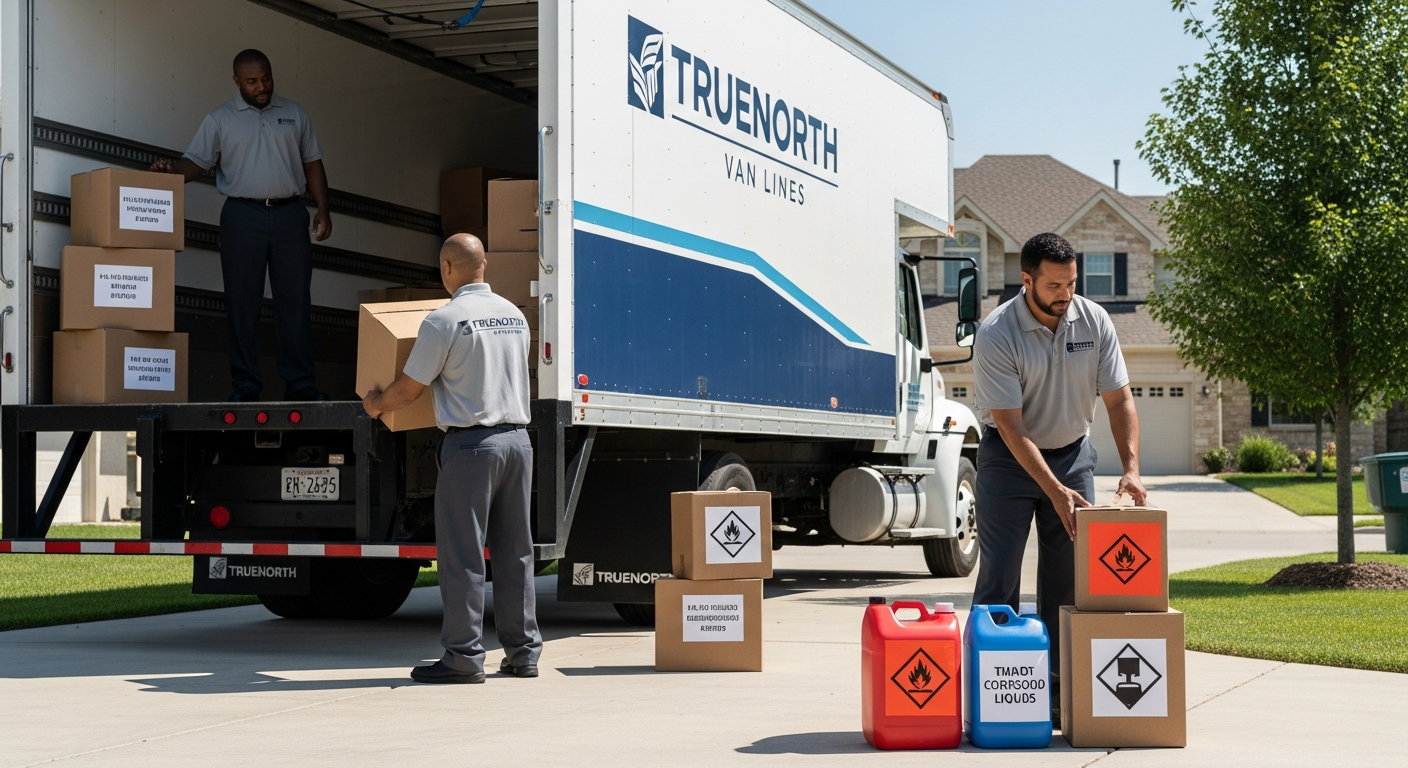
When you are getting ready for a move, it is natural to assume that professional movers will load everything you own onto the truck. In reality, every reputable moving company follows a strict list of non-allowable and prohibited items that they are not allowed or not willing to transport. These rules are in place to protect your belongings, the moving crew, the truck, and your new home.
If you only discover what movers will not move on moving day, you can be left scrambling with open boxes, hazardous materials, and leftover items that will not fit in your personal vehicle. Careful, planned preparation is the key to avoiding last‑minute stress, surprise costs, or even move delays.
This in-depth TrueNorth Van Lines guide explains what movers won\’t move, why certain items are prohibited, and how to plan for them in a practical way. You will find clear non-allowable item lists, planning timelines, comparison tables, and checklists that help you organize, donate, use up, or dispose of these items safely before moving day.
Whether you are planning a local move or a long-distance relocation, understanding non-allowable items is just as important as choosing the right moving services. When you know what professional movers can and cannot load, you can pack smarter, protect your family, and keep the move running on schedule.
Key takeaways
- Every reputable mover follows a non-allowable items list that typically includes hazardous materials, perishables, live items, and certain valuables.
- Understanding what movers will not move early allows you to use up, donate, or properly dispose of these items instead of scrambling on moving day.
- Local and long-distance moves follow similar safety rules, but long-distance relocations often have stricter restrictions on food, plants, and liquids.
- Movers generally cannot pack or transport flammables, explosives, propane tanks, opened chemicals, or pressurized containers due to safety and regulatory rules.
- Important documents, cash, jewelry, and medications should always travel with you, not on the moving truck.
- A written checklist by room and a clear timeline (4–6 weeks before moving day) greatly reduce the risk of delays or extra last‑minute trips.
- Transparent communication with your mover and a planned approach with a company like TrueNorth Van Lines results in a smoother, safer relocation.
Why some items are non-allowable
Non-allowable or prohibited items are things that professional movers either are not allowed to transport under safety regulations or choose not to transport because the risk is too high. This is not just a company preference; it is driven by safety standards, federal and state transportation rules, and insurance and liability concerns.
Safety and regulatory reasons
Items such as gasoline, propane, ammunition, and certain chemicals are considered hazardous materials. When they are loaded onto a moving truck with household goods, they increase the risk of fire, explosion, or chemical leaks. Transporting these incorrectly can violate transportation or hazardous material rules and put the moving crew and public roadways at risk.
Property protection and liability
Even if a product is technically legal to transport, it may be classified as non-allowable if it has a high chance of leaking, breaking, or causing damage to other items on the truck. For example, open paint cans, cleaning chemicals, and some oils are more likely to spill during transit, ruining furniture, mattresses, or clothing.
Practical concerns for long-distance moves
On long-distance moves, items that can spoil, rot, or attract insects become more of a concern. Even if a cooler full of food seems harmless, movers often cannot control temperature for several days. Spoiled food and leaking containers can damage your belongings and create health hazards inside the truck.
Understanding what movers will not move is ultimately about planning a safer, more controlled move. Professional movers like TrueNorth Van Lines work with you ahead of time so your inventory is clear, your packing is compliant, and there are no surprises when the truck arrives.
Common hazardous items movers will not move
Hazardous items make up a large portion of any mover\’s non-allowable list. These are items that are flammable, corrosive, explosive, or reactive, even if they are everyday products in your home or garage.
Typical hazardous household items
Below is a practical overview of common hazardous items that professional movers usually will not load onto the truck.
| Category | Examples | Suggested Solution |
|---|---|---|
| Fuel & combustibles | Gasoline, kerosene, diesel, lighter fluid, charcoal starter, fuel in lawn mowers or snow blowers | Use up fuel in advance, safely drain equipment, or dispose of at an approved facility. |
| Pressurized containers | Propane tanks, small camping fuel canisters, some aerosol cans | Return propane tanks to suppliers or transport carefully in your own vehicle if allowed by local rules. |
| Explosives & ammunition | Ammunition, black powder, fireworks, flares | Contact local law enforcement or licensed dealers for safe handling and transport options. |
| Chemicals & solvents | Paint thinner, acetone, pool chemicals, strong cleaning acids, bleach mixtures | Use up or dispose according to local hazardous waste guidance; do not pour down drains. |
Garage and workshop red flags
Your garage, shed, or workshop often contains the largest number of prohibited items. Common examples include:
- Partially used paint cans and wood stain
- Automotive fluids like motor oil, brake fluid, and antifreeze
- Pesticides, herbicides, and fertilizers
- Propane cylinders for grills or heaters
- Compressed gas tanks (welding gas, scuba tanks, etc.)
Practical tip: Schedule one or two “garage days” during the month before your move. Sort every shelf and cabinet into “take in my car,” “use up,” “give away,” or “dispose safely.”
How to confirm what is allowed
You should always review your mover\’s written non-allowable list and ask questions about specific items. A professional company such as TrueNorth Van Lines can walk through your inventory with you and let you know which items cannot go on the truck and how to plan around them.
Perishables and food items
Food and perishables are another category that causes confusion. Many people assume movers will simply move pantry items, fridge contents, and freezer goods along with everything else. In practice, what movers will or will not take depends on the type of move and how the food is packaged.
Why movers restrict food
Food can:
- Leak and damage nearby items
- Attract pests and insects
- Rot and create odors, especially on long-distance moves
- Violate certain building or transportation rules if spoiled
Typical mover policies on food
| Food Type | Local Move (Same Day) | Long-Distance Move |
|---|---|---|
| Unopened dry goods | Often allowed if factory sealed and well packed. | Sometimes restricted; check with your mover due to pest and spill risks. |
| Open boxes or bags | Typically not allowed; repackage or discard. | Generally not allowed due to higher risk. |
| Refrigerated or frozen items | Usually non-allowable. Move in coolers in your own vehicle if distance is very short. | Non-allowable. Use up, donate, or discard before move. |
| Homemade canned goods | Often discouraged; risk of breakage and leaks. | Typically not allowed, especially in glass jars. |
Practical strategies for food before a move
- Plan a “use it up” menu 2–3 weeks before moving day to reduce perishables.
- Donate unopened, non-perishable goods to local food banks if you cannot take them.
- Set a “no more big grocery trips” date 2 weeks before your move.
- Use coolers and ice packs to move limited essentials yourself on local moves.
Example: “We\’re moving in three weeks, so starting today we\’ll only buy what we can finish, and we will plan meals around what is already in the freezer.”
Plants, pets, and live items
Professional movers generally will not move live plants, animals, or other living things. These are considered non-allowable because they are fragile, sensitive to temperature, and often regulated across state lines.
Houseplants
Most movers treat plants as a non-allowable category, especially on long-distance or interstate moves. Reasons include:
- Potential for pests or soil-borne insects
- Lack of climate control in the truck
- Risk of damage to the plant and other goods
- In some states, limits on transporting certain plant species
Some customers decide to move a few favorite plants themselves in their own vehicle, but you should check any state or regional restrictions in advance.
Pets and other animals
No reputable mover will load pets, reptiles, birds, fish, or any other live animals onto a moving truck. They require constant care, ventilation, and attention that a moving crew and transport trailer cannot provide. Instead, you should make specific travel arrangements for your pets, such as driving with them, using an airline pet program, or working with a specialized pet transport service.
Other live or sensitive items
Movers also typically will not transport items such as:
- Aquariums with water or live fish
- Beehives or live insect colonies
- Live bait or feeder animals
For these, make a separate plan well ahead of your moving date.
Personal, irreplaceable, and high-value items
Some things are not technically prohibited, but most moving companies strongly recommend that you transport them yourself. If something is irreplaceable or highly personal, it is safest to keep it with you at all times instead of sending it on the truck.
Items movers recommend you handle personally
| Item Type | Examples | Reason |
|---|---|---|
| Personal identification | Passports, driver\’s licenses, Social Security cards, birth certificates | You may need them during the move; they are difficult or expensive to replace. |
| Financial items | Cash, checkbooks, credit cards, tax records, bank documents | Sensitive information; higher theft and privacy concerns. |
| Valuables & jewelry | Wedding rings, heirloom jewelry, small antiques, collectibles | Difficult to value, emotionally important, sometimes excluded from standard coverage. |
| Critical medications | Daily prescriptions, medical devices, specialized treatments | You cannot risk delays, loss, or temperature damage. |
Documents and electronics
While movers can transport electronics like TVs and computers, you may prefer to keep small laptops, external hard drives, and certain confidential files with you. If movers are transporting high-value electronics, ask how they will be packed, and consider valuation options for extra protection.
Example phrase to tell your crew: “These three boxes contain documents and personal items we are keeping with us, so please leave them aside.”
Non-allowable items checklist by room
Working room by room makes it easier to identify what movers will not move and plan how to handle each item. Use the checklist below as a practical walkthrough of your home.
Kitchen and pantry
- Open bags of flour, sugar, or grains
- Half-used cooking oil bottles
- Perishable refrigerated or frozen food
- Homemade canned goods in glass jars (risk of breakage)
- Cleaning chemicals (bleach, oven cleaner, drain cleaner)
Living room and office
- Lighters and lighter fluid
- Decor candles with liquid fuel or gel fuel
- Printer ink and toner in unsealed containers
- Important personal documents (keep with you)
- Rare coin or stamp collections (consider personal transport)
Bedrooms and closets
- Jewelry, watches, small collectibles
- Prescription medications and medical supplies
- Loaded safes or lockboxes with firearms or ammunition
- Perfume bottles and aerosols in large quantities
- Battery backups with potential leak risk
Bathroom and laundry room
- Aerosol cans like hairspray, spray paint, or disinfectant in large quantities
- Strong cleaning acids, bleach, and ammonia products
- Nail polish remover (acetone) and certain solvents
- Pressurized shaving cream canisters in large numbers
Garage, shed, and yard
- Gasoline, diesel, and kerosene
- Propane cylinders for grills or heaters
- Pesticides, herbicides, and fertilizer
- Motor oil, brake fluid, and coolant
- Fireworks, flares, or ammunition
As you identify these items, separate them from the rest of your packed boxes. Create clearly labeled areas: “Take in the car” and “Cannot move” so that nothing ends up on the moving truck by accident.
Timeline to handle prohibited items before moving day
Planning ahead prevents the rush of trying to handle non-allowable items when the moving crew is already at your door. Use this sample timeline as a guideline and adapt it to your own schedule and move date.
| Time Before Move | Key Tasks | Non-Allowable Focus |
|---|---|---|
| 4–6 weeks | Book your mover, review non-allowable list, start inventory. | Identify hazardous items in garage, shed, and storage spaces. |
| 3–4 weeks | Begin packing non-essential rooms; plan meal usage. | Schedule drop off or disposal of fuels, chemicals, and old paint. |
| 2 weeks | Stop buying bulk groceries; confirm move details with your mover. | Sort pantry; set aside open or perishable items to use up or donate. |
| 1 week | Finalize packing; set up “do not load” area for essentials. | Pack personal documents, jewelry, and medications for your own vehicle. |
| 1–2 days | Clean fridge; dispose of remaining perishables; confirm instructions with crew. | Drain equipment (lawn mowers), disconnect propane, and label all “non-allowable” items that will stay behind or travel with you. |
Planning your move around non-allowable items is easier when you schedule these steps just like any other part of your move. When you work with a professional company such as TrueNorth Van Lines, you can review this timeline together and adapt it to either a local move schedule or a long-distance relocation.
Cost, liability, and insurance considerations
Understanding non-allowable items also means understanding how they affect the overall cost and risk of your move. Certain items not only increase safety risks but can also impact your moving estimate, valuation options, and what the company\’s insurance or liability covers.
How non-allowable items connect to cost
While movers do not typically charge directly for refusing hazardous or prohibited items, these items can indirectly affect the cost of your move in several ways:
- Extra trips you must make in your own vehicle
- Last-minute purchases to replace discarded items
- Time lost on moving day if the crew has to stop loading to sort non-allowables
- Potential disposal fees if you ask a local service to handle hazardous waste
Liability and coverage limitations
Most moving contracts and bills of lading state that the mover is not responsible for prohibited items that you include without disclosing. If a non-allowable item is packed without the crew\’s knowledge and it leaks or causes damage, your coverage could be limited.
The table below summarizes how non-allowable items intersect with liability and insurance considerations.
| Issue | How It Relates to Non-Allowables | What You Can Do |
|---|---|---|
| Undisclosed hazardous items | If an undisclosed hazardous item causes damage, the mover may not be liable under contract terms. | Be transparent with your mover and remove all prohibited materials before loading. |
| High-value items on truck | Some coverage options limit or exclude certain valuables, especially if not listed. | Discuss valuation options and consider transporting small valuables yourself. |
| Perishable damage | Damage from leaks or spoiled foods may not be covered if perishable items were non-allowable. | Avoid putting perishables on the truck, particularly on long-distance moves. |
When you are comparing moving estimates and planning coverage, ask the moving consultant to explain how non-allowable items are handled and what is and is not covered. A transparent company will welcome these questions and provide clear answers.
Questions to ask your mover about non-allowable items
Before you sign a moving agreement, it is wise to confirm the exact policies on prohibited items. Each company\’s non-allowable list may vary slightly, but all reputable movers will have clear guidance.
Key questions to ask
- Can you provide a written list of items your company will not move?
- Are there differences between your local and long-distance move policies?
- How do you handle partially used cleaning products or paints?
- Do you allow any food items on the truck, and if so, under what conditions?
- What items do you recommend that I transport personally, even if they are not strictly prohibited?
- How should I label or set aside “do not load” boxes on moving day?
Sample wording when speaking with a consultant: “We have several propane tanks, some pool chemicals, and a large coin collection. Which of these are non-allowable, and how should we plan to move them?”
When you work with TrueNorth Van Lines, your moving consultant will review your inventory and answer specific questions so that your plan for non-allowable items is clear and manageable.
Moving-day essentials to keep with you
In addition to items that movers will not move, there are many things that you should intentionally keep with you because you will need them before, during, or immediately after your move.
Essentials bag or suitcase
Pack a dedicated suitcase or tote for each household member that includes:
- 2–3 days of clothing
- Basic toiletries and personal care items
- Medications and medical devices
- Phone chargers and small electronics
- Favorite comfort items for children or seniors
Important documents folder
- Moving contract and contact information for TrueNorth Van Lines
- Lease, closing documents, and keys for the new home
- Insurance policies and emergency contact list
- Vehicle titles, registration, and spare keys
Home access and safety items
- Small tool kit (screwdrivers, Allen keys, box cutter)
- Flashlight or headlamp
- Basic cleaning supplies for quick wipe-downs (keep non-hazardous and in small quantities)
- Snacks and water for moving day
Keeping these items with you ensures that you can settle in quickly at your new home without waiting for the truck to be unloaded and without violating any non-allowable rules.
How TrueNorth Van Lines helps you plan around non-allowable items
TrueNorth Van Lines provides professional local and long-distance moving services with a focus on safety, organization, and clear communication. Handling non-allowable items is a key part of planning any move, and the team will work with you from the beginning so that you know exactly what to expect.
Clear, upfront non-allowable guidance
When you discuss your move with TrueNorth Van Lines, your moving consultant can review your home inventory, explain what movers will not move, and help you develop a plan for hazardous materials, perishables, plants, and valuables. This helps you avoid surprises and reduces the risk of move-day delays.
Support for both local and long-distance moves
Whether you are planning a short local relocation or a multi-state move, non-allowable items are handled with the same attention to safety. For local moves, you may have more flexibility to move certain restricted items in your own vehicle. For long-distance moves, the policies tend to be stricter, and advance planning becomes even more important.
Helpful TrueNorth Van Lines services
By combining professional moving services with a clear understanding of non-allowable items, you can create a safer, smoother relocation plan for your household or business.
Common mistakes and how to avoid them
Many of the most frustrating move-day problems are connected to non-allowable items. Being aware of these common mistakes helps you avoid them.
Typical mistakes related to prohibited items
| Mistake | Why It\’s a Problem | Better Approach |
|---|---|---|
| Packing hazardous items in regular boxes | Hazardous items may end up on the truck by accident, increasing risk and violating policy. | Identify and remove hazardous materials early; do not box them with regular belongings. |
| Waiting until move day to sort food and cleaning supplies | Leads to rushed decisions, wasted groceries, and delays while the crew waits. | Follow a planned timeline, using up and donating items in advance. |
| Assuming the mover will take plants and pets | Last-minute confusion when the crew has to decline these items. | Confirm policies beforehand and create a separate transport plan for live items. |
| Packing passports, cash, or medications on the truck | You may be without essentials during transit and increase risk if a box is misplaced. | Keep critical documents and medications with you in a dedicated bag. |
By approaching your move with a clear understanding of prohibited items, you minimize risks and reduce stress for both your family and your moving crew.
Frequently asked questions
What hazardous items will movers not move?
Most movers will not move gasoline, propane tanks, other fuels, paint thinner, strong chemicals, fireworks, ammunition, or other flammable, explosive, or corrosive items. These materials pose safety and regulatory risks when loaded on a household goods truck.
Can movers take cleaning supplies?
Movers generally avoid strong, corrosive, or pressurized cleaning products, such as bleach, ammonia, drain cleaner, and certain oven cleaners. Mild, sealed cleaners in small quantities may sometimes be allowed, but you should confirm with your mover and consider taking them in your own vehicle.
Will movers move food from my fridge or freezer?
Refrigerated and frozen foods are usually non-allowable because they spoil quickly and can leak or attract pests. For short local moves you may be able to transport a small amount in coolers in your own vehicle, but movers rarely put these items on the truck.
Are houseplants something movers will not move?
Most movers will not move live plants, especially on long-distance or interstate moves, due to temperature, pest, and regulatory concerns. If you plan to keep certain plants, you may need to transport them yourself and check any state or regional restrictions.
Can movers take my medications and personal documents?
Medications and important documents are not usually prohibited, but reputable movers strongly recommend that you do not send them on the truck. Keep prescriptions, IDs, financial documents, and other critical papers with you in a personal bag.
What should I do with propane tanks and gasoline before moving?
Propane tanks and gasoline are among the most common non-allowable items. You should use up or safely drain fuel from equipment, return or exchange propane cylinders where possible, and follow local hazardous waste guidelines for any remaining fuel or tanks.
Can a moving company transport firearms and ammunition?
Policies vary, but many movers will not transport firearms and almost all will refuse ammunition and explosive materials. If you own firearms, discuss them with your mover in advance and review all local laws and safe transport guidelines. Ammunition is typically non-allowable and requires separate handling.
How far in advance should I start handling non-allowable items?
It is best to start identifying and dealing with non-allowable items 4–6 weeks before your move. This gives you enough time to use up food and supplies, schedule disposal or donation, and plan transport for restricted items you want to keep.
What happens if I accidentally pack a prohibited item?
If the crew discovers a prohibited item before loading, they will set it aside and explain why it cannot go on the truck. If a non-allowable item is discovered after loading, it may need to be removed, and any damage or delay may not be covered under your moving agreement. Transparency and careful sorting are the best prevention.
How can TrueNorth Van Lines help me plan around non-allowable items?
TrueNorth Van Lines can review your inventory, provide a clear list of what movers will not move, and suggest practical ways to use up, donate, or dispose of non-allowable items. The team can also help you coordinate timelines and services for both local and long-distance moves so your move-day plan is organized and safe.
Sources referenced in this guide
Professional moving guidance on what movers will not move and how non-allowable items are handled is based on several standard industry references and regulatory frameworks, including:
- Federal Motor Carrier Safety Administration consumer guidance
- U.S. Department of Transportation moving guidance
- State transportation and consumer protection agencies
- Written moving estimates, non-allowable lists, and bills of lading used by licensed carriers
- Carrier tariffs, valuation options, and service agreements used in the moving industry
- Building management move-in and move-out rules, especially for high-rises and commercial spaces
Together, these references shape how professional movers structure their policies and communicate which items they cannot safely transport.
Related moving guides
When you are ready to plan your move with a clear understanding of what movers will and will not move, you can explore TrueNorth Van Lines moving services, check available service areas, use the online moving cost calculator, or request a free moving quote to discuss your specific situation with a moving consultant.
This guide is general moving information, not legal, insurance, or regulatory advice. Moving requirements, pricing, access rules, and coverage options may vary by location, move type, building rules, and service agreement.