
Senior Moving and Downsizing in Southern California
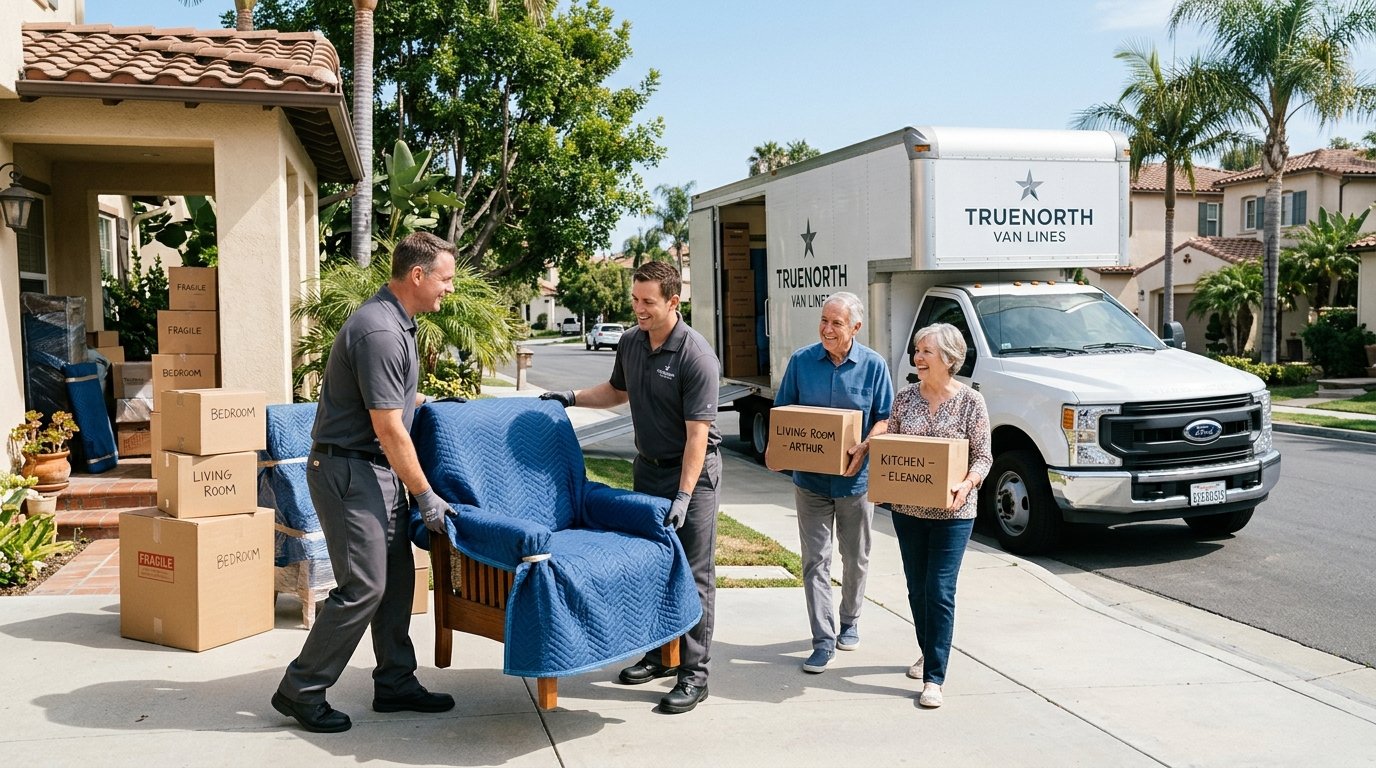
Planning a senior move in Southern California can feel overwhelming. You may be helping a parent move closer to family, transitioning into assisted living, or downsizing from a longtime home into a smaller condo. On top of the emotions, there are timelines, building rules, packing decisions, and safety concerns to manage.
When a senior move is not carefully planned, the process can become rushed and stressful: important items go missing, hallways get blocked with boxes, move-out deadlines are missed, and family members end up exhausted. With a clear plan, the right support, and realistic expectations about cost and timing, senior moving and downsizing in Southern California can be organized, respectful, and much easier on everyone involved.
This guide walks you through each stage of a senior move: from deciding what to take and what to store, to comparing moving estimates, preparing the home, and coordinating move-in with an apartment, condo, or assisted-living community. You will also see where professional local moving and storage services from TrueNorth Van Lines can step in to handle the physical work while you stay focused on decisions and care.
Whether you are moving within the same neighborhood or across Southern California, the goal of this guide is to give you a step-by-step framework, practical checklists, and sample timelines you can adapt to your family's situation.
Key takeaways
- Start planning a senior move in Southern California 6–8 weeks ahead when possible so you have time for sorting, paperwork, and building coordination.
- Local moving, professional packing, and secure storage can be combined to create a gradual, low-stress downsizing plan instead of a single rushed moving day.
- Costs are driven by volume, distance, access (stairs, elevators, long carries), packing level, and timing; clear inventories help movers provide accurate estimates.
- Assisted living and senior communities often have specific move-in windows, elevator reservations, and insurance requirements that must be met by your mover.
- Keep medications, important documents, daily medical equipment, and a few days of clothing with the senior instead of on the moving truck.
- Written questions, a simple timeline, and labeled room plans help seniors feel informed and reduce confusion on moving day.
- Working with a licensed, insured mover that understands senior needs helps protect belongings and reduces the physical and emotional strain on families.
Understanding senior moving and downsizing in Southern California
Senior moving and downsizing in Southern California often involves more than a simple address change. Many moves are triggered by a health event, a desire to be closer to family, or the decision to transition into assisted living or a 55+ community. Homes may have decades of belongings, full garages, and sentimental items that require conversation and care.
Compared with a typical household move, senior moves tend to include:
- More planning and communication among family members
- More sorting and downsizing before moving day
- Additional coordination with property managers and care communities
- Accessibility concerns such as walkers, wheelchairs, or hospital beds
- The need to reduce stress and confusion for the senior being moved
Southern California adds its own layer of logistics: busy urban areas, parking restrictions, HOA rules, and tight building schedules. A planned approach, backed by professional local moving services and secure storage services, can turn what feels like a major disruption into a series of manageable steps.
Common senior move scenarios
- Downsizing from a single-family home to a condo or apartment
- Moving from one apartment to another closer to family or services
- Transitioning into an assisted living or memory-care community
- Relocating within Southern California to be nearer to medical providers
- Moving a surviving spouse into a more manageable home after a loss
"We want to respect what matters to you, move only what fits your new home comfortably, and create options for anything that needs more time and thought."
When to start planning a senior move
The most important factor in a low-stress senior move is starting early. Rushed decisions are hard on seniors and families. When possible, begin planning 6–8 weeks before the desired move date.
Ideal timeline to begin
- 8 weeks out: Talk as a family, confirm the destination address (or at least the target area), and gather key paperwork.
- 6 weeks out: Schedule in-home or virtual estimates with movers, including at least one company that offers both moving and storage.
- 4 weeks out: Begin room-by-room sorting, donations, and planning what will go to storage.
- 2 weeks out: Confirm building requirements, elevator reservations, and moving-day details with the mover and communities involved.
- 1 week out: Finalize packing or confirm packing services, prepare a moving-day essentials bag, and review the plan with the senior.
If your situation is more urgent, the same steps still apply, but they may be compressed into a shorter window. Even with a tight schedule, a simple written plan helps everyone stay aligned.
Signs it is time to start planning
- Home maintenance, stairs, or yardwork are becoming unsafe or unmanageable
- Doctor or care provider has recommended a move closer to support
- The home feels cluttered, and navigating hallways is becoming risky
- Family is spending significant time traveling back and forth to help
- A move into assisted living has been scheduled or is under consideration
"Let's start with dates, health needs, and what feels most important to keep. From there we can build a realistic plan around your timeline."
Choosing between local moving, packing, and storage services
Senior moving and downsizing in Southern California rarely fits into a one-size-fits-all package. The right combination of services depends on health, budget, distance, and how much help the family can provide.
Core service options
| Service type | Best for | How it helps seniors |
|---|---|---|
| Local moving services | Moves within the same metro area or region | Handles loading, transport, and unloading so seniors avoid heavy lifting and reduce fall risk. |
| Professional packing services | Busy families, health limitations, or many fragile items | Reduces physical strain and protects fragile memories, dishes, and artwork. |
| Secure storage services | Gradual downsizing, estate planning, or temporary housing gaps | Gives time to make decisions, prevents clutter in the new home, and supports multi-stage moves. |
TrueNorth Van Lines can combine local moving services, professional packing services, and secure storage services into a single planned move, so you do not have to coordinate multiple companies.
Levels of service to consider
- Labor-only loading or unloading: Movers provide loading and unloading, while you handle the truck rental. This is budget-friendly but requires more family coordination.
- Standard local move: Movers load, transport, and unload everything that is packed and ready. Families handle the packing.
- Partial packing: Movers pack fragile, heavy, or specialty items (china cabinets, art, TVs), while the family packs the rest.
- Full-service move: Movers handle packing, loading, transport, unloading, and basic furniture placement. This is often the best choice for seniors with health or mobility challenges.
For many senior moves, a combination of partial packing and storage is the most balanced option, reducing stress without overextending the budget.
What affects the cost of a senior move
Senior moving and downsizing in Southern California can range from a few hundred dollars for a small apartment move with family help, to several thousand dollars for a full-service, multi-day transition with packing and storage. Understanding the main cost drivers will help you plan and compare estimates fairly.
| Cost factor | What it means | How to manage it |
|---|---|---|
| Volume / size of move | The total amount of furniture and boxes to be moved. | Downsize early, donate or gift duplicates, and consider storage for items you are unsure about. |
| Distance and travel time | How far the truck and crew must travel between addresses. | Group tasks into one or two main days to reduce repeated travel charges where possible. |
| Access and building conditions | Stairs, elevators, long carries, and parking challenges. | Reserve elevators, clear hallways, and share accurate access details with your mover. |
| Packing level | Whether items are pre-packed or the mover provides packing services. | Use partial packing: let movers handle fragile and heavy items, and pack non-breakables yourself. |
| Scheduling and season | Day of week, month, and season of the move. | If possible, choose mid-week or off-peak dates for more flexibility. |
Using a moving cost calculator and requesting a written quote can help you understand how these factors apply to your specific move. Be sure to share any special needs, such as extra stops to pick up items from family members or deliver to storage.
Sample timeline for a planned senior move
Every family is different, but a clear timeline keeps senior moving and downsizing in Southern California organized and less stressful. The example below assumes about eight weeks to prepare.
| Time before move | Key tasks | Senior-friendly focus |
|---|---|---|
| 6–8 weeks | Confirm destination, tour new home, gather documents, start a simple floor plan, contact movers for estimates. | Involve the senior in decisions and show photos of the new space. |
| 4–6 weeks | Begin room-by-room sorting, decide on donations and gifts, identify items to store. | Work in short, calm sessions to avoid fatigue and frustration. |
| 2–4 weeks | Book movers and storage, confirm building requirements, start packing non-essentials or schedule packing help. | Keep daily-life items in place as long as possible. |
| 1 week | Finalize packing, label boxes by room, prepare essentials bag, confirm move-in time with the new community. | Walk through the plan with the senior and answer questions. |
| Moving day | Meet movers, protect floors, direct furniture placement, set up bed, medications, and basic kitchen items first. | Keep the senior away from heavy traffic areas; focus on comfort and familiar items. |
You can adapt this timeline for shorter or longer moves. The key idea is to separate emotional decisions (what to keep) from the physical work (packing and moving), and avoid doing both in a single exhausting weekend.
How to sort, downsize, and decide what to keep
Downsizing is often the most emotional part of senior moving and downsizing in Southern California. Many seniors have lived in their homes for decades, and nearly every item holds some memory. Your goal is to keep the home safe and comfortable, not to rush or minimize those feelings.
Room-by-room downsizing checklist
- Start with low-sentiment areas: Laundry room, hallway closets, pantry, garage shelves.
- Work in short sessions: 60–90 minutes at a time, with breaks to avoid fatigue.
- Use four categories: Keep, Donate, Give to family, Not sure (for storage).
- Measure furniture: Confirm what fits in the new home using a simple floor plan.
- Photograph memories: Take photos of items that will be donated or given away but still hold meaning.
Practical decisions for common items
| Item type | Decision guide | Suggested action |
|---|---|---|
| Furniture sets | Measure the new space; focus on comfort, not sets. | Keep a comfortable chair, bed, and table; offer extra pieces to family or store. |
| China and glassware | How often will full sets be used in the new home? | Keep a smaller favorite set; gift or store full collections. |
| Clothing and linens | Consider climate, care level, and closet space. | Keep favorites and essentials; donate duplicates and formal items rarely used. |
| Photos and memorabilia | High-sentiment items deserve more time and care. | Keep a core selection accessible; consider scanning or storing the rest. |
If decisions are hard, storage can give breathing room. Instead of forcing a yes/no choice on every item before moving day, you can send "not sure yet" items to a secure facility and revisit them later, when the senior is settled.
Using storage to support a gradual downsizing
Secure, professionally managed storage can be an important part of senior moving and downsizing in Southern California. It allows you to move the essentials into the new home now, while preserving options for family heirlooms, seasonal items, or furniture that may not fit immediately.
When storage makes sense
- The new space is significantly smaller, and you are unsure which furniture will feel right.
- The senior wants to see how the new home feels before deciding what to let go.
- Family members live out of town and need time to travel and choose items.
- There is a timing gap between selling the current home and moving into the new one.
- Estate-related decisions require more time and coordination.
Planning storage with a mover
Using the same company for moving and storage keeps things simpler. With TrueNorth Van Lines, the same crews that handle your local moving services can take items directly to secure storage services on moving day. That means fewer handoffs and clearer tracking of which items went where.
- Ask for a written inventory of stored items.
- Group storage items by family member, room, or decision level (keep, maybe, unknown).
- Label boxes with both "new home" or "storage" so movers can separate them quickly.
- Ask about access procedures if you need to retrieve items later.
Many families find that this "two-step" approach is more manageable: move what is clearly needed now, store what is in question, and then downsize again once everyone is rested and settled.
Helpful TrueNorth Van Lines services
How to prepare the home before movers arrive
A well-prepared home makes moving day smoother, faster, and safer for seniors and crews. Even when you book full-service options, a few simple steps in the days leading up to the move can prevent delays and confusion.
Safety and access checklist
- Clear hallways and walkways of small furniture, cords, and loose rugs.
- Identify any items that must stay with the home (built-ins, fixtures) and tag them.
- Confirm parking options for the truck or van; notify neighbors or HOA if required.
- Reserve elevators at both locations, if applicable.
- Set aside a quiet room or area where the senior can rest away from the main activity.
Labeling and organization tips
- Label every box on the side, not just the top, with both room and brief contents (for example, "Bedroom – nightstand items").
- Use color-coded stickers or tape for each room to help movers place boxes correctly.
- Place "Do Not Move" notes on items that are staying or being picked up separately.
- Keep remote controls, cables, and screws for electronics in labeled zip-top bags taped to the main item or placed in an "electronics" box.
Even if TrueNorth Van Lines is providing professional packing services, it still helps to identify high-priority items and areas you want packed first, so seniors are not without daily essentials too early.
How to compare moving estimates and choose a mover
For senior moving and downsizing in Southern California, choosing the right mover is about more than price. You need a company that is licensed and insured, familiar with local building rules, and comfortable working with older adults and their families.
What to look for in estimates
- Clear description of services: Packing or no packing, local only or local plus storage, number of crew members, and truck size.
- How time and cost are calculated: For local moves, this is often hourly, with minimum hours and possible travel or fuel charges explained.
- Details on special items: Pianos, large safes, mobility equipment, and high-value artwork should be clearly noted.
- Valuation options: Basic coverage vs. higher levels of protection for belongings.
When comparing two or more estimates, make sure you are comparing similar service levels. A quote that includes full packing will naturally be higher than one that assumes everything is already in boxes.
Simple comparison table you can create
Use a sheet of paper or spreadsheet to compare key details:
| Mover | Services included | Notes |
|---|---|---|
| Company A | Local move, no packing, no storage | Family must pack everything; storage needs separate vendor. |
| Company B | Local move, partial packing, storage option | Single provider for move and storage; less coordination for family. |
Be sure to ask how changes in inventory (such as adding or removing rooms of furniture) would affect the price. Written estimates based on a walkthrough or detailed video call are typically more reliable than quick phone quotes without much information.
Questions to ask before booking a senior mover
Asking clear, focused questions will help you understand how prepared a moving company is to support senior moving and downsizing in Southern California.
- Are you licensed and insured for local and, if needed, long-distance moves?
- How often do your crews handle senior or assisted-living moves?
- Can you provide both moving and storage services under one agreement?
- Do you offer partial or full packing services, and how is packing charged?
- How do you handle moves into communities with strict time windows or elevator rules?
- What is your process if we need to adjust the inventory or dates before the move?
- What valuation options do you offer for belongings?
- Will the same company handle the entire move, or will any services be subcontracted?
"Because we are moving an older parent, we want to be sure the crew is patient and experienced with senior moves. Can you describe how you handle those moves and communicate with families?"
What seniors and families should keep with them on moving day
Regardless of how organized the move is, there will be a period when belongings are on the truck and boxes are stacked in the new home. Keeping certain essentials with the senior—not on the truck—makes this transition safer and calmer.
Moving-day essentials checklist
- Medications and detailed medication list
- Important documents (ID, insurance cards, medical directives, financial contacts)
- Daily medical equipment (hearing aids, glasses, walkers, CPAP machine)
- One or two changes of clothing and sleepwear
- Basic toiletries and towels
- Phone, charger, and list of emergency contacts
- Favorite blanket, pillow, or small personal items that provide comfort
- Snacks, water, and any dietary items that may not be easy to find right away
Pack these items in a clearly labeled suitcase or tote that stays with the senior or a designated family member at all times. Let the crew know that this bag is not to be loaded on the truck.
Common senior moving mistakes and how to avoid them
Senior moving and downsizing in Southern California has patterns. Families are often surprised by the same issues: underestimating time to downsize, overlooking building rules, or trying to handle too much alone.
| Common mistake | Result | How to prevent it |
|---|---|---|
| Waiting too long to start sorting and downsizing | Last-minute decisions, stress, and sometimes paying to move items that will later be donated. | Begin with one room 6–8 weeks before the move; set small, regular goals. |
| Not confirming building requirements | Delays at elevators, parking issues, or rescheduling fees. | Ask both buildings about move-in/move-out rules, time windows, and insurance needs. |
| Trying to do all packing without help when health is limited | Physical strain, increased fall risk, and incomplete packing on move day. | Use partial packing for heavy or fragile items; ask family and friends to support lighter tasks. |
| Assuming storage is not needed | New home feels overcrowded; repeated moving of items in and out. | Plan for some secure storage services if you have many "not sure yet" items. |
Another common mistake is not involving the senior in decisions. Even when health or cognition is limited, explaining the plan clearly and repeatedly, in simple language, helps reduce anxiety.
"First we will move your favorite chair, bed, and photos. The other items are going to safe storage while we decide what fits best."
How TrueNorth Van Lines supports senior moves
TrueNorth Van Lines offers a combination of local moving, packing, and storage support that can be tailored to senior moving and downsizing in Southern California. The focus is on safety, communication, and practical planning rather than rushed, one-size-fits-all moves.
Ways TrueNorth Van Lines can help
- Local and regional moves for apartments, condos, single-family homes, and senior communities
- Professional packing services for fragile, high-value, or hard-to-pack items
- Secure storage for staged downsizing, timing gaps, or estate-related items
- Coordination with property management and community staff about elevator times and access
- Clear expectations about scheduling, crew size, and approximate duration of the move
You can review service areas and the full range of moving services offered, then request a free moving quote with basic information about the current and future home.
Planning next steps
- Talk with your senior family member about goals and concerns.
- Make a simple list of rooms and large items that will be moved.
- Use the moving cost calculator to get a general sense of budget.
- Contact TrueNorth Van Lines to discuss timing, packing, and storage options.
- Adjust the timeline and service level to match your family's needs and abilities.
A planned, step-by-step move often leads to a calmer transition and a safer, more comfortable new home for the senior involved.
Frequently asked questions
How far in advance should we book a senior move in Southern California?
When possible, book 4–6 weeks in advance, especially if you need specific dates or packing help. This gives time for estimates, sorting, and coordinating with buildings or senior communities. Short-notice moves are often possible, but planning ahead usually results in smoother scheduling and less stress.
Is it better to downsize before or after we move?
If the senior is up to it, starting some downsizing before the move can reduce costs and clutter. However, it is not always realistic to make every decision upfront. Many families choose a blended approach: downsize obvious items now, then use storage for "not sure yet" belongings and make final decisions after the senior is settled.
Can movers help pack a senior's home, or do we need to do it ourselves?
Professional movers like TrueNorth Van Lines can handle full packing or partial packing. For many senior moves, partial packing is ideal: the crew packs fragile, heavy, or complex items, while the family handles linens, clothing, and non-breakables. This reduces physical strain while keeping costs manageable.
How do we move into an assisted-living or senior community with strict rules?
Most assisted-living communities in Southern California have set move-in windows, elevator reservations, and insurance requirements for movers. Share those rules with your moving company as early as possible. A professional mover will coordinate arrival times, truck placement, and insurance documents to fit the community's policies.
What if my parent is anxious or resistant to moving?
Anxiety is common. Involve your parent in small decisions, visit or show photos of the new home, and move familiar items (favorite chair, bedding, photos) first. Work in short sessions for sorting, and keep explanations simple and consistent. Sometimes involving a neutral professional mover or senior move manager helps reduce family tension.
How much does a typical senior move cost?
Costs vary depending on home size, distance, access, packing level, and storage needs. A small local apartment move without packing may cost significantly less than a full house move with packing and storage. Use the moving cost calculator and request a written quote that reflects your actual inventory and access details.
Should we use storage during a senior downsize?
Storage can be very helpful when space is limited or decisions are emotional. It allows you to move essentials into the new home and give families more time to sort heirlooms, collections, or seasonal items. Using the same company for moving and storage simplifies logistics and tracking.
What should stay with the senior instead of going on the moving truck?
Keep medications, daily medical equipment, important documents, a few days of clothing, essential toiletries, and comfort items with the senior or a family member. These items should travel by car, not on the truck, so they remain available even if there are delays or the truck is still being unloaded.
Can TrueNorth Van Lines help if our dates or plans change?
Move plans sometimes change due to health, housing availability, or building schedules. Contact TrueNorth Van Lines as early as possible if you need to adjust dates or inventory. The team will explain what is possible and how any changes may affect timing or cost.
Do you offer help for long-distance senior moves as well as local ones?
Yes. While many senior moves in Southern California are local, TrueNorth Van Lines also provides long-distance moving services. For longer relocations, planning, packing, and storage become even more important, so discuss your full route and timing with the team.
Sources referenced in this guide
For this guide on senior moving and downsizing in Southern California, general best practices were informed by:
- Federal Motor Carrier Safety Administration consumer guidance on working with licensed movers
- U.S. Department of Transportation moving guidance and general safety recommendations
- State transportation and consumer protection agency information related to local moving rules
- Building management move-in and move-out requirements commonly used by apartments, HOAs, and senior communities
- Written moving estimates, carrier tariffs, valuation options, and service agreements used in the moving industry
These sources provide general frameworks for safe, organized moves. Always review your specific service agreement and local building rules for requirements that apply to your move.
This guide is general moving information, not legal, insurance, or regulatory advice. Moving requirements, pricing, access rules, and coverage options may vary by location, move type, building rules, and service agreement.
When you are ready to take the next step with senior moving and downsizing in Southern California, you can review service areas, explore available moving services, use the moving cost calculator, and request a free moving quote. A well-planned move, combined with experienced support, can help your family focus less on logistics and more on helping your senior loved one feel at home in the next chapter.