
Full-Service vs. DIY Packing: What’s Worth Paying For
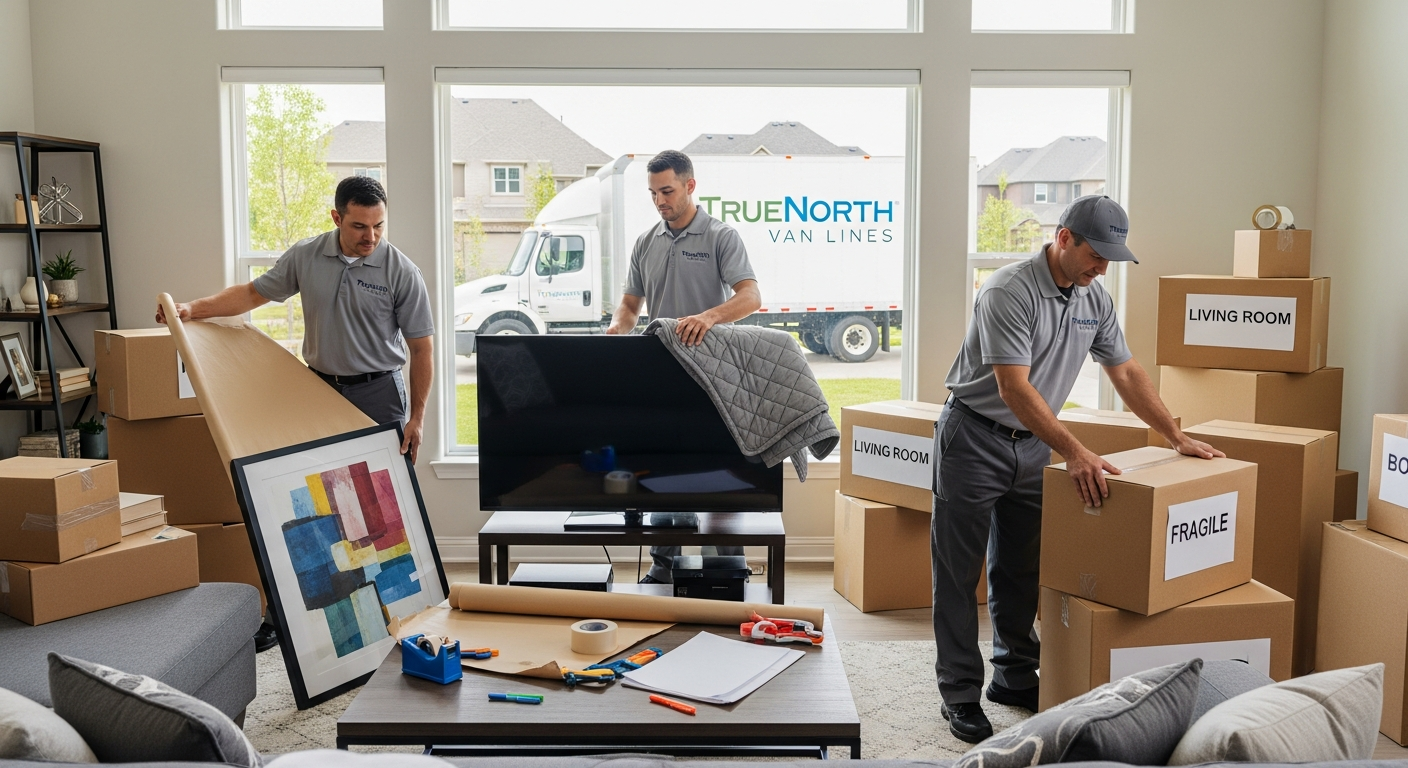
When you plan a move, one of the biggest decisions is whether to let professional movers handle the packing or to pack everything yourself. Packing looks simple until you are staring at a whole house, a limited timeline, and a pile of fragile items that matter to you. The choice between full-service packing, partial packing, and DIY will shape your stress level, your schedule, and your overall moving cost.
TrueNorth Van Lines helps customers every day who are deciding how much packing help to use. Some want a complete hands-off experience so they can focus on work and family. Others only want help with delicate or time-consuming items. Many start out planning to pack everything themselves, then realize halfway through just how much work it really is.
This guide walks through the real-world pros, cons, and costs of full-service vs. DIY packing, plus all the in-between options. You will learn how professional packing actually works, what drives the price, what you can safely handle yourself, and how to plan a smart mix that fits your budget and schedule.
Throughout the guide, we will also point out where TrueNorth Van Lines can help with professional packing services, local and long-distance moves, and secure storage, so you can build a move plan that is realistic and well organized.
Key takeaways
- Full-service packing trades higher cost for major time savings, lower stress, and professional materials; DIY packing lowers cost but adds hours or days of work.
- Partial packing lets you pay movers to pack fragile, high-value, or time-consuming areas while you handle simple, non-breakable items.
- Packing service cost depends on volume, item type, access, materials, timeline, and how organized your home is when packers arrive.
- You should almost always pack personal documents, daily medications, valuables, and irreplaceable sentimental items yourself.
- A realistic, planned packing timeline for an average home is 1–3 days with a crew vs. 2–4 weeks of evenings and weekends for DIY.
- Clear labeling, room-by-room planning, and separating «do not pack» items are critical whether you hire packers or go DIY.
- TrueNorth Van Lines offers flexible packing options, from full-service to targeted help for kitchens, fragile items, or last-minute finishing.
How professional packing actually works
Understanding how packers operate makes it easier to decide what level of service you want and how to budget for it. Professional packers follow a planned process designed to protect your belongings and keep move day efficient.
What full-service packers typically do
- Arrive with boxes, paper, tape, and specialty materials.
- Walk through your home with you to confirm what is being moved and what is not.
- Pack room by room, grouping items logically and labeling boxes.
- Wrap fragile and furniture items with paper, pads, or stretch wrap as needed.
- Prepare an inventory for long-distance or interstate moves.
With a company like TrueNorth Van Lines, the same crew may handle both packing and moving, which helps with consistency and accountability.
How long packing usually takes
Timing depends on the size and complexity of your home. For example:
- Studio or small one-bedroom: often 4–8 labor hours.
- Two- or three-bedroom home: often 1 full day with a small crew.
- Four-plus bedroom home: often 1–2 days with a larger crew.
DIY packing for the same homes typically stretches over many evenings and weekends. This is where a planned approach, and possibly combining DIY with professional help, really pays off.
Full-service vs. DIY packing: overview
The decision is not just «pay for everything» or «do everything yourself.» There is a spectrum of options. Still, it helps to understand the core differences between full-service and DIY.
| Option | What it includes | Best for |
|---|---|---|
| Full-service packing | Movers pack nearly everything with professional materials and techniques. | Busy households, tight timelines, larger homes, or long-distance moves. |
| Partial packing | Movers pack select rooms or item types, you pack the rest. | Budget-conscious moves that still need professional help in key areas. |
| DIY packing | You handle all packing and materials, movers just load/transport/unload. | Smaller homes, flexible timelines, or very tight budgets. |
Each option has tradeoffs in cost, control, and effort. Full-service packing typically increases the total move cost, but it can dramatically cut down on time and stress. DIY saves money but requires a lot of labor, organization, and attention to detail.
Pros and cons at a glance
- Full-service packing pros: Fast, professional, less stressful, materials included, better protection for fragile items.
- Full-service packing cons: Higher cost, less hands-on control over how every box is packed.
- DIY packing pros: Lower cost, complete control, pack at your own pace.
- DIY packing cons: Time-consuming, physically demanding, easier to under-pack, over-pack, or mislabel boxes.
What really affects packing service cost
Packing service cost is not a single flat number. It is calculated based on several factors that a company like TrueNorth Van Lines reviews during your estimate. Understanding these helps you anticipate cost and see where you can adjust your plan.
Key cost drivers
- Volume of items: More rooms and belongings mean more boxes, labor, and materials.
- Fragility and complexity: Glassware, art, electronics, and antiques require more time and padding.
- Home layout and access: Stairs, long walks, and tight spaces add handling time.
- Timeline: Last-minute or rush packing can increase cost compared with a well-planned schedule.
- Level of organization: Cluttered or unprepared spaces take longer to sort and pack.
- Type of move: Long-distance and interstate moves often involve more detailed inventory and preparation.
Below is a simplified look at how each factor can change your packing investment.
| Factor | Effect on cost | How to control it |
|---|---|---|
| Number of rooms/items | More to pack = higher labor and material cost. | Declutter before the estimate and donate or sell unneeded items. |
| Fragile items | Delicate items require extra time and supplies. | Decide if you want movers to handle only the most fragile items. |
| Home access | Stairs, distance, and obstacles add labor time. | Ensure clear walkways and reserve elevators where needed. |
| Timeline and flexibility | Rush jobs can cost more due to scheduling and crew needs. | Book early and keep your packing days flexible when possible. |
| Organization level | Unsorted clutter slows packers, raising labor time. | Group similar items and separate trash, donations, and «do not pack» items. |
Many customers use the TrueNorth Van Lines moving cost calculator to get a rough idea of overall move cost, then use a detailed quote to decide how much packing help fits their budget.
Packing timelines and planning your schedule
A realistic, planned packing schedule is one of the best ways to keep your move under control. Whether you choose full-service or DIY, treat packing as its own mini-project with a start date, milestones, and deadlines.
Typical packing timelines
| Home size | DIY packing timeline (planned evenings/weekends) | Full-service packing timeline (crew) |
|---|---|---|
| Studio/1-bedroom | 1–2 weeks of part-time packing | Half day to 1 day |
| 2–3 bedroom home | 2–3 weeks of evenings/weekends | 1 full day with a crew |
| 4+ bedroom home | 3–4+ weeks of steady packing | 1–2 days, depending on size and complexity |
Sample planned packing schedule (DIY or partial)
Here is a simple way to structure DIY or partial packing around a planned move date:
- 4–6 weeks before move: Declutter, donate, and sell unneeded items. Start packing out-of-season clothing and decor.
- 3–4 weeks before move: Pack storage areas, guest rooms, and rarely used closets.
- 2–3 weeks before move: Pack books, wall art, and extra linens. Confirm packing dates with your movers if using partial or full-service packing.
- 1–2 weeks before move: Pack most of the kitchen except everyday essentials. Pack non-essential toys, office supplies, and bathroom extras.
- 2–3 days before move: Finish bedrooms and living areas. Professional packers often handle all remaining items at this stage.
- Moving day: Pack your last-day essentials bag and clearly separate items that stay with you.
Example wording to add to your calendar: «Thursday evening: pack hallway closet and label 4 boxes for storage.» Small, planned tasks keep you from getting overwhelmed.
What you should almost always pack yourself
Even when you pay for full-service packing, there are categories of items most customers prefer to handle personally. Some may also be required to stay with you for security or regulatory reasons.
Items to keep in your control
- Important documents (passports, IDs, insurance, financial records).
- Daily and backup medications.
- Small, high-value items (jewelry, small electronics, collectibles).
- Sentimental keepsakes that cannot be replaced.
- Critical work equipment you need immediately on arrival.
- Basic toiletries and a few days of clothing for each family member.
Sample note to your mover: «These two suitcases and the black backpack are not to be packed or loaded. They are staying with us.» Clear instructions prevent confusion on packing day.
Items movers may not pack
Many moving companies will not pack or transport hazardous or perishable items. This can include:
- Propane tanks and fuel.
- Household chemicals and some cleaning supplies.
- Perishable food from the refrigerator or freezer.
- Live plants, depending on distance and regulations.
Ask your TrueNorth Van Lines moving consultant in advance about any restricted items so you can plan to use, donate, or safely dispose of them before moving day.
When it is worth paying movers to pack
Deciding whether you should pay movers to pack is ultimately about time, risk, and energy. In many situations, a planned investment in professional packing pays off clearly.
Situations where full-service or partial packing is often worth it
- You are on a tight timeline. If you are starting a new job, closing on a home, or have to be out by a certain date, full-service packing can keep the schedule realistic.
- You are moving long-distance or interstate. Longer moves involve more handling and more time on the road. Professional packing can reduce the risk of damage during a long trip.
- You have a large or complex home. Multiple floors, a lot of fragile decor, or a big family household all add packing hours.
- You have limited physical ability or health concerns. Bending, lifting, and reaching for long periods can be hard on your body.
- You are balancing work, kids, or caregiving. In a busy season, the time you save may be worth more than the cost of packing help.
Typical items people are happiest to let pros handle
- China, glassware, and stemware.
- Framed art and mirrors.
- Electronics, speakers, and gaming setups.
- Lamps and delicate decor.
- Garage tools, shop items, and oddly shaped gear.
Many TrueNorth Van Lines customers tell us later that having the kitchen and fragile items professionally packed was the single most helpful part of their move, even when they handled most other rooms themselves.
Partial packing options and smart combos
You do not have to choose between «all or nothing.» Partial or hybrid packing is often the most budget-friendly solution, blending professional expertise with your own effort.
Common partial packing approaches
| Partial packing style | What movers pack | You handle |
|---|---|---|
| Fragile-only packing | China, glass, art, electronics, mirrors, fragile decor. | Books, clothes, linens, toys, pantry, and non-breakables. |
| Kitchen-first packing | All kitchen contents and breakables in dining/living areas. | Bedrooms, bathrooms, closets, home office. |
| Last-minute rescue | Remaining unpacked areas a day or two before move. | Most pre-packing and sorting done in advance. |
How to plan a partial packing strategy
- Walk through your home and mark rooms as «DIY,» «shared,» or «pro-only.»
- Estimate how many evenings/weekends you realistically have before move day.
- Assign high-skill or time-consuming areas (kitchen, fragile decor) to your movers.
- Assign simpler areas (linen closets, bookshelves, clothing) to DIY packing.
- Discuss your plan with your TrueNorth Van Lines moving consultant so your quote reflects your actual needs.
This kind of planned, partial approach often gives customers the right mix of control, cost savings, and professional support.
How to compare packing estimates
Not all packing quotes are structured the same way. When you compare estimates from moving companies, you want to understand what is and is not included so you are comparing on equal terms.
Questions to ask about packing estimates
- Is the packing cost based on an hourly rate, a flat rate, or a mix?
- Are all packing materials (boxes, paper, tape) included, or are they extra?
- Does the quote include specialty boxes (wardrobe, dish packs, TV boxes) if needed?
- Is there a separate line item for packing labor vs. moving labor?
- What happens if you need more or fewer boxes than estimated?
- How are valuation coverage and liability handled for items you pack vs. items the movers pack?
Below is a quick comparison of what to look for when reviewing different estimates.
| Estimate detail | Why it matters | What to check |
|---|---|---|
| Packing scope clearly listed | Prevents surprises about which rooms or items are included. | Look for room-by-room or category notes, not just «packing» as one line. |
| Materials included or separate | Boxes and paper can add up; know if they are in the price. | Confirm whether standard packing materials are bundled in. |
| Valuation/coverage terms | Coverage can differ for items you pack vs. movers pack. | Ask how self-packed boxes are handled if damage occurs. |
Written estimates and clear communication
Always get your packing scope and pricing in writing, as part of your overall moving estimate and service agreement. If you change your mind later (for example, you start DIY packing and decide you want more help), let your mover know as early as possible so they can update your plan and crew schedule.
How to prepare before packers arrive
Whether you choose full-service, partial, or just have movers load your own boxes, the way you prepare your home will directly affect both your experience and your cost.
Pre-packing checklist
- Finish decluttering, including trash, donation, and recycling runs.
- Separate and clearly mark anything that will not be moved.
- Group small loose items into bins or trays for easier packing.
- Unplug electronics and wrap or label cables where possible.
- Launder and dry towels and linens that will be packed.
- Secure pets in a safe, quiet area on packing and moving days.
Labeling and «do not pack» zones
Clear labeling is just as important when professionals pack for you. It helps your movers know what goes where and what should be left alone.
- Use sticky notes or painter’s tape to mark doors or cabinets that are «do not pack.»
- Set aside a countertop, closet, or entire room for items that stay with you.
- Label sensitive areas like «pack last» (for everyday dishes, kids’ favorite toys, etc.).
Sample sign you can tape to a closet door: «Do not pack – staying with us.» Simple, large-print notes are easy for the crew to follow.
What to keep with you on moving day
Think of your move as an overnight or weekend trip where you may not have full access to your boxes right away. Plan a set of essentials that never goes on the truck.
Moving day essentials bag
- Wallets, keys, phones, chargers, and small electronics.
- Medications and medical devices.
- Basic toiletries and a few towels.
- One or two changes of clothes for each person.
- Snacks, water, and quick meals, especially if you have kids.
- Copies of your moving paperwork and contact numbers for TrueNorth Van Lines.
Home setup essentials box
In addition to personal bags, consider a clearly labeled «first 24 hours» box that you or the movers load last and unload first. This might include:
- Simple kitchen items (a pan, a few plates, cutlery, coffee supplies).
- Basic cleaning supplies.
- Light bulbs, small toolkit, and scissors/box cutters.
- Pet food, leashes, and comfort items.
Let your crew know which box this is so they can help ensure it is easy to access at your new home.
Common packing mistakes and how to avoid them
Some of the most expensive or stressful moving issues come from preventable packing mistakes. Whether you go DIY or hire professionals, being aware of these risks helps you plan around them.
| Common mistake | Why it is a problem | How to prevent it |
|---|---|---|
| Overloading large boxes with books or heavy items | Boxes can break or become too heavy to carry safely. | Use small boxes for books and heavy items; keep boxes under a comfortable lifting weight. |
| Under-padding fragile items | Plates, glasses, and decor can chip or break in transit. | Use plenty of paper and dish packs, or let movers handle fragile packing. |
| Poor labeling or no labeling | Unpacking takes longer and essentials are hard to find. | Label boxes with room + summary («Kitchen – pots and pans»). |
| Mixing «keep with me» items into packed boxes | Important documents or medications may end up on the truck. | Create a clearly separate, off-limits area for personal and essential items. |
Having trained professionals from TrueNorth Van Lines pack your most fragile or high-value categories can dramatically reduce the risk of these common issues.
How TrueNorth Van Lines can support your move
TrueNorth Van Lines is a professional, licensed, and insured moving company serving residential and commercial customers across local and long-distance moves. Our teams are experienced in full-service packing, partial packing, and carefully handling self-packed boxes. We focus on planned, organized moves that respect your time, budget, and belongings.
Flexible packing and moving options
- Professional packing services for full-service or partial packing.
- Local moving services for apartment, house, and office moves in your area.
- Long-distance moving services for interstate and cross-country relocations.
- Secure storage services when your timelines do not line up perfectly.
During your estimate, a TrueNorth Van Lines moving consultant can walk you through full-service vs. DIY packing and help you build a plan that matches your priorities. You can start with our moving cost calculator to get a rough idea of costs, then request a free moving quote when you are ready for a detailed plan.
Helpful TrueNorth Van Lines services
Planning your move with TrueNorth Van Lines
Beyond packing, TrueNorth Van Lines can help you plan the full timeline of your move, from the first quote through delivery. That includes confirming building requirements, access and elevator reservations, and any special handling needs for your belongings.
For more planning ideas and detailed tips, you can also browse the TrueNorth Van Lines blog.
Frequently asked questions
Is full-service packing really worth it?
It depends on your situation. If you have a larger home, a tight timeline, long work hours, or many fragile items, paying for full-service or partial packing is often worth the cost. You save days of work, reduce stress, and get professional protection for your belongings. If you have a small home and lots of free time, DIY packing may be more practical.
How much does packing service usually add to a move?
Packing service cost varies by volume, item type, and timeline, so there is no universal number. For many customers, full-service packing can add a meaningful amount to the total move price, while partial packing focused on fragile or complex areas adds less. A written estimate from TrueNorth Van Lines will outline packing labor and materials so you can see the impact clearly.
Can I pack some items myself and have movers pack the rest?
Yes. Partial packing is very common. Many customers pack clothes, books, and non-breakables, then have movers handle the kitchen, artwork, electronics, and fragile decor. Make sure your scope is clearly described in your estimate so the crew arrives prepared.
Will movers repack boxes I packed myself?
If a box is clearly unsafe (overloaded or poorly packed), a professional crew may recommend repacking it or rebalancing items for safety and protection. Discuss this with your TrueNorth Van Lines consultant in advance, especially for long-distance moves, so you understand how self-packed boxes are handled.
How far in advance should I book packing services?
Ideally, you should book packing and moving services at least several weeks in advance, especially during busy seasons. This gives you time to plan, declutter, and set a realistic schedule. Short-notice bookings may still be possible depending on crew availability, but flexibility helps.
Do packing services include unpacking at the new home?
Unpacking can be added in many cases but is often separate from standard packing and moving. Some customers prefer full unpacking support, while others just want boxes placed in the right rooms to unpack at their own pace. Ask during your quote if you are interested in unpacking options.
What should I do before packers arrive?
Declutter, separate items that are not moving, and clearly mark anything that should not be packed. Group small items, unplug electronics where possible, secure pets, and set aside your personal essentials and documents. Being organized when the crew arrives keeps the process smooth and efficient.
Are packing materials included when I hire movers to pack?
Often, standard packing materials are included in the packing portion of your estimate, but every company structures pricing differently. Ask whether boxes, paper, tape, and specialty cartons are bundled into your TrueNorth Van Lines quote or listed separately so you know exactly what is covered.
What if I start packing myself and run out of time?
This happens frequently. If you realize you are behind schedule, contact your mover as soon as possible. TrueNorth Van Lines may be able to add partial or last-minute packing support so your move can stay on track, depending on availability and your move date.
Sources referenced in this guide
Professional moving and packing practices are guided by several industry and regulatory references. When planning your move, you may also review information from:
- Federal Motor Carrier Safety Administration consumer guidance for interstate moves.
- U.S. Department of Transportation moving guidance.
- State transportation or consumer protection agencies for local rules.
- Building management move-in and move-out requirements for your specific property.
- Written moving estimates, bills of lading, and service agreements from your chosen mover.
- Carrier tariffs and valuation options that describe coverage levels for your shipment.
This guide is general moving information, not legal, insurance, or regulatory advice. Moving requirements, pricing, access rules, and coverage options may vary by location, move type, building rules, and service agreement.