
The Complete Moving Packing Checklist (Room by Room)
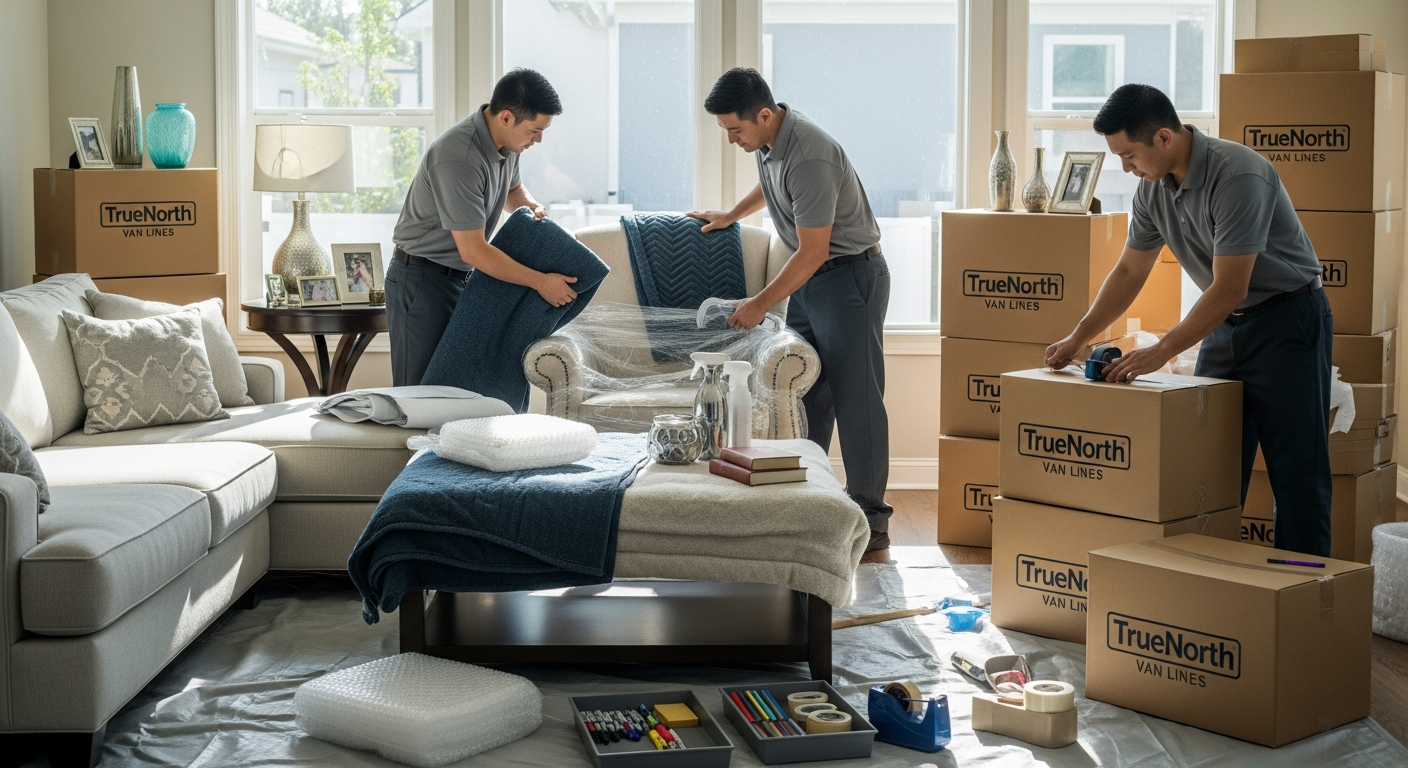
Planning a move is stressful enough without trying to remember every last item that needs to be packed, labeled, and ready for the truck. A missing box of kitchen essentials, a poorly wrapped TV, or an overflowing closet on moving day can slow down the crew, increase costs, and add a lot of last-minute frustration.
A clear, room-by-room moving packing checklist turns that chaos into a manageable plan. It helps you decide what to keep, what to donate, what to pack first, and what to leave for moving day. It also ensures your movers can work efficiently, protecting your belongings and your budget.
This guide from TrueNorth Van Lines walks you through The Complete Moving Packing Checklist, room by room. You will see what to pack, how to pack it, when to pack it, and how professional services like professional packing services and local moving services can support your plan. Use this as a working document as you prepare your home or office for moving day.
Whether you are handling most of the packing yourself or choosing a full-service option, this checklist will help you stay organized, avoid common mistakes, and give your movers a clear picture of what needs to be moved.
Key takeaways
- A written, room-by-room packing checklist helps you stay organized, avoid last-minute rush, and reduce the risk of damage or items being left behind.
- Start packing earlier than you think you need to; non-essentials can be boxed up weeks in advance so that moving week is focused on essentials only.
- Using the right boxes, padding, and labels is just as important as what you put in each box, especially for kitchens, electronics, and fragile décor.
- Packing quality and access directly affect your final move cost because they impact how long the crew needs to load and unload your shipment.
- Professional packing services from TrueNorth Van Lines can handle all or only the most challenging rooms, such as kitchens and fragile items.
- Keep a dedicated moving-day essentials kit with documents, medications, chargers, basic tools, and a change of clothes with you, not on the truck.
- Clear communication with your mover about what is packed, what stays, and any special items helps create an accurate estimate and a smoother move.
Why packing well matters for your move
Many people focus on the truck and the moving date and leave packing to the last few days. That is when problems start: heavy boxes packed with random items, unlabeled cartons, fragile belongings wrapped in thin paper, or closets still full when the crew arrives.
Good packing is the foundation of a smooth move. It affects:
- Time – Professional movers can load a well-packed home significantly faster, which can lower labor charges for local moves.
- Safety – Boxes packed correctly protect your belongings and the movers who are carrying them.
- Damage risk – Proper materials and techniques reduce the chance of broken dishes, scratched furniture, or crushed boxes.
- Stress level – When everything is labeled and staged, you can answer the crew's questions quickly and concentrate on the move itself.
Using The Complete Moving Packing Checklist (room by room) ensures nothing is overlooked and that both you and your moving crew are working from the same plan.
Suggested packing timeline before moving day
A realistic packing schedule prevents the last-minute rush that leads to mistakes. Here is a sample timeline you can adapt to your home size and schedule.
| Time before move | Main tasks | Rooms / items to focus on |
|---|---|---|
| 4–6 weeks | Declutter, donate, sell, or recycle; create room-by-room inventory; confirm moving and packing services. | Storage areas, garage, attic, out-of-season items. |
| 3–4 weeks | Start packing non-essentials and décor; label boxes clearly by room and contents. | Guest rooms, books, wall art, collectibles, rarely used kitchen gadgets. |
| 2–3 weeks | Pack most of each room, leaving only daily essentials accessible. | Bedrooms, living room, home office, kids' toys (except favorites). |
| 1 week | Pack the kitchen except for a small “moving week” setup; finalize bathroom items and linens. | Kitchen, bathrooms, laundry, linens, remaining décor. |
| 1–2 days | Pack remaining essentials, electronics, and moving-day kit; confirm access and elevator times. | Everyday dishes, chargers, work items, kids' must-haves. |
If this timeline feels tight, consider partial help from TrueNorth Van Lines, such as professional packing for just your kitchen and fragile items.
Essential packing supplies checklist
Having the right supplies on hand keeps your packing efficient and consistent. Use this checklist to stock up before you start:
- Small moving boxes (books, canned goods, dense items)
- Medium moving boxes (linens, toys, non-fragile décor)
- Large moving boxes (pillows, bulky but light items)
- Wardrobe boxes with hanging bar (clothing on hangers)
- Dish pack / double-wall boxes (dishes, glassware, fragile kitchen items)
- TV boxes or specialty cartons (flat-screen TVs, mirrors)
- Bubble wrap and/or foam wrap
- Packing paper (unprinted newsprint)
- Furniture pads or moving blankets
- Stretch wrap for upholstered furniture
- Heavy-duty packing tape and tape dispenser
- Permanent markers in dark colors
- Labels or colored stickers for room coding
- Zip-top bags for small hardware and parts
- Basic tools (screwdrivers, Allen keys, wrench)
You can source materials yourself or ask about materials and packing support as part of your estimate with TrueNorth Van Lines.
Room-by-room moving packing checklist
The heart of The Complete Moving Packing Checklist is breaking your home into manageable sections. Use the following room-by-room guidance to make sure nothing gets missed and everything is packed safely.
Living room / family room
Living spaces tend to have a mix of fragile items, electronics, and bulky furniture.
- Sort books, magazines, and media; donate what you no longer need.
- Photograph electronics and cable setups before disconnecting.
- Use original boxes for electronics when available; otherwise, use sturdy, padded cartons.
- Remove bulbs and shades from lamps; wrap shades in packing paper and place upright in boxes.
- Wrap framed art and mirrors individually with paper and bubble wrap; use specialty cartons for larger pieces.
- Use moving blankets and stretch wrap to protect sofas, tables, and entertainment centers.
- Label each box with the room and a brief contents description, such as “Living room – game consoles and remotes.”
Sample label format: “Living Room – Box 3 of 6 – DVDs and Game Consoles – Fragile.”
Kitchen
The kitchen is the most time-consuming room to pack, which is why many customers choose professional help for this part of the move.
- Start with items you do not use daily: holiday dishes, specialty cookware, rarely used gadgets.
- Use dish pack boxes or double-wall cartons for dishes and glassware.
- Wrap each plate and bowl in paper; stack vertically instead of flat to reduce breakage.
- Fill open spaces in boxes with crumpled paper or towels so items cannot shift.
- Bundle silverware by type and wrap securely, or use a tray covered with plastic wrap.
- Pack pantry items tightly; avoid packing open liquids that can spill.
- Empty and defrost the refrigerator and freezer at least 24 hours before the move.
- Clearly mark boxes that should be opened first with “Open First – Kitchen Essentials.”
| Kitchen item category | Suggested box type | Packing notes |
|---|---|---|
| Plates, bowls, glassware | Dish pack / double-wall medium box | Wrap each piece; pack vertically; pad top and bottom. |
| Pots and pans | Medium box | Nest items; fill gaps with towels or potholders. |
| Small appliances | Original boxes or medium box | Secure cords; wrap glass/plastic parts separately. |
| Pantry / dry goods | Small or medium box | Group by weight; avoid overloading with canned goods. |
Bedrooms
Bedrooms mix clothing, furniture, and personal items. A simple plan keeps them easy to unpack.
- Use wardrobe boxes for hanging clothes you want to keep wrinkle-free.
- Pack folded clothes in medium or large boxes; avoid making them too heavy.
- Place shoes in their original boxes when possible, or wrap pairs together.
- Use small boxes for jewelry and personal items; keep valuables with you, not on the truck.
- Disassemble bed frames if needed; keep hardware in labeled zip-top bags taped to the frame.
- Use mattress bags or covers to protect mattresses from dirt and moisture.
Sample wording to mark valuables that stay with you: “Do Not Load – Take in Car.”
Bathrooms
Bathrooms are quicker to pack, but leaks and spills are common if you rush.
- Sort through products; safely dispose of expired items.
- Place liquids and toiletries in sealed plastic bags before boxing.
- Use small boxes for medicines, cosmetics, and personal care items.
- Pack towels and bath mats in medium or large boxes to cushion fragile items.
- Set aside a “first-night” bathroom box with essentials like soap, toilet paper, toothbrushes, and basic toiletries.
Home office
Protecting work and financial records is critical.
- Back up computers and sensitive files before packing anything.
- Label cords and devices clearly; use photos to document setups.
- Use sturdy boxes for books, filling gaps to prevent shifting.
- Keep passports, tax records, and essential documents in a folder you carry with you.
- Protect printers and electronics with ample padding and avoid stacking heavy items on top.
Kids' rooms and play areas
Involve older children in the process to reduce stress and help them feel in control.
- Declutter toys and clothing with your child's input where possible.
- Pack out-of-season clothes and less-used toys early.
- Leave a small selection of favorite toys and books for moving week.
- Label boxes clearly by child or room, such as “Sam's Room – Toys.”
- Prepare a special “first-night” box with comfort items like stuffed animals, blankets, and bedtime books.
Laundry room and cleaning supplies
The laundry room is often packed last but should be planned ahead.
- Use small boxes for detergents and cleaning products; avoid overpacking heavy liquids.
- Seal caps with tape and place bottles in plastic bags.
- Unplug and clean the washer and dryer; follow manufacturer guidelines for transport, especially for front-loading washers.
- Keep a basic cleaning kit accessible for move-out touch-ups.
Garage, attic, and storage spaces
These areas tend to have a mix of heavy, odd-shaped, and rarely used items, so start early.
- Sort items into keep, donate, recycle, and dispose piles.
- Use small boxes for tools and hardware; label by type.
- Bundle long-handled tools together and pad sharp edges.
- Drain fuel from lawn mowers and outdoor equipment according to safety guidelines (movers typically cannot load fuel).
- Use sturdy boxes and extra padding for holiday décor and fragile seasonal items.
Entryway and miscellaneous areas
Finish by packing entryway décor, rugs, and miscellaneous items.
- Pack rugs rolled, not folded, when possible.
- Remove and pack wall hooks, small shelves, and organizers.
- Keep keys, garage remotes, and access cards in a clearly labeled envelope for handoff.
How to handle fragile, high-value, and special items
Certain belongings need extra attention due to their monetary or sentimental value. TrueNorth Van Lines can advise you on options for these items during your estimate.
- Fine art and framed pieces
- Mirrors and glass table tops
- Large TVs and electronics
- Musical instruments (pianos, guitars, violins)
- Antiques and family heirlooms
- Collectibles and display items
| Item type | Recommended approach | Why it matters |
|---|---|---|
| Fine art / mirrors | Custom or specialty cartons; padding on all sides; mark as fragile and keep upright. | Reduces impact risk and protects glass and frames. |
| Large TVs | Use manufacturer box if available or TV-specific carton; never lay flat without support. | Avoids pressure on the screen that can cause cracks. |
| Musical instruments | Transport in hard cases; consider climate considerations for sensitive instruments. | Prevents damage to delicate parts and finishes. |
| Heirlooms / collectibles | Wrap individually; use small, well-padded boxes; consider keeping with you. | Protects irreplaceable sentimental items. |
Discuss these pieces with your TrueNorth Van Lines move coordinator so the crew arrives with the right materials and understands your priorities.
Common packing mistakes and how to avoid them
Even well-planned moves can run into trouble if packing shortcuts are taken. Here are frequent mistakes and how to prevent them.
| Common mistake | What can go wrong | Better approach |
|---|---|---|
| Overloading large boxes with books or cans | Boxes become too heavy to move safely; bottoms can tear. | Use small boxes for heavy items and keep weight consistent. |
| Leaving dressers and drawers full | Furniture can be damaged or difficult to carry; drawers may open during transit. | Remove contents unless your mover advises otherwise; pack separately. |
| Using thin, worn-out boxes | Boxes can crush or collapse, damaging contents. | Choose sturdy moving-grade cartons or supplies from your mover. |
| Not labeling boxes by room and contents | Unpacking takes much longer; essentials can be hard to find. | Label top and sides with room + short description + “fragile” if needed. |
| Packing flammable or restricted items | Safety hazards and possible regulatory issues. | Ask your mover for a list of non-allowables and plan to dispose or transport them yourself. |
- Start decluttering early so you are not paying to move items you no longer want.
- Pack a consistent number of boxes each day to avoid last-minute marathons.
- Set aside a staging area where completed boxes are stacked and ready for the crew.
- Walk through your home at least twice before moving day to catch any overlooked closets or cabinets.
How packing affects moving cost
Many people are surprised at how much packing can influence the final bill. Whether you are planning a small apartment move or a large home relocation, packing decisions impact:
- The time movers spend loading and unloading
- The total volume and weight of your shipment
- The level of liability coverage and valuation options you choose
- Whether the crew needs to re-pack unsafe boxes on moving day
| Packing factor | How it can affect cost | Planning tip |
|---|---|---|
| Number of boxes | More boxes mean more handling time and can impact weight-based charges for long-distance moves. | Declutter aggressively; avoid half-empty boxes. |
| Box weight and safety | Overly heavy or unstable boxes slow the crew; some may need to be repacked. | Distribute weight evenly; use small boxes for dense items. |
| Professional packing services | Adds an up-front service cost but can reduce damage risk and moving-day labor time. | Decide which rooms you want packed professionally and request itemized pricing. |
| Last-minute packing | Delays loading; may extend hourly charges for local moves. | Follow a written timeline; be fully packed before crew arrival if you are self-packing. |
You can use the TrueNorth Van Lines moving cost calculator to get a sense of how your inventory and services may influence pricing, then refine that with a detailed quote.
Self-packing vs. professional packing services
Choosing between doing your own packing and hiring professional help is a balance of time, budget, and comfort level. Many customers choose a hybrid approach.
When self-packing makes sense
- You have time to pack steadily over several weeks.
- You are comfortable wrapping and boxing most items yourself.
- You want to control exactly how each item is packed.
- Your move is smaller, such as a studio or one-bedroom apartment.
When to consider professional packing services
- You have a larger home or years of accumulated belongings.
- Your schedule is tight due to work, school, or family commitments.
- You own a lot of fragile items, high-value pieces, or complex electronics.
- You want a single team to handle packing, loading, and unloading.
TrueNorth Van Lines offers flexible professional packing services, including:
- Full-home packing, where our crews pack your entire residence.
- Partial packing for selected rooms like the kitchen, china cabinet, or home office.
- Packing of only fragile items, leaving you to handle clothing and non-breakables.
You are not required to choose all-or-nothing. During your estimate, you can say something like: “I plan to pack bedrooms and closets myself, but I would like a quote for you to pack my kitchen, art, and TVs.”
How to prepare your home before the movers arrive
Preparation on the day before and morning of your move helps your crew work safely and efficiently.
- Finish packing all boxes (unless you have scheduled packing on move day).
- Group boxes by room and place them near exits or in clear staging areas.
- Remove items from the tops of dressers, tables, and cabinets.
- Clear hallways, stairs, and entryways of loose items and trip hazards.
- Disassemble beds and larger furniture if you are doing this yourself.
- Set aside items that should not go on the truck and mark them clearly as “Do Not Load.”
- Confirm details with your building (elevators, loading dock access, parking).
For local moves, good preparation can reduce the total time the crew spends at your origin address. For long-distance moves, it helps keep loading on schedule for transportation timing.
Helpful TrueNorth Van Lines services
What to keep with you on moving day
Certain items should stay with you instead of going onto the moving truck. Prepare a “moving day essentials” kit and clearly mark it.
- Wallet, keys, and photo ID
- Moving documents and your written inventory
- Lease or closing papers and any building access documentation
- Medications and basic first aid supplies
- Laptop, phone, and all necessary chargers
- Valuables and sentimental items you prefer not to ship
- Change of clothes, pajamas, and basic toiletries for each family member
- Snacks, water, and pet supplies
- Basic tools (box cutter, screwdriver, pliers, tape, marker)
To avoid confusion, you can place these items in clearly marked suitcases or bins and tell your crew: “These bags and this box stay with us and are not going on the truck.”
Choosing between local moving, long-distance, packing, and storage
Different types of moves call for different service combinations. TrueNorth Van Lines provides local and long-distance moving services, packing options, and storage solutions that can be tailored to your situation.
Local moving
Local moves are usually priced based on time (hourly) with a crew and truck. How ready your home is – especially your packing – has a direct effect on cost. When your boxes are sealed, labeled, and staged, crews can load quickly and safely.
For shorter moves, many customers:
- Do most or all packing themselves using a checklist.
- Request help only for large or fragile items.
- Use wardrobe boxes and dish packs from the mover for added protection.
You can review TrueNorth Van Lines local moving services to see how packing support can be combined with transportation.
Long-distance and interstate moving
Long-distance moves are often priced based on shipment weight and distance, with packing services added as an optional line item. For these moves, careful packing is especially important because your belongings travel farther and may be handled multiple times.
- Consider professional packing for fragile rooms like the kitchen and formal dining room.
- Use high-quality cartons and padding for all self-packed items.
- Label boxes with both origin and destination rooms to simplify unloading.
Storage services
If your move has a gap between move-out and move-in, or you are downsizing, storage can be part of your plan.
- Decide which items you need immediately and which can stay in storage.
- Pack storage-bound items in uniform boxes and label them clearly.
- Note “Storage” on any boxes you do not need delivered right away.
TrueNorth Van Lines offers secure storage services that integrate with your overall move, so your shipment can be picked up, stored, and delivered on a coordinated schedule.
How to compare moving and packing estimates
Comparing estimates is easier when you understand exactly what is included, especially around packing. A clear inventory and packing plan will help you gather accurate, comparable quotes.
- Provide each mover with a consistent description of your home and items.
- Clarify which rooms you will pack and which you want the movers to pack.
- Ask for itemized pricing for packing labor and materials.
- Confirm whether the estimate is binding, non-binding, or not-to-exceed, according to the company's policies.
Key questions to ask your mover about packing before booking:
- “If I pack my own boxes, are there any materials or methods you do not accept for transit?”
- “How do you charge for packing services and materials, and can you provide a line-item breakdown?”
- “What rooms or items do you recommend I have your team pack instead of doing myself?”
- “How does my choice between self-packing and professional packing affect coverage for damage?”
You can also use the TrueNorth Van Lines moving cost calculator as a starting point, then speak with a move coordinator for a more detailed quote.
How TrueNorth Van Lines can support your packing plan
TrueNorth Van Lines is a professional, licensed moving company providing local and long-distance relocation services for homes and businesses across its service areas. Packing is a core part of almost every move we handle, and our teams are trained to organize, protect, and label your belongings efficiently.
Here is how we can support The Complete Moving Packing Checklist you are building:
- Planning and inventory: During your estimate, we'll review your rooms, special items, and schedule to create a packing and moving game plan.
- Flexible packing options: Choose full packing, partial packing, or fragile-only packing based on your needs and budget.
- Quality materials: Our crews use moving-grade cartons, dish packs, wardrobe boxes, padding, and stretch wrap designed for transit.
- Labeling and organization: Boxes packed by our team are labeled clearly by room and content type to simplify delivery and unpacking.
- Integrated services: Packing, loading, transportation, storage, and delivery can be managed as one coordinated move so you have a single point of contact.
To discuss your checklist, confirm availability, and get pricing, you can review our moving services, check our service areas, and request a free moving quote tailored to your home, timeline, and packing preferences.
Frequently asked questions
How early should I start packing for a move?
Most households benefit from starting 4–6 weeks before moving day, beginning with storage areas and non-essential items. The final week should be reserved for everyday essentials, the kitchen, and bathrooms. A written timeline helps you avoid last-minute stress.
What should I pack first when using a room-by-room checklist?
Start with spaces and items you use least, such as guest rooms, seasonal clothing, décor, and storage areas. Then move to books, hobby gear, and rarely used kitchen gadgets. Save daily-use kitchen items, toiletries, and work essentials for last.
Which boxes should I use for heavy items like books?
Use small, sturdy boxes for books, canned goods, tools, and other dense items. Overpacking large boxes with heavy contents makes them difficult and unsafe to carry and increases the chance of the box failing during the move.
Do I need wardrobe boxes for hanging clothes?
Wardrobe boxes are not mandatory, but they make moving hanging clothes faster and keep items cleaner and less wrinkled. They are especially helpful for business attire, dresses, and coats. Folded everyday clothes can go in regular boxes.
How do I pack fragile items like dishes and glassware?
Use dish pack or double-wall boxes, wrap each piece individually in packing paper, and place dishes vertically like records rather than stacking flat. Fill gaps with crumpled paper and mark the box as fragile with “This Side Up” if needed.
Should I let movers pack my kitchen?
Many people choose professional packing for the kitchen because it is time-consuming and full of fragile items. Movers bring the right boxes and materials and know how to pack dishes, glassware, and small appliances efficiently and safely.
What should I keep with me instead of sending on the truck?
Keep important documents, medications, small valuables, electronics you cannot be without, chargers, a change of clothes, basic toiletries, and any irreplaceable sentimental items with you. Also keep your moving paperwork and access information.
Can movers take cleaning supplies and flammable items?
Moving companies typically cannot transport flammable, corrosive, or hazardous materials. Items like gasoline, propane, some cleaning chemicals, and certain paints may need to be disposed of or moved in your personal vehicle according to safety guidelines.
How detailed should my box labels be?
At minimum, include the destination room and a brief content description, such as “Kitchen – Pots and Pans” or “Bedroom – Linens.” For fragile items, add “Fragile” and indicate if there is a top or upright side. This helps both movers and your future self.
Can TrueNorth Van Lines help with partial packing only?
Yes. TrueNorth Van Lines can provide partial packing for selected rooms (such as the kitchen or dining room) or fragile-only packing based on your preferences. During your quote, you can specify exactly which areas you want help with.
Sources referenced in this guide
When designing this moving packing checklist and best practices, TrueNorth Van Lines draws on guidance and requirements from several sources, including:
- Federal Motor Carrier Safety Administration consumer guidance on household goods moves
- U.S. Department of Transportation moving guidance and general safety recommendations
- State transportation and consumer protection agencies for local rules and building access considerations
- Written moving estimates, bills of lading, and service agreements used in household goods transportation
- Carrier tariffs and valuation options that outline how belongings are handled and covered during transit
- Building management move-in and move-out requirements for elevators, loading docks, and parking
These references, combined with field experience from professional moving crews, help shape a practical, realistic approach to packing and preparing for moving day.
This guide is general moving information, not legal, insurance, or regulatory advice. Moving requirements, pricing, access rules, and coverage options may vary by location, move type, building rules, and service agreement.